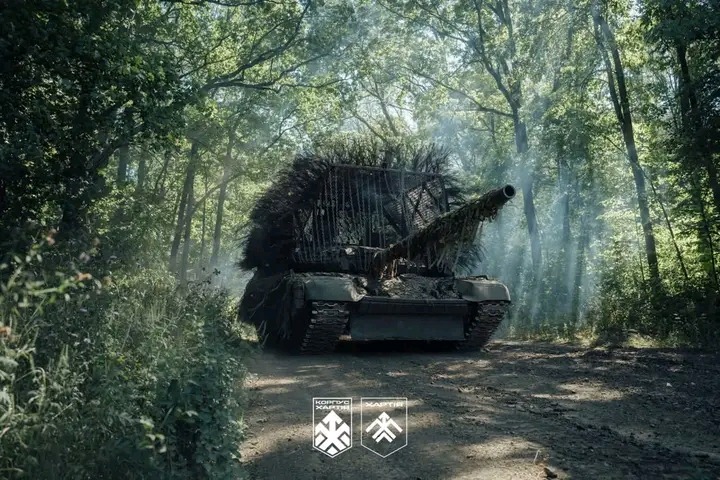

WHY THIS UKRAINIAN TANK LOOKS LIKE A GIANT HEDGEHOG
This tank belonging to Ukraine’s Khartiia Corps looks almost prehistoric—but every strange-looking layer has been added for the modern drone battlefield.
It is not one enormous piece of armor. It is a handmade system of cages, chains, screens and unraveled metal cables intended to keep an attacking FPV drone away from the tank’s real armor.
The large steel frame surrounding the turret creates standoff distance. If a drone strikes the frame, its warhead may detonate before reaching the roof, where tanks are normally most vulnerable. The frame can also physically prevent a drone from reaching the turret hatches or engine deck.
Hanging from the frame are flexible chains and cables. These form a moving curtain around openings that cannot be permanently sealed. An approaching drone may strike a chain, lose control, damage its propellers or detonate before reaching the vehicle itself.
The dense bristles surrounding the cage are made from unraveled industrial cable. These are the tank’s “hedgehog” spikes. Instead of presenting a clean surface for an FPV to strike, they create thousands of opportunities to catch its frame, foul its propellers or trigger its contact fuse away from the main armor.
The gun barrel is wrapped with strips and camouflage material to break up its outline and make the vehicle harder to identify from above. Similar material around the sides helps conceal the tank in wooded terrain, although it provides far less protection than the metal screening.
Beneath everything remains the tank’s original armor, with its strongest protection concentrated around the front of the hull and turret. The additional structure is primarily there to defend the weaker roof, sides and rear against drones approaching from above or at an angle.
Khartiia crews construct these systems by hand. Metal is cut, welded and fitted separately to each vehicle, while soldiers spend hours unraveling cables into protective clusters. Outfitting one tank can take approximately a week.
There are serious disadvantages. The structure adds weight, restricts visibility, catches on trees, complicates repairs and can slow an emergency escape. The tracks, lower front plate, gun and rear engine area also remain vulnerable. Heavy artillery, large bomber-drone munitions, mines and repeated FPV strikes can still defeat it.
This armor does not make the tank invincible. It gives the crew another layer between themselves and the first drone—and sometimes that extra distance is the difference between returning home and never returning at all.
The battlefield changed, so the tank changed with it.