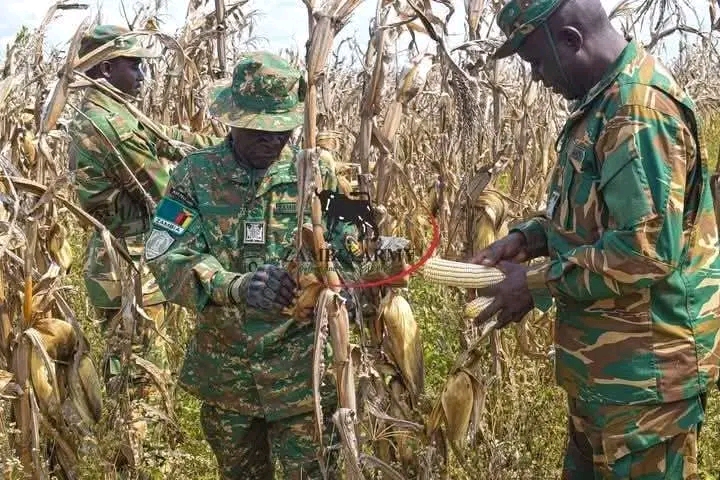

ZAMBIA DEFENCE FORCE TO HARVEST 29,000 TONNES OF MAIZE
Ministry of Defence Permanent Secretary Mr. Maambo Haamaundu revealed in a press release issued by Principal Public Relations Officer (PPRO) Mr. Paul Shalala.
Here are the highlights:
✅The Zambia Defence Force is projected to harvest 29,600 metric tonnes of maize in the 2024/2025 farming season.
✅For the first time, the Zambia Army has planted a total of 103 hectares of maize with a projected yield of 500 metric tonnes at the Solwezi farm while 3 hectares has also been planted at the Army Makeni Farm in Lusaka.
✅The army has also planted 2 hectares of Bananas, 1 hectare of Avocados, 1 hectare of Irish Potatoes and 1 hectare of Tomatoes at its Lusaka farm.
✅ Meanwhile, the Zambia Air Force has planted 900 hectares of maize across the country with an expected yield of 7,200 metric tonnes and the maize has been planted at its major farms in Mbala, Mumbwa, Chisamba and Lufwanyama Districts.
✅At the Mbala farm, a total of 600 hectares was cultivated with an expected yield of 4,800 in this farming season.
✅ZAF Mbala farms have expanded into beef production, with 48 animals currently on-site while 50 hectares of land has been allocated for the cultivation of beans as part of the farm’s diversification programme.
✅And at ZAF Mumbwa farm, the service has 229 cattle for beef production while Chisamba farm houses 114 animals for the same purpose and has a poultry project which is currently managing a stock of 10,000 birds, with half of this number ready for market each month.
✅And the Zambia National Service has planted 1,550 hectares of rain fed maize with a further 1, 414 hectares of irrigated maize commonly known as early maize.
✅ZNS projects to harvest 7,750 metric tonnes from rain fed maize and 14,150 metric tonnes from irrigated maize, bringing the total harvest for the service to 21,900 metric tonnes.
✅In addition, ZNS has some of its major maize fields at Munsakamba in Mkushi, Airport Farm in Lusaka, Musakashi in Mufulira, Mangango in Kaoma and Mpika Farm and fish farming in Kafue and Gwembe as well as ranching in Mkushi and Choma.