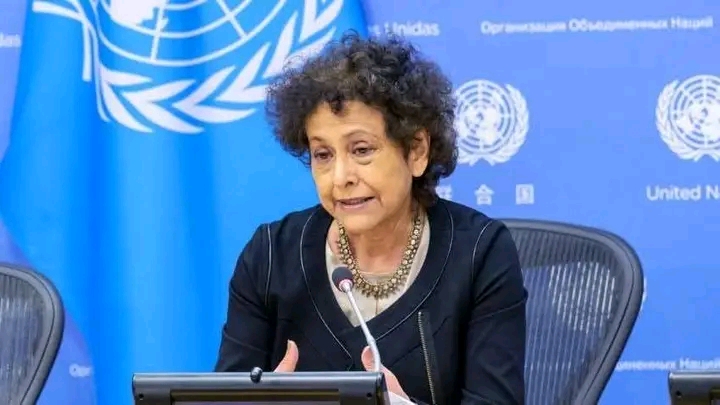

UN Rapporteur Urges Government to Act on Human Rights
As Zambia prepares for its 2026 general elections, the government faces intense scrutiny over its record on human rights and freedom of expression. Following her official visit to Zambia, United Nations Special Rapporteur on Freedom of Expression, Irene Khan, has delivered a stark warning, urging the government to take urgent and meaningful action to fulfill its promises. The Special Rapporteur’s findings suggest that, while some progress has been made, Zambia remains far from creating a fully enabling environment for the free expression of its citizens.
Khan’s assessment, issued at the conclusion of her visit from January 20 to 31, highlighted both positive and concerning developments in the country. While she commended the government for the adoption of the Access to Information Act, she warned that its implementation has been sluggish, and the Human Rights Commission, which is supposed to oversee the law’s operationalization, has not been fully empowered. The law, intended to enhance transparency and accountability, remains largely ineffective in practice, leaving citizens without the vital information they need to hold their government accountable.https://www.facebook.com/share/p/12C2fHepumW/
Khan also expressed support for the decriminalization of defamation against the President, a move that aligns with the country’s commitment to upholding free expression. However, she was quick to point out that many other repressive laws remain in place. The use of criminal libel, sedition, hate speech laws, and cybercrime statutes continues to threaten free speech and punish dissent. These laws, Khan stated, are being weaponized to silence critical voices, undermining the democratic principles that Zambia claims to uphold.
Despite these positive steps, Khan emphasized that legal reform in Zambia remains incomplete. Repressive laws such as the Public Order Act, which gives the police wide powers to restrict public gatherings, continue to be misused to suppress dissent and stifle opposition. Khan warned that unless these laws are revised or repealed, Zambia risks further eroding its democratic space. The Public Order Act in particular has become an effective tool for political repression, making it nearly impossible for citizens to peacefully protest or engage in public debate without fear of government intervention.
Khan’s criticism was not limited to legal frameworks; she also addressed the slow pace of reforms and the growing use of repressive tactics reminiscent of the previous government. Many have expressed frustration that the current administration, which came to power with promises of reform, has been too slow to deliver on its commitments. The government’s failure to fully engage with civil society organizations (CSOs) and nongovernmental organizations (NGOs) has been a key point of concern. Khan’s report emphasized that any meaningful reforms must include the voices of those outside the political elite, particularly those from civil society, which has a crucial role in ensuring democratic accountability.
Civil society organizations (CSOs) and NGOs have been particularly vocal in advocating for inclusive decision-making processes. However, the government has often opted to consult only politicians when discussing constitutional amendments or legal reforms, ignoring the input of the broader public. Khan pointed out that CSOs are key stakeholders in any democratic state, and their exclusion from these important discussions undermines the legitimacy of reforms and risks further alienating the very people the government claims to serve.
The government’s failure to engage civil society effectively has raised concerns that it is perpetuating a cycle of political elitism, in which power remains concentrated in the hands of a small group of politicians, while ordinary citizens are left out of the conversation. Khan emphasized that reform in Zambia must be inclusive and transparent if the country is to make real progress on human rights and freedom of expression. Without the involvement of CSOs, NGOs, and other key stakeholders, the government’s commitment to reform will remain in question.
Another troubling aspect of Zambia’s human rights landscape is the increasing prevalence of online disinformation. Khan expressed grave concern over the use of the internet by political actors to spread falsehoods, smear campaigns, and manipulate public opinion. These campaigns, often fueled by both the ruling party and opposition, have the potential to undermine public trust in the democratic process and deepen political divisions. Khan urged politicians to exercise responsibility in their speech and to avoid using their platforms to spread hate or incite violence.
Zambia’s growing culture of disinformation is compounded by the rise of online attacks against journalists, activists, and opposition figures who attempt to challenge the prevailing political narrative. The government must act swiftly to address this issue by ensuring that freedom of expression is protected both online and offline. Politicians have a special responsibility, Khan noted, to inform, not mislead, the public—especially during the lead-up to the 2026 elections, when political tensions are likely to run high.
Khan’s report also drew attention to the independence of key institutions, such as the judiciary, the Independent Broadcasting Authority (IBA), the Electoral Commission, and the Human Rights Commission. These institutions must be free from political interference to function properly and ensure that Zambia’s democratic processes are fair and transparent. Without strong, independent institutions, there is a real risk that Zambia could slip back into authoritarian practices, with little accountability for those in power.
Looking ahead, Khan’s visit marks a critical juncture for Zambia. The next six months will be a decisive period for the government to demonstrate whether it is serious about implementing meaningful human rights reforms. The General Council, which will review the findings of this report, will play a pivotal role in shaping Zambia’s future. It is not for any single individual to conclude whether Zambia has improved, Khan noted, but rather the collective judgment of civil society and the broader public that will determine whether the country has made genuine progress.
The window of opportunity is rapidly closing. Zambia’s 2026 elections will be a key test of the country’s commitment to freedom of expression, human rights, and democratic governance. If the government fails to act decisively on the recommendations laid out by Khan and other stakeholders, it risks further erosion of trust in its leadership and undermining the very values it claims to uphold. The stakes are high, and Zambia’s future as a democratic nation hangs in the balance.
As Khan closed her statement, she issued a final call to the Zambian government: “It is time for Zambia to deliver on its promises. The coming months will determine whether the country will advance toward a more democratic future or fall into the trap of political repression once again.”
Kumwesu January 31, 2025