
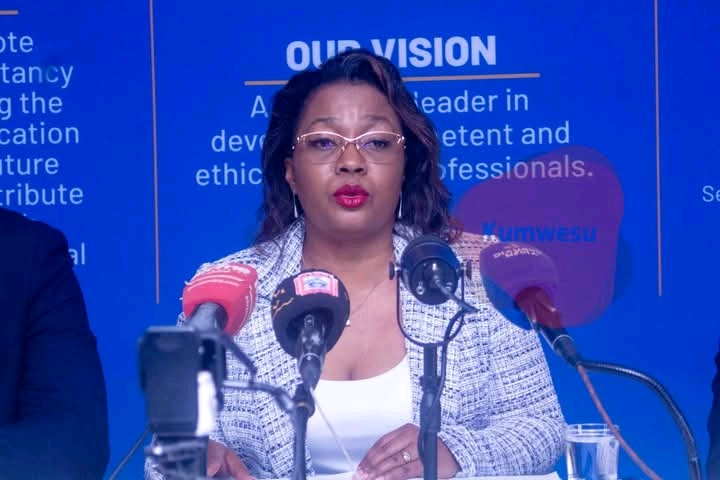
ZAMBIA’s 2025 GROWTH PROJECTIONS UNREALISTIC AMID MOUNTING ECONOMIC PRESSURES – ZICA
Zambia’s projected 6.6% economic growth for 2025 is facing stiff skepticism after the Zambia Institute of Chartered Accountants (ZICA) exposed a harsh economic reality that contradicts government optimism. In its first quarter media briefing, ZICA cautioned that the government’s projections were overly ambitious and detached from prevailing challenges choking the country’s productivity and resilience.
According to ZICA President, Mrs. Yande Siame Mwenye, the economy only managed a 3% growth in the first quarter of 2025 a figure that lags significantly behind the IMF’s full-year projection.
“Growth must be inclusive and climate resilient,” Mwenye said. “It’s not time to celebrate just yet.” Her remarks come amidst a torrent of economic and environmental shocks affecting multiple sectors.
Chief among the threats is Zambia’s ongoing power crisis, which has seen daily load shedding of up to 21 hours due to historically low water levels in Lake Kariba. With power generation slashed by over 50%, ZICA warned that industries, SMEs, and even public services are experiencing massive disruptions, severely undermining productivity.
“We are deeply concerned about the prolonged load shedding that has affected livelihoods and investor confidence,” Mwenye stated.
Compounding the crisis is the continued depreciation of the Zambian Kwacha, which ended March 2025 at K28.75 per US dollar a 28.9% drop over the past year. ZICA highlighted how this has driven up input costs, spurred inflation, and suffocated foreign investor confidence.
“Zambia must diversify export earnings and promote legal predictability to restore macroeconomic stability,” Mwenye advised.
While a minor dip in inflation from 16.8% to 16.5% in March 2025 has been recorded, ZICA urged caution. With food prices still surging and energy costs spiraling, this marginal decline offers little comfort.
“This progress must be interpreted cautiously in light of rising food prices and energy insecurity,” Mwenye warned, noting the risk of economic stagnation if urgent interventions are not made.
She added that Zambia’s agricultural sector is also under siege due to persistent droughts, worsened by the 2023/2024 El Niño pattern.
Maize production the nation’s staple crop has been devastated, forcing the country to consider food imports. ZICA called for increased support to small-scale farmers and investment in weather forecasting and early warning systems. “We must protect our farmers from exploitation and ensure food sovereignty,” Mwenye said.
Moreover, the sudden withdrawal of USAID funding has left critical sectors exposed. Although the full impact remains to be seen, ZICA warned of long-term effects on public health, education, and governance. The Institute urged government to create a sustainability plan to safeguard progress made under US support.
“We must diversify aid sources and integrate key programs into the national budget,” Mwenye said.
With global trade tensions rising particularly between the U.S., China, and South Africa Zambia is also vulnerable to spillover effects that could disrupt exports and drive commodity price volatility. ZICA called for a proactive national strategy to mitigate these external shocks. “A comprehensive risk impact assessment must be undertaken immediately,” Mwenye stated.
April 23, 2025
By Edwin Daka & Esther Yobe
©️ KUMWESU
We are in April. Current is 3%. Projection for whole year is 6.6%. Best to make an assessment in December. Or January 2026.