
Zambia’s Bill 7 Standoff: When Power Collides With the Constitution
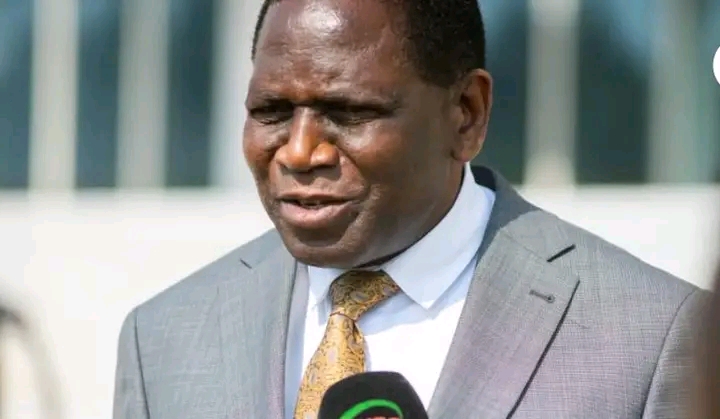
….As panic deepens, Attorney General Kabesha has rushed to the Constitutional Court, seeking to nullify the Bill 7 judgment on grounds of unconstitutionality….
_By Michael Zephaniah Phiri – Political Activist & Advocate of Good Governce_
Zambia now finds itself at a defining constitutional crossroads, where law, politics and power are locked in a tense confrontation. At the centre of this storm is Constitution (Amendment) Bill No. 7 of 2025 a piece of legislation that has moved from parliamentary ambition to judicial rejection, and now into an arena of political desperation and legal uncertainty.
What is unfolding is not merely a disagreement over procedure. It is a deeper struggle over whether judicial authority will be respected, whether public money will be accounted for, and whether constitutional limits will hold firm in the face of political pressure.
Earlier this year, the Constitutional Court delivered a decisive blow to Bill 7, declaring core elements of the amendment process unconstitutional. The ruling was not symbolic. It struck at the legal foundation of the Bill, making it invalid in its presented form. In any constitutional democracy, such a ruling should have marked the end of the matter either through full compliance, or through a sober, lawful review process
Instead, what followed was confusion, contradiction and political retreat disguised as consultation.
Government withdrew the Bill and announced the formation of a Technical Committee a group of experts tasked with collecting submissions and crafting proposals. Public funds were released. Consultations were conducted. Allowances were paid. Citizens were encouraged to participate. Expectations were raised that a new, legally sound framework would emerge.
But as 2026 draws nearer, the state has abruptly declared that the Technical Committee’s draft will not be considered by Cabinet or Parliament. The very process that was presented as a national corrective mechanism has now been politically discarded without explanation.
This abrupt abandonment raises a serious public question: Was the committee formed in good faith or was it merely a political delay tactic?
In the same breath that government has rejected the committee’s outcome, it has announced its intention to revive the original Bill 7 in its unchanged form the very Bill the Constitutional Court already condemned. This contradiction lies at the heart of the current crisis. A Bill cannot be both judicially invalid and politically reusable at the same time. One of these positions must be false.
Government’s defence is that parliamentary privilege allows legislators to debate any matter within the House. While that is procedurally true, it is constitutionally incomplete. Parliamentary debate does not override a court judgement. A Bill found unconstitutional does not become lawful simply because it is returned to the Order Paper. Outside Parliament, the court’s ruling still binds the state.
The danger now emerging is not simply legal inconsistency it is institutional confrontation.
The Attorney General has now moved to challenge the Constitutional Court itself, arguing that the judiciary interfered with Parliament’s law-making authority and acted under public pressure. Such arguments, if accepted, would fundamentally alter the balance of power in Zambia’s constitutional order. Courts exist precisely to place limits on legislative and executive authority. When the executive turns against judicial oversight, the fault line of constitutional democracy is exposed.
Behind the legal manoeuvres lies political urgency.
The calendar is unforgiving. Zambia is moving rapidly toward the 2026 general elections. The Constitution itself discourages amendments close to elections because of the risk of instability, manipulation and loss of public trust. With time running out, any attempt to restructure electoral rules, parliamentary composition or governance frameworks now is bound to trigger suspicion. It is no longer viewed as reform; it is interpreted as survival politics.
More troubling still is the cost to public confidence.
The church, civil society, governance advocates and the Law Association of Zambia have all raised consistent alarms. Their message is simple: constitutional amendment must not be rushed, recycled or politically forced. When such broad moral and professional voices converge, they reflect not opposition politics, but national concern.
There is also the unresolved question of public money. The Technical Committee consumed state resources. If its work is now deemed legally unusable and politically irrelevant, then accountability is required. Silence on this matter deepens public distrust and reinforces the perception that national resources were spent without due responsibility.
At its core, this is not just a fight over a Bill. It is a test of whether Zambia remains governed by law or gradually shifts toward governance by political convenience.
A government confident in its legal footing does not argue with court judgements. It complies with them. A leadership secure in public trust does not fear judicial oversight. It welcomes it. And a state that respects taxpayers does not abandon expensive national processes without explanation.
Bill 7 may have been declared unconstitutional by the courts, but the deeper constitutional question it has exposed remains unanswered: when law and political ambition collide in Zambia, which one ultimately prevails?
The answer to that question will shape not only the credibility of the next election, but the very character of the Republic itself.