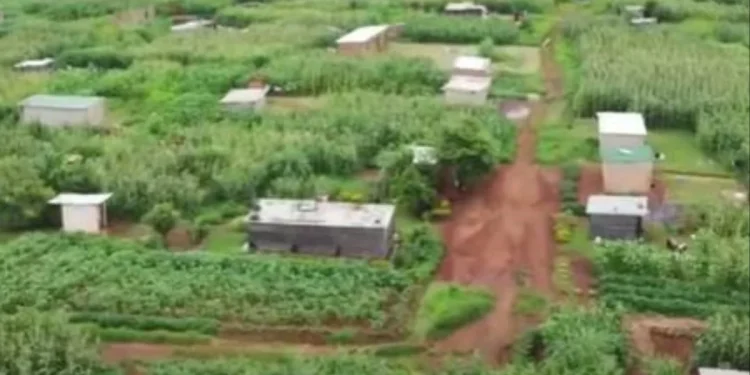

The government has formally reinstated its prohibition on urban farming ahead of the rainy season. The Minister of Lands, Agriculture, Fisheries, Water and Rural Development, Dr Anxious Masuka, has declared that urban and peri-urban residents will no longer be eligible for state-assisted farming inputs distributed through the Presidential Inputs Support Scheme. The official position is that cultivation is strictly for designated rural farmlands.
The practice, known as peri-urban farming, involves small-scale crop growing and livestock rearing on undeveloped plots, road verges, and wetlands within municipal boundaries. It has seen a significant surge in recent times, becoming a common sight on the outskirts of major urban centres, including Harare, Bulawayo, Gweru, and Mutare.
For many city dwellers, these plots have become a vital source of supplementary food and a crucial source of income amid economic challenges.
Zimbabwe Government Declares That Peri-Urban Farming Is Not Allowed
The policy was clarified during a parliamentary session in the National Assembly. Minister Masuka articulated the government’s position, drawing a clear line between residential and agricultural zones. He emphasised that the very nature of urban settlements makes them incompatible with farming endeavours.
He stated,
“It is important to note that agriculture is designated for agricultural zones. Urban areas are primarily residential and do not accommodate farming activities. In Zimbabwe, we have established that urban agriculture is not permitted, as farming should take place on land specifically allocated for agricultural purposes, not within urban settlements.”
The government’s rationale for the ban extends beyond mere zoning regulations. Officials have raised significant concerns about the negative side effects of uncontrolled cultivation in densely populated areas. The Minister outlined the potential for significant environmental damage and public infrastructure disruption.
He warned that such practices can damage the environment, clog drainage systems and strain municipal infrastructure.