

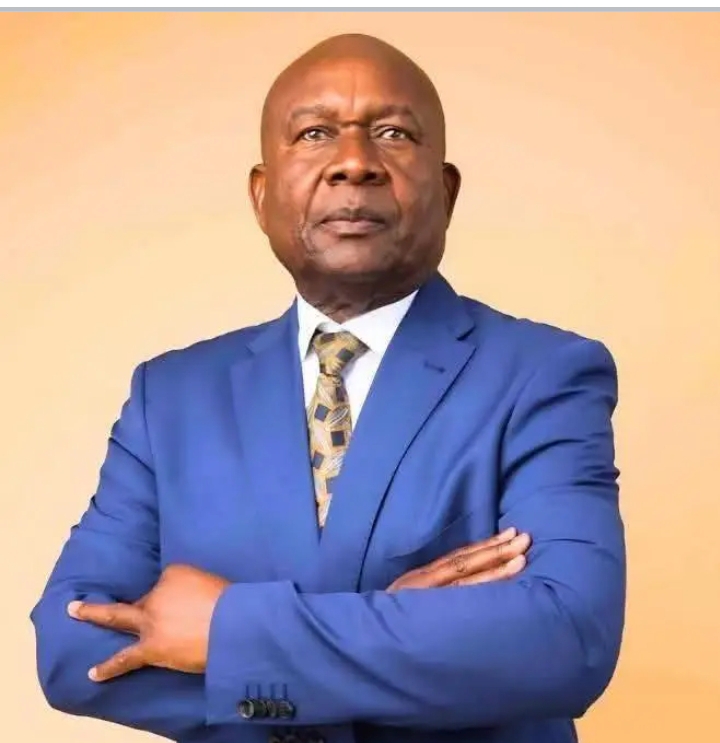
WHY ZAMBIANS NEED TO HEAR XAVIER CHUNGU
The attempt to silence former Zambia Security Intelligence Service (ZSIS) Director-General Xavier Chungu by Chilufya Kasonde before he has even uttered a word on “That ZED Podcast” should concern every citizen who values democracy, transparency, and historical truth.
To this day, we don’t know the details of what happened during the Lenshina Wars apart from accounts by the last District Commissioner of Isoka and Chinsali, John Hudson, the Mushala Rebellion, the link between General Malimba Masheke and the rescue of Samora Machel from the Portuguess in Mozambique, the role Zambia played in the Battle of Quito Quanavale in Angola, how Rupiah Banda ended up being the caretaker President of Nambia, what role Zambia played in the over throw of Idi Amini of Uganda, who (was it Captain Mulundika or General Peter Zuze) flew into Southern Rhodesia with a fighter plane which succesfuly escaped and the final war plan to end Aparthied.
What happened during privatisation is also part of our nation’s history.
Whether one agrees with Mr Chungu politically is beside the point. The real question is this: Do Zambians have a right to hear firsthand accounts from one of the most consequential intelligence officials in the nation’s modern history?
I am absolutely sure that the answer is unquestionably yes. We know where the tunnels are since they were already exposed, and still some of us wonder why the highest point in terms of elevation in Lusaka was given to the US to construct their Embassy. Which one is more dangerous? I still belive that it was even more dangerous to lock up a former Head of our intelligence but that is a debate for another day.
For decades, Zambia’s political history has been narrated almost exclusively by politicians, newspaper columnists, foreign diplomats, hearsay and selective state narratives. Yet the men and women who actually operated at the centre of state power, those who witnessed pivotal national events from inside the machinery of government, have largely remained silent. This is what should be contained in our history books instead of talking about conmen like David Livingston and H.M. Stanley “Dr Livingston, I presume”! What sort of madness is that? How is that going to make a Zambian think about the happenings in the mines, for instance?
The silence around events that shaped our country has not strengthened democracy or our young people’s appreciation of what this country has done to liberate the regions of Eastern and Southern Africa. It has weakened historical understanding, and instead of our people walking with their heads high when they travel outside Zambia, they hang their heads in shame instead.
Mr. Chungu’s proposed discussion of the 1997 Captain Solo coup attempt, the Chiluba third-term debate, the ZamTrop controversy, and the workings of the state during one of Zambia’s most turbulent political eras is not merely gossip or “entertainment.” It is part of the living archive of Zambia’s national history. It should give our people an insight into a mature democracy that does not fear history but interrogates it.
People like Chilufya Kasonde are attempting to portray any public reflection by a former intelligence chief as an automatic threat to national security. But international practice demonstrates the exact opposite. Around the world, former intelligence leaders routinely publish memoirs, give interviews, testify publicly, and participate in national conversations. This is far from destroying their institutions, because these engagements have often strengthened public understanding, institutional reform, and democratic accountability. We know about the Nixon tapes and Henry Kissinger’s mess in the Vietnam, Rhodesian, South American and Indo-China wars from former intelligence chiefs.
Former CIA Directors in the United States, including Leon Panetta, George Tenet, John Brennan, and Michael Hayden, have all publicly discussed major intelligence events after leaving office. They have written books, appeared on television, delivered lectures, and offered insight into historic national crises ranging from terrorism to political decision-making.
Former MI6 chiefs in the United Kingdom have done the same, for instance, Sir Richard Dearlove has openly discussed intelligence operations, geopolitical strategy, terrorism, and statecraft in interviews and public forums. Sir Alex Younger, another former MI6 chief, regularly speaks at universities and policy forums about intelligence, democracy, cyber warfare, and national resilience. So why should Zambia be any different?
These nations did not collapse because former intelligence officials spoke publicly. On the contrary, their openness helped demystify intelligence work, improve democratic oversight, educate citizens, and preserve institutional memory. You don’t have to be superstitious about everything!
In fact, some of the most important reforms in Western intelligence services emerged precisely because former insiders eventually spoke about mistakes, successes, and historical lessons learned from operations they undertook.
Democracies mature when institutions are subjected to public understanding, not when they are wrapped in permanent silence. Zambia cannot claim to aspire toward democratic maturity while simultaneously insisting that every aspect of state history should remain buried indefinitely under vague invocations of “security.”
It is not possible that Mr. Chungu will reveal active operations, expose agents, or compromise ongoing national security matters. There is a clear distinction between discussing historical political events and disclosing operational intelligence secrets. Mature legal systems understand this distinction, which is why public discourse cannot be criminalised simply because it involves former officials.
More importantly, Zambia suffers from a deeper national problem: the absence of institutional memory. This is a country where governments change, archives disappear, records become inaccessible, and historical knowledge is often replaced by rumour, propaganda, or partisan mythology. Did you know that our State House itself does not even maintain a proper library worthy of a presidential institution? That fact alone should worry everyone because it speaks volumes about how seriously Zambia treats the preservation of its own national memory.
A nation without archives eventually becomes a nation without historical clarity. In developed democracies, presidential libraries preserve documents, recordings, policy debates, and firsthand accounts for future generations. In the United States, every president from Herbert Hoover onward has a presidential library and archive. Britain meticulously preserves official records for historians and scholars. South Africa has invested heavily in documenting the apartheid struggle and post-apartheid transition.
But in Zambia, too much of the nation’s political history survives only through whispers, rumours, and fragmented media reports. This is precisely why firsthand accounts such as that of Mr Chungu matter.
Whether one ultimately agrees or disagrees with his perspective, hearing directly from someone who sat at the centre of power during defining national moments is historically valuable. Citizens are capable of listening critically, evaluating competing narratives, and forming their own judgments.
Democracy does not require citizens to be protected from information. It requires citizens to have access to it, and the effort to pre-emptively threaten Mr. Chungu with imprisonment before he has even spoken creates a dangerous precedent. If broadly applied, such logic would effectively ban former intelligence officers, military commanders, diplomats, and senior civil servants from participating meaningfully in public life forever. Intelligence is what shapes government policy, and when we stop people from looking at the flaws of the past, we will not plan the future better.
That sort of thinking is not democratic but an attempt to enforce historical amnesia. That is more dangerous than allowing Mr Chungu to speak. I suspect the real fear underlying the backlash may not be national security at all but may be an attempt at narrative control.
For years, many aspects of Zambia’s political past have remained shielded from serious public examination. Certain powerful figures and institutions benefited from that silence. But younger generations are increasingly demanding transparency, context, and firsthand testimony about how major national decisions were made.
The young people deserve those answers, otherwise we shall continue producing future politicians who are inspired by thuggery instead of critical thinkers. Commander this, commander that! Nations become stronger when they confront their histories honestly, including the uncomfortable parts. The 1997 coup attempt, the third-term debate, corruption controversies, and the internal workings of past governments are all part of Zambia’s democratic evolution as well as our own history. Pretending that these subjects are too sacred for public discussion only deepens suspicion and weakens trust in our own institutions. Mind you, the people of Zambia pay for this.
If we have to talk about true patriotism, we should remind ourselves that it is not about blind silence. True patriotism is believing that citizens are mature enough to engage with their own history responsibly without anyone curtailing debates by scaring people with made-up crimes.
Mr. Xavier Chungu should therefore not be silenced before he speaks. He should be heard, questioned, challenged where necessary, and evaluated by the public like any other national figure participating in democratic discourse.
The Zambian people are not children; they are entitled to hear their own history from those who lived it. Through memoirs, books or University lectures. This can even be a way for former officials to raise funds when they leave government instead of becoming destitutes, because that is even more dangerous. They might start selling information to the highest bidder for survival. Memoirs are open secrets which everyone can interrogate.
#i_wish_i_had_more_time_to_write
By Ngobola Cengelo Muyembe
He can say whatever he wants but if he breaks his oath of secrecy and is arrested for that please dont come back cry persecution
Besides that, the timing is also wrong, why telling us about all those things when we are busy preparing for elections. There are other reports like Gabon Air Disaster, Rodger Chongwe Commission of Inquiry on Barotseland were not released to the public. When Sikota Wina wanted to brief the Nation, PF stopped him, so why should UPND allow Xavier Chungu to reveal all that information now? Well he can go ahead but should be ready for the consequences that will follow. No responsible government can allow such a thing happen.
Mr Xavier Chungu can do what others do in the rest of the world- WRITE A BOOK. Andrew Sardanis, Vernon Mwanga, Guy Scott, Sikota Wina have been the trendsetters in Zambia.
A 30 minute interview by a poorly informed interviewer cannot answer all the questions you want answers to. We do not just have a poor reading culture, but worse than that, we have a pathetic writing culture. When KK was in office, he had the assistance of secretaries at State House to write his Humanism and Letter to My Children books. But when he left office, Mark Chona whom he asked to write for him died and so also the project. If Zambians even=r needed to know what happened to their country, KK was the man to tell it. Others like Kapwepwe could also have written, but his tribal loyalties prevented him from rising to the call of the nation. Nkumbula, Mulemba, Grey Zulu, Mundia, Mbikusita Lewanika, even Chiluba, Sata, RB etc- all failed the Zambian people.
General Kingsley Chinkuli is still alive but has not opened his mouth to tell the Zambia defence forces story. Zambians never prepare for death and never prepare the country for the future.