

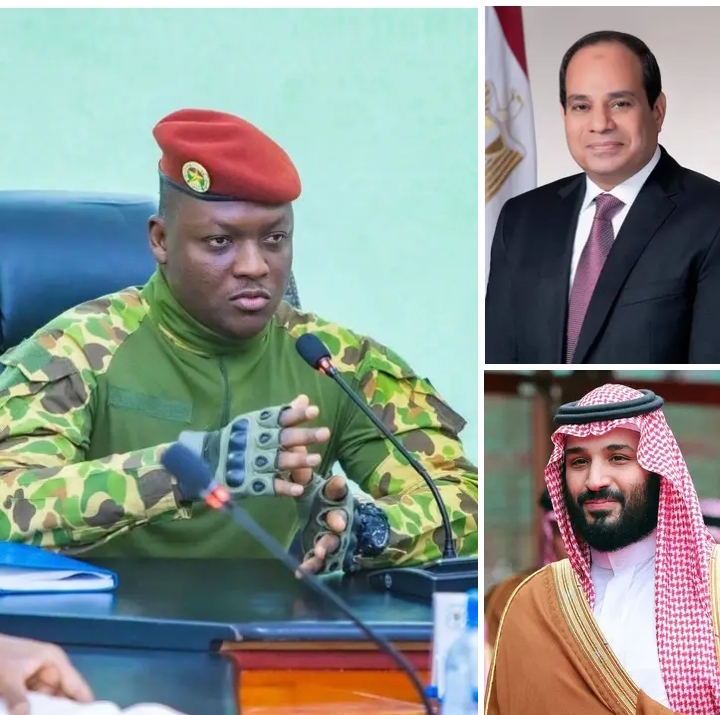
Check this out .. Islam in Burkina Faso vs Egypt vs Saudi Arabia
Saudi Arabia and Egypt are the two most important Islamic countries in the world. For Sadudi Arabia the reason is obvious. Concerning Egypt, it’s because Egypt is the home of the oldest and most influential Islamic institution in the word, that’s Al-Azhar. It’s a big very well-respected institution.
It has hundreds of schools and a University, one of the oldest in the world with campuses allover Egypt and branches in other countries. Many Muslim scholars are graduates of Al-Azhar University. It has adapted to the changing times. It doesn’t teach only Islamic sciences, but also, Medicine, Engineering, Pharmacy, etc.
Now, check this out ..
In Saudi Arabia, mosques are under the supervision of the Ministry of Islamic Affairs. Imams are generally appointed, licensed, or approved by the authorities.
The ministry provides guidance on topics to be addressed in Friday sermons (khutbahs).
Preaching political messages, criticizing the government, or promoting extr£m¡st ideas is prohibited.
Imams who deviate from official guidelines can be suspended, removed, or investigated.
But anyway, this does not mean every imam reads a government-written text WORD for WORD every week. Many have some flexibility in how they present religious teachings, but they operate within boundaries set by the state.
In Egypt, the Ministry of Awqaf (a dedicated ministry in charge of Islamic Affairs) exercises extensive control over mosques.
The ministry licenses imams and oversees mosque activities. For Friday prayers, the ministry often issues a unified sermon topic nationwide.
In some periods, especially after political unrest and concerns about extr£m!sm, authorities have gone further and distributed detailed sermon outlines or even full texts.
Independent preaching outside authorized mosques is heavily restricted.
The Egyptian government’s position is that centralized oversight helps combat extr£m!sm and ensure consistent religious messaging.
In other Arab countries:
Many Arab states, including United Arab Emirates, Jordan, Morocco, and Tunisia, also regulate religious preaching to varying degrees.
Common measures include:
▪️Licensing imams.
▪️Monitoring sermons.
▪️Providing recommended sermon topics.
▪️Prohibiting political or extremist preaching.
▪️Removing preachers who violate regulations.
In Burkina Faso:
Now, concerning Burkina Faso, a country that has been suffering from extr£m¡sm and the mass k!ll¡ng of innocent people in the name of Islam for more than 10 years, the government wants to regulate Islamic affairs, just as many Arab countries do. But surprisingly, many Burkinabè who studied Islam in those Arab countries are saying, “No Way!” They say that they will not accept the regulation of Islamic affairs. They have started attacking the authorities, including Captain Traoré, for wanting to regulate certain aspects of religious affairs in order to f¡ght extr£m¡sm, just as those Arab countries do.
They want to be more Muslim than the countries where they received their Islamic education. The funny thing is that some of them are still living in those Arab countries and know very well how things are regulated there. Yet they make social media posts every day, waging h£ll on the Burkinabè authorities especially CaptainTraore! Pathetic!