

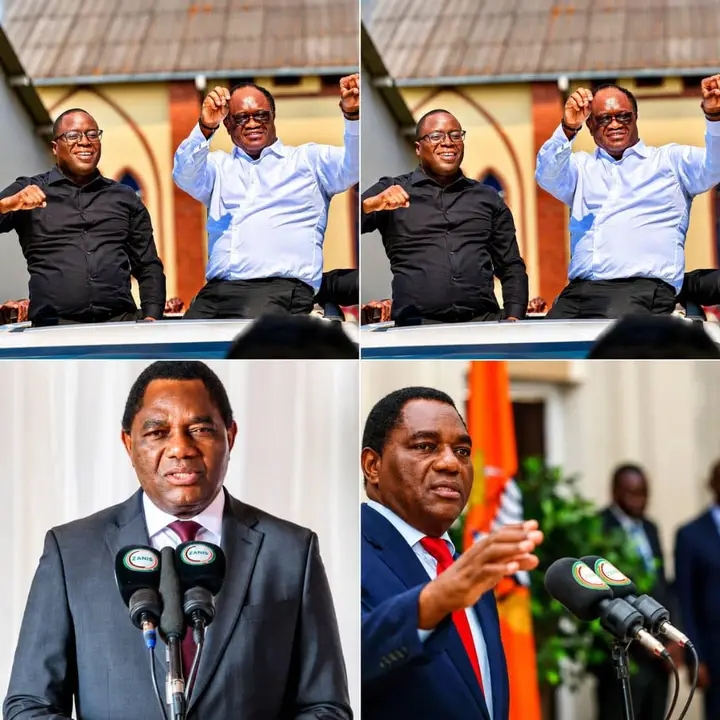
CHANGE IS INEVITABLE: ZAMBIANS WANT THE SAME DEMOCRACY HH FOUGHT FOR IN 2021
_”Opposition supporters say the 2026 election will be a referendum on governance, accountability, and the democratic promises that inspired change in 2021.”_
_By Michael Zephaniah Phiri Political Activist_
As Zambia moves closer to the August 13, 2026 General Elections, political temperatures continue to rise across the country. With only 66 days remaining before Zambians head to the polls, the national conversation has increasingly focused on democracy, governance, and the future direction of the country.
Recently, President Hakainde Hichilema questioned what opposition political leaders want from his administration. The answer, according to supporters of incoming presidential candidate Brian Mundubile (BM8) and his running mate Makebi Zulu (MZ8), is straightforward: they seek the very same democratic space and political freedoms that President Hichilema demanded while he was in opposition.
Many Zambians remember the years when President Hichilema passionately campaigned for political change, transparency, accountability, justice, and equal opportunities for all political players. Those values resonated with millions of citizens who ultimately voted for change in 2021.
Today, opposition supporters argue that reminding citizens about whom to vote for will not solve the challenges they believe the country has faced over the last five years. They contend that many Zambians feel disappointed by unmet expectations and are looking for alternative leadership and new ideas.
When President Hichilema asks what Brian Mundubile and Makebi Zulu are seeking, their supporters respond that they are simply presenting themselves as an alternative choice before the Zambian people. Ultimately, they argue, it is not politicians who decide election outcomes but the citizens themselves through the ballot box.
Many opposition supporters further argue that if the ruling party remains confident in its popularity, then all political competitors—whether representing established parties or running as independents—should be allowed to campaign freely and fairly throughout the country. They maintain that a level political playing field is essential for preserving Zambia’s democratic traditions.
Critics of the government also point to what they view as contradictions in political alliances and public messaging. They note that individuals and groups who were once heavily criticized by political opponents have, in some instances, later become political allies. In their view, this raises questions about consistency and politicalaccountability.
Some citizens have also called for greater transparency from all public leaders and institutions, arguing that accountability standards should apply equally regardless of political affiliation. They believe public confidence is strengthened when leaders demonstrate openness and a commitment to the highest standards of governance.
An old proverb teaches that the company one keeps matters. In Bemba, people often say, “Shaba imodzi ikaola, nishi shonse zaola”—a reminder that reputation and trust are shaped by the associations we choose. For many voters, this election will be about assessing not only promises but also consistency, credibility, and leadership.
The message from many citizens is clear: elections should be decided by ballots, not intimidation; by policies, not violence; and by the will of the people, not political maneuvering.
As election day approaches, Zambians will ultimately determine the country’s future through their votes. Democracy remains strongest when every citizen is free to choose their leaders without fear and when every candidate is given an equal opportunity to present their vision to the electorate.
Whether one supports the ruling party, the opposition, or an independent candidate, the principle remains the same: Zambia belongs to all its citizens, and the future of the nation will be decided on August 13, 2026, through the democratic choices of the Zambian people.
For many citizens calling for change, one message continues to grow louder: change is inevitable when the people decide it is time.
HH alewina…
If only wishful thinking can turn into reality, but unfortunately it can’t and it won’t. There is no change coming, HH for continuity.
Even if there are twenty of you getting zeros in the coming elections, twenty zeros cannot amount to anything other than zero. Please, heed the wisdom of your fellow HH hater – M’membe and stop hallucinating.