

THE SACRED SECRECY: Why the Burial of a Bemba Chief is Hidden from the Public Eye.
By Jack Mbulo
Have you ever wondered why, in Bemba traditional culture, the general public and outside individuals are strictly forbidden from witnessing the burial of a senior chief, especially the Paramount Chief, Chitimukulu?
It is not just about privacy.
In the Lubemba (the Bemba kingdom), this deep-rooted practice is a vital requirement to preserve the spiritual, political, and physical continuity of the entire land.
In our tradition, a chief is not just a political leader; they are the divine custodian of the land. They hold the mipashi (ancestral spirits) that ensure fertile soil, good rains, and peace.
When a chief passes away, the Bemba say the land has “gone cold” (ukutalala) or broken into pieces. The actual burial is a highly sensitive “spiritual state of emergency.” It is handled exclusively by the Bakabilo—the elite, hereditary royal councillors and undertakers. They work in absolute secrecy to ensure the spiritual power transitions smoothly to the successor, bringing “warmth” and order back to the kingdom without public interference.
The physical remains of a Bemba ruler are treated with supreme reverence. Historically, the body undergoes a long, highly secretive preservation process during the interregnum (the period between reigns).
When it is time for burial at sacred royal sites like Mwalule, the exact location of the grave is kept a strict secret. In traditional statecraft, protecting the chief’s body prevents political rivals or unauthorized individuals from desecrating or manipulating the remains, securing the absolute legitimacy of the throne.
To maintain order, a chief’s passing is never spoken of in plain, ordinary language. Instead, deep Bemba proverbs and euphemisms are used—such as “Umuti ukulu awila” (The great tree has fallen) or “Icipuna cafutuka” (The stool has tilted).
Keeping the final burial private among the Bakabilo manages public anxiety, prevents succession disputes among the Abana ba Mfumu (the royal clan), and ensures that when the public finally interacts with the royal establishment again, a new chief is already firmly installed.
In Summary, the exclusion of the public is a sacred boundary. It ensures that ancestral spirits transition safely, royal relics remain protected, and the stability of the kingdom stands firm against the “coldness” of an open transition.
Respect for the Bakabilo and our elders who keep these ancient fires burning!
Reference
Musambachime, M. C. (1994). The Ubutwa Society in Eastern Shaba and Northeast Zambia to 1920. The International Journal of African Historical Studies, 27(1), 77–99.
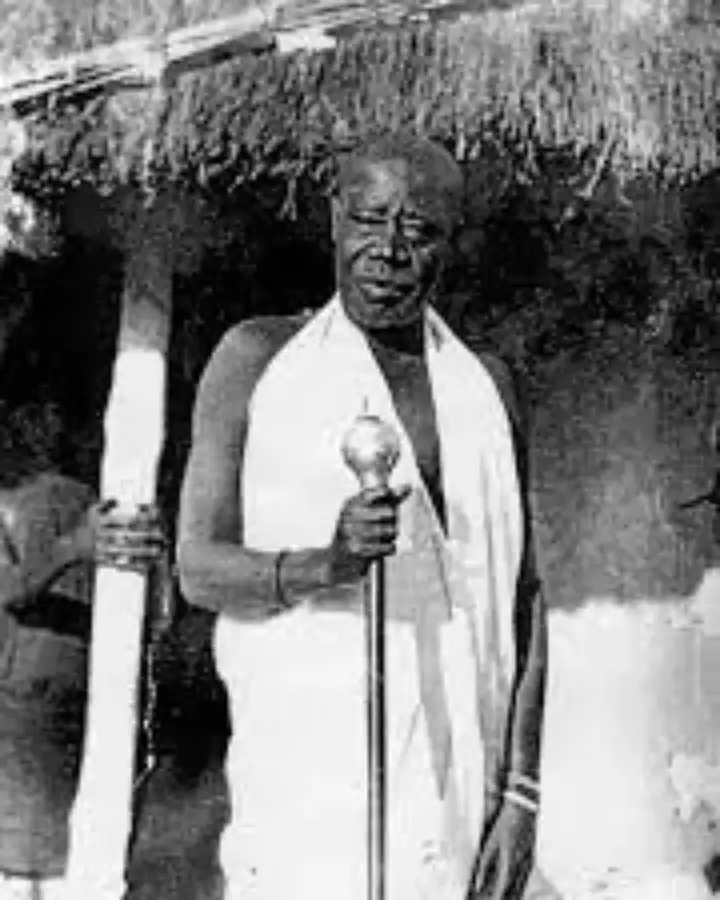
Photo of Chitimukulu Kanyanta I, 1926-1943. Before coming to the Chitimukulu throne, he was Nkolemfumu the second and Mwamba the sixth (1899-1925). He was a king for close to 50 years. He was the first Chitimukulu to be called: Paramount Chief Chitimukulu. Photo 1: He is standing whi