

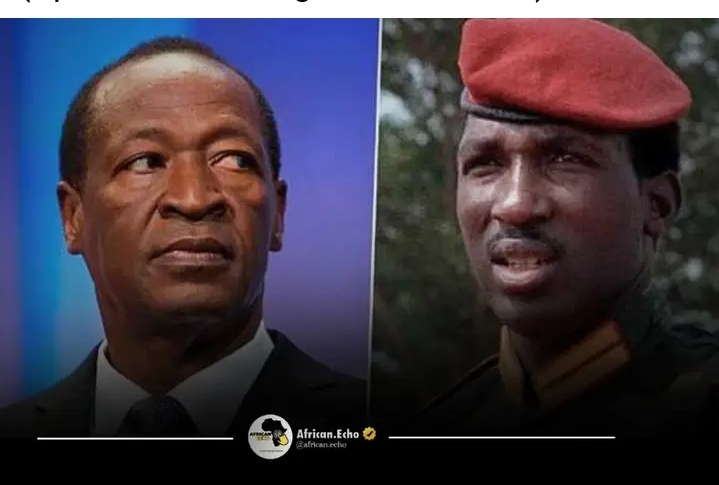
He Killed His Best Friend. Then Ruled for 27 Years.
In 1983, Thomas Sankara became president of Burkina Faso at 33 years old. He banned forced marriage. He vaccinated 2.5 million children in two weeks. He told the IMF and World Bank no. He told France no. He called debt “a cleverly managed reconquest of Africa.”
Four years later, his best friend killed him for it.
Blaise Compaoré — the man who fought beside Sankara, who helped bring him to power — led the coup that gunned him down outside his own office on October 15, 1987. Within months, every policy was reversed. The IMF was welcomed back. State assets were sold off. The revolution was buried with its leader.
Compaoré then ruled Burkina Faso for 27 years.
He was finally ousted in 2014 by a popular uprising. He didn’t face a courtroom. He fled to Côte d’Ivoire, where he still lives, protected by French interests that benefited the day Sankara died.
In 2022, a Burkinabé court did what 35 years of silence couldn’t — they convicted him in absentia of orchestrating Sankara’s murder. A symbolic verdict. The man has never spent a day in a Burkinabé cell.
This is the part of African history rarely taught in classrooms: not just colonization, but the men who inherited power and sold the dream back to the same forces it was built to resist.
Sankara is remembered as “Africa’s Che Guevara.” Compaoré is remembered as the friend who ended him.
What do you call a revolution betrayed from the inside?
**Sources:** Al Jazeera, CNN, VOA News (April 2022 coverage of the verdict)