

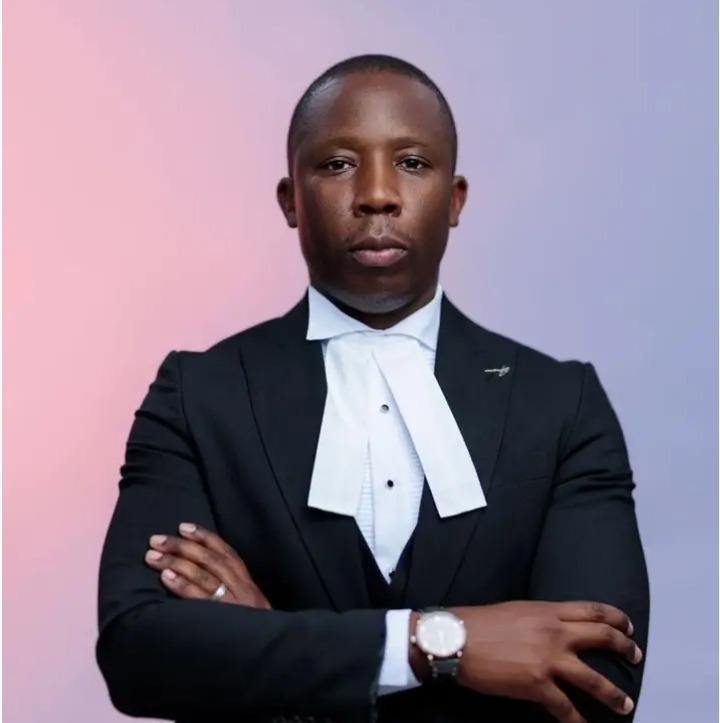
By George Nkhuwa
ABOUT THE LEGAL BATTLE OVER PRESIDENT LUNGU’S BURIAL
In late 2024, the former President of Zambia, Edgar Chagwa Lungu became ill and realised that he required urgent medical attention. In January 2025, he left Zambia for South Africa on a commercial flight in the company of his wife, Mrs Esther Lungu, and other members of his family.
When he was medically examined in South Africa, he was diagnosed with terminal cancer of the oesophagus. He was advised that, due to the delay in diagnosis, the cancer was inoperable. President Lungu remained in South Africa, where he continued to receive palliative care.
According to Mrs Lungu, while receiving palliative care in South Africa, former President Lungu openly and consistently expressed the wish that he did not want the Zambian Government, and particularly President Hakainde Hichilema, to be anywhere near his body or funeral. He felt that he had been mistreated by them and objected to their participation in his burial, as he believed they had forsaken him during his lifetime.
Mrs Lungu further stated that, on 5 June 2025, shortly before he was sedated for intubation, former President Lungu repeated these wishes to her. President Lungu never regained consciousness and subsequently passed away.
In the immediate aftermath of his death, several meetings were held between representatives of the Lungu family and the Zambian Government in an effort to reach consensus on the manner of burial. The Zambian Government wished to accord the late President a state funeral in Zambia, with all the formal trappings, including the involvement of President Hichilema.
The family, on the other hand, relying on the late former President Lungu’s stated wishes, including a deathbed declaration, insisted that if a state funeral were to be held, President Hichilema should play no role.
When attempts to reach a mediated solution failed, the family indicated that it would not agree to the repatriation of the remains for a state funeral and burial at Embassy Park. Consequently, the family announced its decision to arrange a private burial of the late former President Lungu in South Africa.
This prompted the Zambian Government to institute proceedings in the Gauteng Division of the High Court, Pretoria, seeking an order permitting it to repatriate the body to Zambia.
The Zambian Government argued that it had a clear right to determine where and how the late former President Lungu should be buried, regardless of the wishes of the family.
It further contended that, where there was a conflict of laws, Zambian law should prevail, and that Zambian traditions, customs, and protocols governing the burial of former heads of state supported its position. The Government also argued that the family was bound by an agreement allegedly reached during the meetings between the parties.
In response, the family disputed the applicability of Zambian law and relied on the Constitution of the Republic of South Africa. They referred in particular to section 10, which guarantees the right to dignity, and section 39, which requires courts to promote the values of dignity, equality, and freedom.
The family argued that these principles apply to personal matters, including burial decisions, and that their rights to dignity and family autonomy should be respected and protected. They further relied on the common law, which recognises that the next of kin has the primary right to determine burial arrangements.
The family also denied that any binding agreement had been concluded regarding the repatriation and state funeral of the late former President Lungu.
The High Court ruled in favour of the Zambian Government, holding that it was entitled to repatriate the body of the late former President Lungu for a state funeral and burial at Embassy Park.
Dissatisfied with this decision, the family appealed to the Supreme Court of Appeal of South Africa.
The Supreme Court of Appeal upheld the appeal and set aside the High Court’s judgment. It held, inter alia, that neither the Constitution nor the common law conferred a right on the Zambian Government to repatriate and bury the late former President Lungu contrary to the wishes of his family.
The Court emphasized that the South African Bill of Rights applies to all persons within South Africa, regardless of nationality.
The Court further held that there was nothing irrational about the family’s position, as they were seeking to honour the wishes of the deceased by refusing to permit repatriation and burial by the Zambian Government.
Finally, the Court found that the High Court had erred in concluding that the Zambian Government had established a contractual right to compel repatriation. The Government’s failure to establish a clear right, whether under the common law or contract,to override the family’s burial decision was fatal to its case.
Case Citation: Esther Lungu and Others v Government of The Republic of Zambia and Others (089/2026) [2026] ZASCA 87 (23 June 2026)