

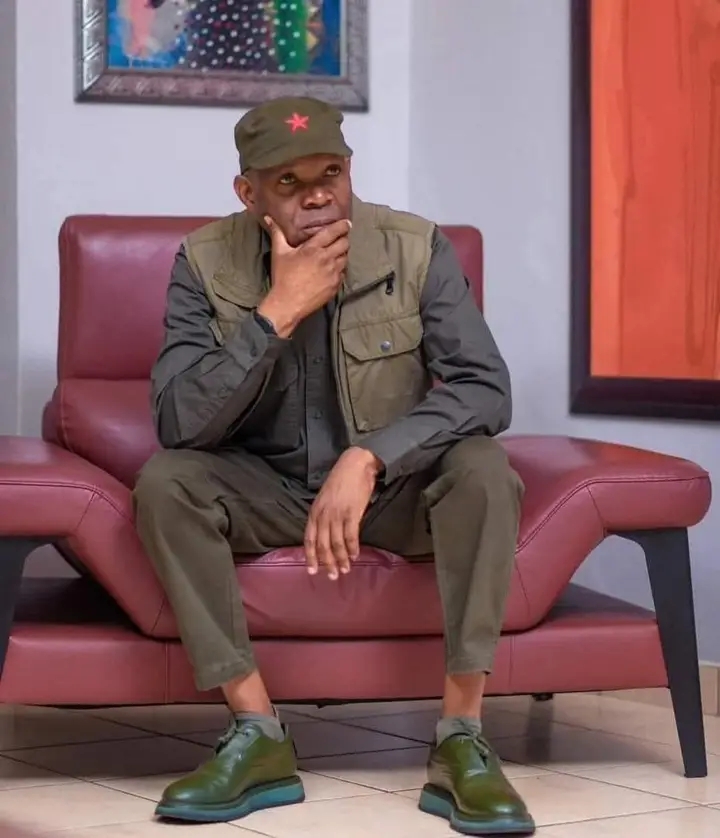
The silent shield, why the army commands best from the Barracks.
The ultimate strength of an army lies not in the volume of its public commentary, but in the quiet precision of its readiness.
In a constitutional democracy like Zambia, the army occupies a unique and sacred space. It is the final guarantor of sovereignty, a shield against external threats, and an institution defined by absolute discipline.
For this shield to retain its untarnished dignity, its leadership must remain distinctly apart from the daily churn of public media and political discourse.
Recent public statements and media engagements by the Zambia Army Commander, Lieutenant General Geoffrey Choongo Zyeele, regarding internal security and forthcoming electoral processes have naturally triggered active civic debate. A consortium of civil society organizations has already voiced concerns over the perceived overlap into domestic law enforcement, a domain constitutionally reserved for civilian police.
While the Commander’s intent is undoubtedly rooted in patriotism and a desire to ensure national stability, the resulting public friction demonstrates a fundamental truth, when the army commanders step regularly into the media spotlight, the institutional focus risks becoming blurred.
A professional army thrives on a culture of strategic silence. Unlike civilian departments, which must routinely litigate their policies in the court of public opinion, the army speaks through its actions, its training, and its operational readiness. Frequent media appearances by Lieutenant General Zyeele even those intended to reassure the public inadvertently expose the defense forces to politicization. In a polarized political landscape, any public pronouncement from the army or military command can be easily misconstrued, co-opted, or critiqued by partisan actors, eroding the apolitical foundation upon which the army’s universal public trust is built.
Zambia faces evolving defense and strategic priorities that demand the unyielding, undivided attention of command at army headquarters. From driving innovative agricultural initiatives to bolster food security to managing regional stability commitments and modernizing troop welfare, the army business is vast, complex, and vital. These heavy responsibilities are best executed far from the cameras, within the structured discipline of the barracks and the operational headquarters.
Lieutenant General Zyeele’s distinguished career and extensive training, including his induction into the prestigious United States Army War College International Fellows Hall of Fame, reflect a commander fully capable of visionary leadership.
To preserve this honourable legacy and protect the institutional integrity of the Zambia Army, the commander should delegate routine communication entirely to the army’s public relations or appoint someone as a spokesperson. By stepping back from the media microphone, the army commander ensures that the army remains what it was always meant to be, a powerful, silent, and universally respected guardian of the republic.
Fred M’membe President of the Socialist Party
I am not privy to what the Army Commander has said in the public domain but in principle, I agree with Dr. M’membe. However, if Dr. M’membe is referring to the ultimatum by the Commander over the illegal gold mining, that is a different matter. That was an urgent and important matter which needed his direct communication.