

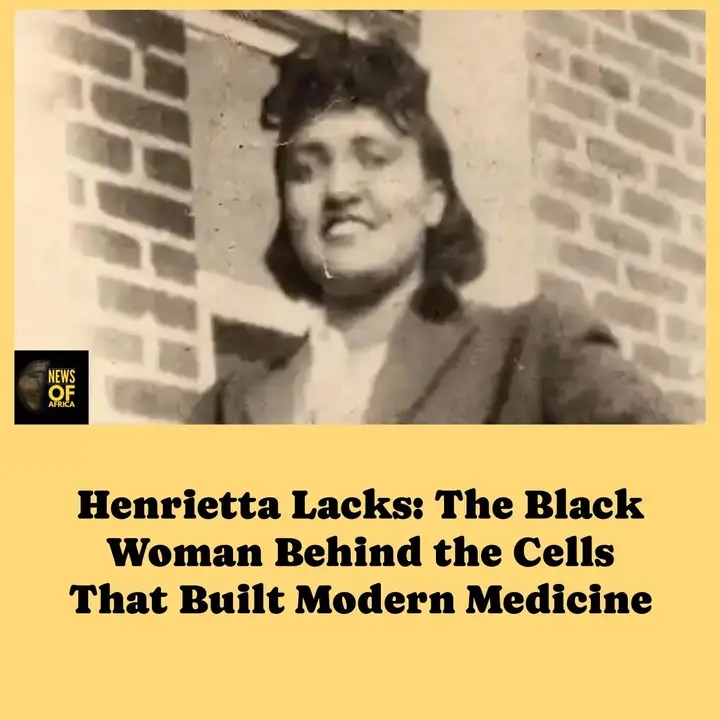
On February 8, 1951, doctors at Johns Hopkins Medicine took a tissue sample from Henrietta Lacks, a 31-year-old mother of five being treated for cervical cancer. Henrietta died months later, but her cells never did.
Those cells, taken without her knowledge or consent, became the world’s first “immortal” human cell line. While normal cells stop dividing after a few generations, HeLa cells — named from the first two letters of Henrietta Lacks — kept multiplying indefinitely in lab conditions.
That accidental discovery launched a scientific revolution. 75 years later, HeLa cells are still used daily in labs worldwide. They helped Jonas Salk test the polio vaccine, advanced chemotherapy and HIV drugs, and made gene mapping possible. Billions of HeLa cells have been grown — more mass than Henrietta herself ever weighed.
For decades her family knew nothing while her cells were bought and sold globally. The story forced science to confront hard questions about race, consent, and who owns your body after it’s gone. In 2013, the Lacks family finally gained some control over access to Henrietta’s genome.
Today, every breakthrough tied to HeLa carries two legacies: one of medical progress, and one of a Black mother whose cells outlived her to change the world.