

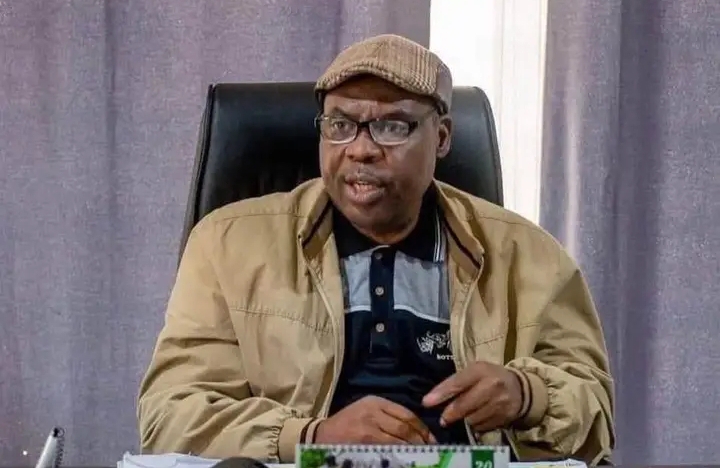
THE 2026 ELECTIONS OUTLOOK: HON. BATUKE IMENDA’S VIEW
The other night, I received a late telephone call from Hon. Batuke Imenda, the Secretary General of the United Party for National Development (UPND).
The call was primarily meant to be a family catch-up. However, as our conversation progressed, he shared a political reflection so profound that I felt compelled to share it.
“Bashemi,” I asked him, “how do you see the political situation ahead of the August 2026 elections?”
He paused briefly and responded in the calm, measured and commanding voice of an elder who has witnessed many political seasons.
“Mwanake,” he said, “one of the most valuable lessons I have learnt over the years is never to be excited by things that merely create the appearance of progress. Sometimes movement can easily be mistaken for growth.
He then drew on an old and instructive Silozi analogy:
“Moving the same herd of cattle from one kraal to another does not increase the number of cattle.”
He explained that the cattle may be placed under a new shelter, the kraal may be given a different name, and new handlers may stand at its entrance but the size of the herd remains substantially the same.
Bringing the analogy into the political arena, Hon. Imenda observed that transferring existing supporters from one formation of the former Patriotic Front family to another does not necessarily expand the opposition vote.
“It may consolidate an old constituency,” he explained. “It may improve campaign coordination and create excitement among existing supporters. But consolidation must never be confused with expansion. Celebrating the movement of the same political actors is sometimes nothing more than celebrating political recycling as political growth.”
He observed that the greatest danger facing Mr Brian Mundubile is the possibility of mistaking the regrouping of the former PF family for the construction of a new national majority.
“The cheering may become louder, the endorsements may appear more frequent and the campaign platform may carry a different name,” he said, “but the electoral reservoir remains largely familiar.”
He then added a statement that stayed with me:
“A presidential election is not won merely by recovering yesterday’s supporters. It is won by recruiting tomorrow’s voters.”
Hon. Imenda explained that Zambia’s presidential election is decided through a majoritarian system in which the successful candidate must obtain more than 50 per cent of the valid votes cast. Therefore, any challenger seeking to defeat an incumbent president must move decisively beyond inherited political boundaries.
“You cannot win simply by collecting the same people who supported your political family in the previous election,” he said. “You must win new regions, attract undecided citizens, convince first-time voters and persuade people who previously voted for your opponent.”
According to Hon. Imenda, one of the UPND’s greatest political achievements under President Hakainde Hichilema is not merely its historic victory in 2021. It is the gradual transformation of the UPND from a party once portrayed as having a limited regional base into a genuinely national political organisation capable of competing credibly across Zambia.
“The question in 2026 is no longer whether the UPND can win outside its traditional strongholds,” he stated. “The party has already demonstrated that capacity. The real question is whether the opposition can reverse the UPND’s growing penetration into areas that were once regarded as impregnable PF territory.”
As our conversation drew towards its conclusion, the Secretary General outlined the enormous electoral task facing Mr Mundubile.
For him to win, Hon. Imenda explained, Mr Mundubile would have to retain almost the entire traditional PF vote, dominate the wider opposition, capture the majority of undecided voters and, at the same time, take a substantial portion of the UPND’s established support.
He would also have to achieve this while competing against several other opposition presidential candidates seeking support from the same electoral constituency.
“Mwanake,” Hon. Imenda concluded, “politics is ultimately about numbers. Enthusiasm is important, endorsements are useful and rallies can generate excitement but elections are won by building a broad national majority.”
President Hakainde Hichilema enters the 2026 election with an established UPND support base, the advantages of incumbency, a nationwide governmental presence and a record of major policy interventions that have directly affected millions of citizens.
These include free education, the recruitment of teachers and health workers, expanded social protection programmes, the restoration of investor confidence, increased Constituency Development Fund allocations, debt restructuring and renewed economic activity in critical sectors such as mining.
At the same time, the opposition remains fragmented among several presidential candidates, many of whom are competing for support from essentially the same former PF political constituency.
Hon. Imenda’s assessment was therefore firm and unambiguous:
“President Hakainde Hichilema will not merely win the August 2026 presidential election. He is positioned to command it with an outright first-round victory, potentially exceeding 60 per cent of the national vote.”
Whether one agrees with his forecast or not, the wisdom behind his analysis is difficult to ignore:
Moving the same herd from one kraal to another does not increase the number of cattle.
Dr. Martin Mushumba
For sure!!!! HH is a household name in Eastern Province,MUCHINGA Northwest and the whole Zambia at large.
HH will win by 63.4%. Mundubile 27.8% and the rest will share 8.8%. That’s my conservative prediction.