

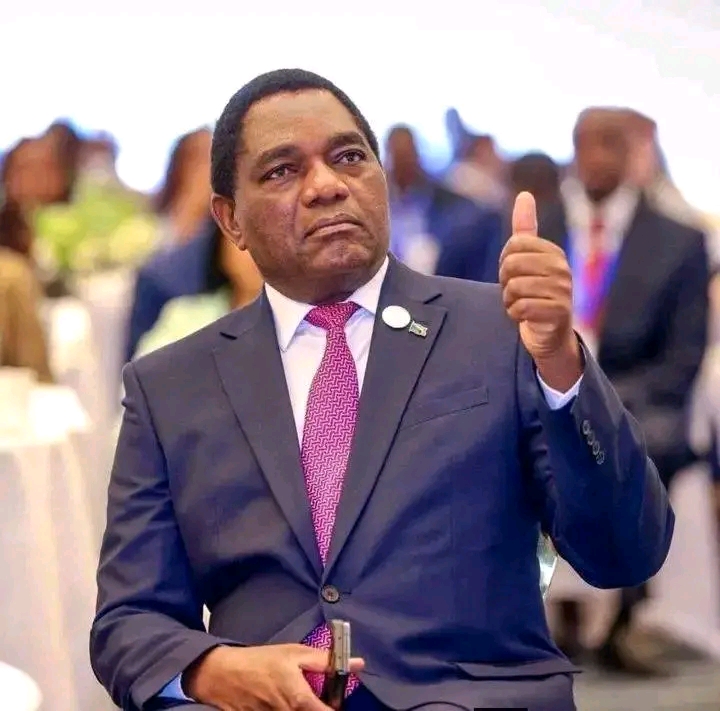
EXPLAINER | Investors pile into Zambia bonds after Hichilema win
Zambia’s first Government bond auction after the August 13 election has delivered an early signal from financial markets. Government offered K6.3 billion in bonds on August 21. Investors submitted bids worth about K8.6 billion, putting demand roughly K2.3 billion above the amount on offer. The auction was therefore oversubscribed by about 37%.
The timing makes the numbers particularly interesting. The auction came only days after President-elect Hakainde Hichilema secured a second term. Before the election, uncertainty over the political outcome had contributed to caution among some investors. An earlier bond auction had failed to attract enough bids to cover the amount Government wanted to raise. The first auction after the election produced the opposite result.
Bloomberg had already been tracking growing interest in Zambia before polling day. Zambia’s local-currency Government bonds had generated returns of about 36% in dollar terms during 2026, placing them among the stronger-performing emerging-market local debt instruments being followed by investors. Citi had also argued that a clear Hichilema victory could support the rally because it would remove political uncertainty and preserve continuity in economic policy.
That assessment became more pronounced after the result. Citi upgraded Zambia’s international bonds from “marketweight” to “overweight” and indicated interest in Zambia’s seven-year local-currency debt. In market language, overweight essentially means the bank sees enough potential value to recommend greater exposure relative to its benchmark
This begins to explain why economist Lubinda Haabazoka, Associate Professor of Banking and Financial Economics and Director of the University of Zambia Graduate School of Business, sees the 37% oversubscription as an early vote of confidence in the election outcome. His argument is that foreign investors appear comfortable with the continuation of Hichilema’s economic management.
But why Hichilema?
The first answer is predictability. Investors have already spent five years dealing with his administration. They know its broad positions on debt, the IMF, mining, fiscal management and private investment. A change of government would have required markets to reassess those assumptions. His re-election removed part of that uncertainty.
Debt is particularly important. Hichilema inherited a country which had defaulted on its external debt in 2020. His first term was dominated by negotiations to restructure more than $12 billion in external obligations. Progress on restructuring helped restore Zambia’s relationship with creditors and reopened conversations about longer-term investment.
The IMF relationship is another factor. Zambia completed its previous $1.7 billion Extended Credit Facility, while attention has now shifted towards possible discussions over a successor arrangement. IMF Managing Director Kristalina Georgieva has since congratulated Hichilema and assured him of the Fund’s “unequivocal commitment” to supporting Zambia’s development agenda.
Mining also sits at the centre of investor calculations. Zambia is one of Africa’s major copper producers at a time when global demand for copper and critical minerals is rising. Hichilema has placed mining investment at the centre of his economic programme and wants Zambia eventually producing around three million tonnes of copper annually. Investors therefore have reason to value regulatory and policy continuity.
Still, 37% oversubscription should not simply be translated into a 37% political endorsement of Hichilema. Investors do not vote when they buy bonds. They calculate risk against return.
There are other reasons for Friday’s demand. The Bank of Zambia recently reduced the statutory reserve ratio on kwacha deposits from 26% to 21%, releasing additional liquidity into the financial system. Citi had specifically pointed to abundant liquidity as one reason it expected strong demand for Government securities. Banks and institutional investors with more available money naturally have greater capacity to buy bonds.
This distinction matters because the market is not uniformly bullish. A Treasury bill auction immediately before the bond sale attracted about K1.73 billion against K2.2 billion offered, leaving it undersubscribed. Investors are therefore discriminating between different securities, maturities, returns and risks rather than simply buying everything Government offers.
There are risks too. Zambia still faces electricity shortages, pressure on household incomes, unemployment, climate vulnerability and the difficult task of converting improved macroeconomic indicators into living standards people can feel. Investors will also watch Government borrowing, inflation, the kwacha and whether fiscal discipline survives the political pressures of a second term.
Economist Yusuf Dodia therefore points to what happens after the election. His argument is that Zambia must keep post-election anxiety low and preserve peace, the rule of law and a predictable environment for business. Political stability reduces uncertainty. Uncertainty increases risk, and investors eventually price that risk into the cost of lending Zambia money.
So, is the K8.6 billion auction an endorsement of Hichilema?
It is better described as an endorsement of confidence and continuity than a political endorsement. Investors had their first major opportunity after the election to reassess longer-term Zambian Government debt. Instead of retreating, they offered Government considerably more money than it wanted to borrow.
This is a positive opening for Hichilema’s second term. But one auction cannot establish a five-year economic trajectory.
The election removed political uncertainty. The harder task is turning market confidence into cheaper capital, investment, jobs and an economy whose improvement can be felt outside financial markets.
– The People’s Brief | Ollus R. Ndomu