

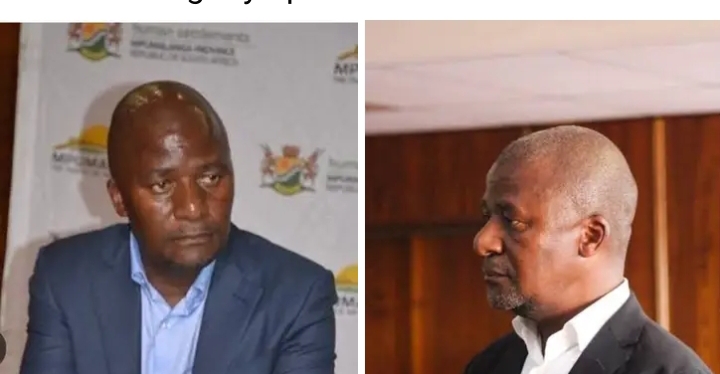
SA IDENTITY THEFT: ZIMBABWE-BORN TOWN PLANNER LOSES ROUND 1 IN HIGH COURT BATTLE FOR IDENTITY
Gwanda born man lived in SA for 25 years, landed top government jobs
By Fanuel Viriri
A Zimbabwean man alleged to have fraudulently acquired a South African identity before becoming a Town Planner and later Head of Settlement for the Mpumalanga Provincial Government has lost his first battle with Home Affairs in the Pretoria High Court.
Kebone Masange (56) claims he was born on 16 July 1969 in South Africa to a South African mother, Miemie Joyce Maila, but grew up in Zimbabwe where he obtained an honours degree in Regional and Urban Planning.
He says he came to South Africa in 1995 to register his birth, applied for an ID that was incorrectly spelled, returned to Zimbabwe while awaiting correction, was called back in 1996 to apply for exemption under the SADC amnesty, was issued with another incorrectly reflected ID which he declined, and in 1997 received a correct ID.
When he applied for a smart ID card in 2015 he was told three identity numbers were linked to him, two of which were cancelled.
Home Affairs tells a different story. It says Masange first entered South Africa on 19 October 1995 on a Zimbabwean passport showing place of birth as Gwanda, Zimbabwe, as Keboni. In November 1996 he applied for exemption under section 28 of the Aliens Control Act claiming he was born in Gwanda and entered South Africa in 1990, supported by a letter from DNMZ Engineers saying he had been employed as a Town Planner since 1 March 1990. That contradicts movement control records showing entry in 1995, according to court papers.
The department says this was to meet the five-year residence requirement.
While awaiting that exemption, he allegedly applied at Ferreirasdorp in Johannesburg as Kebone Masangeni, mother Melsie Caroline Masangeni, born 16 July 1989 in Johannesburg. Three IDs were issued.
In December 2013 he allegedly applied again in Randburg for late registration of birth claiming he was born in Pietermaritzburg to mother Sibongile Masange, which the department says was an attempt to regularise improperly obtained documents.
Home Affairs also alleges his spouse obtained permanent residence in 2003 and naturalisation in 2006 on the basis of marriage to a South African citizen.
On 11 August 2020 Masange was served with a notice under section 33(4)(c) of the Immigration Act to verify his status. He appeared on 1 September 2020, completed a questionnaire stating first entry as 1995 versus 1990 in his exemption application, and deposed to affidavits at Lindela stating he was born in Brits at Letlhabile, contradicting earlier versions. He was arrested and detained at about 15h00 and declared a prohibited person under section 29(f) for being in possession of an ID obtained by misrepresentation and failing to surrender it during the 2010 amnesty.
He launched an urgent application. On 2 September 2020 Justice Van der Westhuizen ordered his release and suspended deportation pending finalisation of his main application challenging his status as an illegal foreigner. That main application remains pending.
In that main case Masange in April 2021 demanded Home Affairs hand over copies of his three ID applications, the IDs themselves, his 1996 exemption application and all Population Register notes. The department made documents available in May 2021 but argued it was not obliged to do so. Masange demanded more.
On 23 May 2022 his application to compel was dismissed by Molahlehi J in the Ndlokovane judgment on grounds that discovery notices are not competent in application proceedings without a court order. That was confirmed on appeal in 2024.
Masange then brought a Rule 35(13) application seeking to make discovery applicable.
In judgment by Acting Judge Tisani deemed handed down on 17 August 2026, the court dismissed the application with costs on Scale B/C. The court held discovery in applications is very rare and only ordered in exceptional circumstances.
In simple terms, what the court is saying is this: In a trial, both sides must show all their documents. In an application, which is what Masange filed, you fight on papers only. You don’t get to demand the other side’s filing cabinet.
If you want to force them to show internal files, you must prove exceptional reasons. Masange failed that test. The judge said he created his own problem in three ways.
First, when he was declared an illegal foreigner he was told he could ask the Minister to review it within three days and could not be deported until the Minister decided – he never used that remedy. Second, instead of filing a proper review that would have automatically forced Home Affairs to hand over the full record, he filed an urgent application about unlawful arrest. Third, his case has too many factual disputes – was he born in Gwanda, Pietermaritzburg, Johannesburg or Brits, is his mother Miemie, Melsie or Sibongile, did he arrive in 1990 or 1995, why three IDs – which cannot be decided on papers alone.
You cannot choose the wrong court procedure and then complain you are prejudiced and need extra documents to fix it, the court said.
The practical effect is Masange is now blocked from forcing Home Affairs to hand over the complete internal file on his three IDs and exemption application. He must fight his main citizenship case with what he already has.
Home Affairs had asked that his lawyers be ordered to pay the costs personally. The court refused, saying it was reasonable for them to try after the earlier judgment had left the door slightly open. #Crime