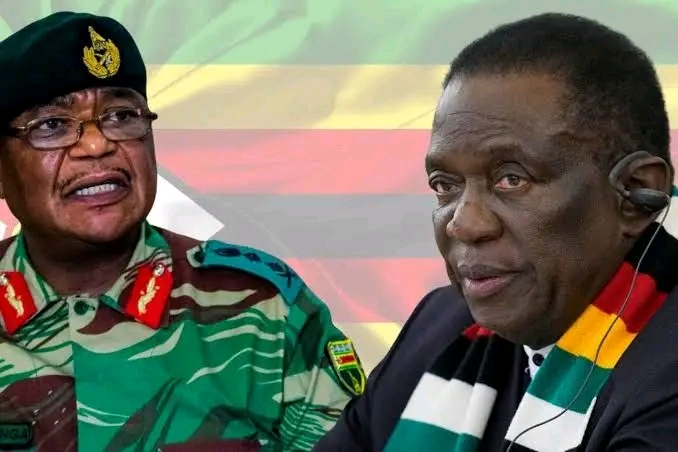

A QUESTION ZANU PF CANNOT ESCAPE: CHIWENGA BRINGS THE BATTLE TO CHINHOYI
By Gabriel Manyati
Vice President Constantino Chiwenga did not travel to Chinhoyi on 16 October 2026 to give the president’s ego a full body massage. He travelled there to plant a political landmine in the middle of the ZANU PF 23rd National People’s Conference and then smile while it ticked.
The most explosive line came in Shona, delivered with the calm of a man who knows exactly what he is doing:
“Chii chakaita kuti 2nd Republic ivepo? Kwaive kugadzirisa zvakaipa zvanga zvichiitika mumashure, hatisi kudzokorora here kuita zvakambotadzwa?” (“What made the Second Republic come into existence? It was to correct the bad things that were happening in the past. Are we not repeating the same mistakes?”)
That is not a rhetorical flourish. That is a former army commander looking the party he helped install in power in the eye and asking whether the patient has relapsed.
He did not stop there. He reminded the hall that “our party belongs to the people, never to individuals.” He insisted that “change must be driven by the people, not imposed from above.” He recited to Mnangagwa his own slogan just after he took power in 2017 that “the voice of the people is the voice of God.” Then he dismissed the current culture of personal empire-building with the devastatingly simple observation: “Mazvake mazvake haana kwaanotisvitsa.”
In a party currently busy elevating the likes of Kudakwashe Tagwirei, rewriting rules, and floating 2030 as if it were holy scripture, these words land like a slap. The elevation of business figures and the quiet rewriting of succession norms have created an atmosphere in which personal loyalty and proximity to power appear to matter more than collective decision-making or ideological consistency. Against that background, Chiwenga’s remarks read as a direct rebuke of the emerging order.
This was not an isolated outburst. It is the latest chapter in a carefully escalating public campaign.
In Mutare last year, Chiwenga stood on the wartime gateway to Mozambique and announced that Vision 2030 is “a party and national covenant, not a personal pursuit.” He told the delegates they are “not the alpha and the omega of Zimbabwe’s journey.” He invoked Tongogara, the commander who fought knowing he would never see independence, and then delivered the line that still stings: “The fallen are watching us. Their blood demands integrity. Their voices cry out against greed, corruption, laziness and moral decay.”
Mutare was the polite warning. Chinhoyi is the open challenge.
Yet for all the high-minded talk of principle, party ownership by the people, and the voice of God, Chiwenga’s Chinhoyi intervention is less a disinterested call for reform than a calculated move in the succession game. The former army commander who helped usher in the Second Republic is positioning himself as the guardian of its founding ideals precisely because those ideals are now the most potent weapon against the current trajectory of Mnangagwa’s power consolidation. By framing the debate around the original sins the 2017 transition was meant to correct, he forces the party to confront the possibility that the project has been hijacked – while quietly reminding everyone who still holds the military and liberation credentials to reclaim it.
This is succession politics dressed in the language of moral recovery. The careful choice of venue, the deliberate invocation of wartime sacrifice, and the refusal to name Mnangagwa directly all serve the same purpose: to elevate Chiwenga as the authentic custodian of the party’s soul without triggering an immediate and messy confrontation. In the internal logic of ZANU PF, such positioning is never neutral. It is the slow accumulation of moral capital that can later be converted into political leverage when the moment of succession finally arrives. Those who have watched ZANU PF succession contests over the decades will recognise the pattern: the careful public performance of principle that simultaneously advances a personal claim to legitimacy.
Between the two conferences came the April 2026 “Hezekiah” sermon in Murewa. There, in a Catholic church, Chiwenga retold the story of a king who decided he was too important to die. Hezekiah “banged himself against the walls of the palace and refused to die but asked for more time.” God, in His strange mercy, granted the extra 15 years. The result was disaster. Chiwenga’s verdict was ice-cold: “Extra years are not always a blessing.”

He never mentioned Mnangagwa by name. He did not have to. The timing, amid the noisy campaign for constitutional gymnastics and term extensions, did the work for him. The biblical reference was not accidental. It allowed Chiwenga to plant the idea that prolonged tenure, however justified by loyalty or continuity, can itself become a form of decay. In a party where personal loyalty is often treated as the highest virtue, this was a dangerous suggestion. It implied that the very act of clinging to power could be the problem rather than the solution.
Taken together, these three interventions form a coherent dossier. Mutare 2025 provided the moral framing. The Hezekiah sermon supplied the biblical parable. Chinhoyi 2026 asked the political question that cannot be unheard: if the Second Republic was created to correct the failures of the past, why does so much of the present feel so familiar? The consistency of the messaging across different platforms and different audiences suggests a deliberate strategy rather than spontaneous frustration. Chiwenga is constructing a public record that can later be cited as evidence of foresight and principle, regardless of how the succession contest ultimately unfolds.
The venues themselves are part of the message. Mutare was the crossing point into exile and war. Chinhoyi is where the first shots of the armed struggle were fired and where seven young fighters paid with their lives. Chiwenga is using the sacred geography of the liberation war to measure the conduct of those now living off its dividends. By speaking in these places, he forces the party’s current leadership to confront the gap between the idealism of the struggle and the realities of contemporary power. The contrast is deliberate and uncomfortable. It invites ordinary party cadres to ask themselves whether the sacrifices of the past are being honoured or simply harvested for private gain. In a movement that still draws much of its emotional authority from the liberation narrative, this is a powerful form of internal pressure.
He keeps returning to the same uncomfortable truths. Leaders are temporary custodians. The party is not private property. Service must come before personal ambition. The people are not “hewers of wood and drawers of water surviving from the benevolence of a privileged few.” And the young generation is watching “with sharp attention.” These lines are not abstract philosophy. They are direct challenges to the emerging culture of patronage, ostentatious wealth, and political gatekeeping that has become increasingly visible in recent years. When Chiwenga speaks of the young generation watching, he is also speaking to the party’s own future base, reminding them that legitimacy cannot be manufactured indefinitely through slogans and controlled narratives.
The real test is brutal and measurable. If the Second Republic was born to end the culture of entitlement, political class capture and disconnection from the grassroots, what exactly has changed in the lived experience of ordinary Zimbabweans? The speech itself supplies the standard. The silence that follows it will supply the answer. Economic hardship, persistent corruption scandals, and the sense that political proximity determines opportunity more than competence or effort remain the dominant realities for most citizens. Chiwenga’s question therefore lands with particular force because it is not only about internal party purity. It is about whether the entire project of the Second Republic has delivered on its original promise of correction and renewal. Ordinary citizens who still struggle with the same hardships that the Second Republic was supposed to address will recognise the force of the question even if the party’s internal machinery chooses to ignore it.
Chiwenga ended by invoking the Chinhoyi Seven and the unfinished business of economic empowerment, then politely invited the president to the podium. The invitation was ceremonial. Everything that came before it was not. The closing gesture of deference does not cancel the earlier challenge; it merely frames it as the contribution of a loyal but concerned senior figure. In the coded language of ZANU PF politics, such performances of loyalty often accompany the most serious internal critiques. They allow the speaker to claim both fidelity to the party and the right to question its direction.
When the man who commanded the operation that created the Second Republic stands on the soil of the liberation struggle and asks whether the party is repeating the same mistakes, only two responses are possible: honest self-appraisal, or more of the same. History suggests which one is more likely. The question, however, has already been asked. It will not be unasked. Once spoken in public, on sacred ground, and in the hearing of the party’s highest structures, it becomes part of the permanent political record. Future contenders, future crises, and future moments of reckoning will all have to contend with the fact that the question was posed, and that it came from one of the architects of the current order.