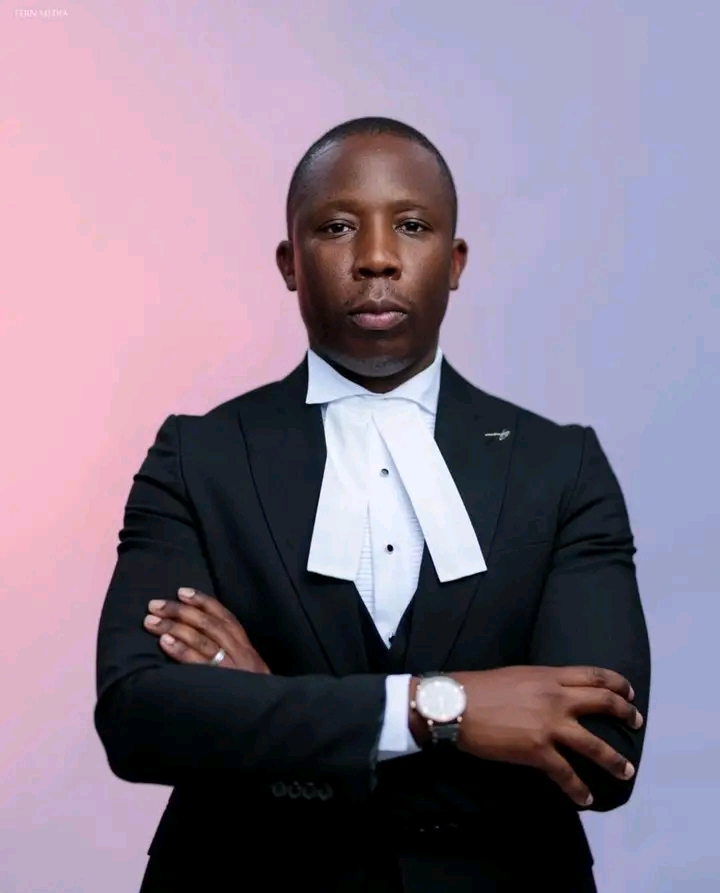

By George Nkhuwa
ABOUT TAINTED PROPERTY AND THE SEIZING OF DALITSO LUNGU’S ASSETS
Pardon Liuma, a police officer, received information that 15 Toyota Land Cruisers reasonably suspected to be proceeds of crime where parked at Star Shell Zambia Limited on Kafue Road in Lusaka. After conducting several searches, it was discovered that one of the Land Cruisers was registered under Saloid Traders Limited, a company owned by Dalitso Lungu and Matildah Likando Milinga, who was also an Assistant Accountant at ZESCO.
Liuma further found 16 additional vehicles at Star Shell Zambia Limited, which he seized after another search. Out of the 16 seized vehicles, five were registered under Saloid Traders.
Liuma later received further information that suspicious motor vehicles were parked at a warehouse yard belonging to Ndozo Lodge. A search was conducted at Ndozo, where four Shacman tipper trucks and trailers were found. These tipper trucks and trailers had been purchased by Dalitso at a total cost of USD 476,000, paid in cash, with a remaining balance of USD 40,000. These assets were also registered in the name of Saloid Traders.
In total, Saloid Traders owned 48 motor vehicles of various makes, all valued at K23,050,842.49, and 8 pieces of land, including a property in Jack Compound that was leased to Total Energies Limited for USD 8,000 per month.
In 2021, Saloid Traders declared a nil return to the Zambia Revenue Authority (ZRA), meaning the company reported having no taxable income or income below the taxable threshold.
Meanwhile, it was established that Dalitso personally owned 16 properties and 21 motor vehicles registered in his name. Investigations into his personal earnings revealed that in 2012, he worked for Varun Beverages Zambia and the Zambia Revenue Authority. While at Varun, he earned a total of K5,407.25. He later resigned and joined ZRA, where he worked for 34 months and earned a total of K132,396.

On this basis, Liuma seized the properties, alleging that they were reasonably suspected to be proceeds of crime. He stated that Dalitso had acquired unexplained wealth amounting to approximately K31,332,019—being the difference between the total value of properties and motor vehicles acquired during the period under review and his total legitimate earnings from Varun, ZRA, bank loans, and salaries allegedly earned from Saloid Traders.
Similarly, Liuma submitted that Saloid Traders earned K7,075,645.00 from Total Energies and K780,000.00 from BII Zambia, against unexplained wealth amounting to K35,067,662.56. He contended that the cited properties were tainted, as neither Dalitso nor Saloid Traders possessed the financial means or capacity to acquire and develop the said properties.
In response, Dalitso argued that the Land Cruiser and the five other vehicles registered under Saloid Traders were purchased by his father, Mr. Edgar Chagwa Lungu. He further claimed that the Jack Compound plot was gifted to him by his father, and that Saloid Traders was a family business whose purchases and operations were largely financed by his father.
The High Court held that it was satisfied that the cited properties were reasonably suspected to be proceeds of crime and were therefore liable to forfeiture to the State. The Court found that, based on investigations conducted at ZRA, neither Dalitso’s nor Saloid Traders’ income or business earnings demonstrated the capacity to purchase the properties. It further found that Dalitso failed to provide sufficient evidence, such as proof of bank transfers into any of his accounts, to support his claim that the properties were purchased by his father.
Additionally, the Court held that the lawfulness of the source of the property allegedly gifted to Dalitso, along with clear irregularities in the contract between Saloid Traders and Total Energies, rendered the subject premises tainted in accordance with the legal definition of tainted property.
The implication of this judgment is that when the State applies for properties to be declared tainted and subject to forfeiture, the initial burden of proof lies with the State, which must establish that the properties are likely to be proceeds of crime. Once this is established, the evidentiary burden shifts to the respondent, who must demonstrate and justify that the properties were legitimately acquired and not obtained through illicit means.
Case Citation: The Director of Public Prosecutions v Dalitso Lungu and Anor (HPEF /04/2022) [2026] ZMHC 15 (9 February 2026)
With these facts and evidence, and we saw some of the properties displayed on TV news, who can doubt the levels of plunder under PF?
All the more reason that this should be brought out in the appeal pleadings to quash what Sishuwa seems to be so “cork sure” will be the winning arguement Chisangano will use.
Scroll back to the same arguement that he cited in the Tasila Lungu matter. The other daughter who is a lawyer has not contested the forfieture and she is a lawyer. Makebi and Chisangano will use any line to get their clients to win the case.
One then asks where are Sishuwas morals? His hate for HH justifies the wrong that the Lungus have done? Wrong is wrong regardless of who has done it.
Slective procesution…the Livingstone case edifies the narrative and we call for the woman to be caged.
And given the facts of the two cases (albeit Lungus forfeiture and the Livingstone Mayor) the facts are the same. Both never actual committed the crime but were in reciept of is a crime in the corruption matter in case and what us suspected to be proceed of a crime in another.
At law, and am not a lawyer one would ask why in one case a custodial sentence is imposed and in another just forfieture is imposed?
Forget about Sishua, he is a psycho Historian and has never practised as a lawyer. About the law, in criminal law, the burden of proof is on the prosecution. So, there are two pieces of legislation here. In one, the prosecution has only to prove that your wealth is more than your legitimate income. In another case, the prosecution has to prove that you stole or received money from somebody they can call as a witness for the prosecution. It was easy for the prosecution to adduce evidence that Dalitso had wealth exceeding his legitimate income and discharged their burden of proof. It would have been impossible to prove where he got the wealth if the prosecution opted to use the other route. But the case of the Livingstone Mayor, definitely needed appealing.
And where did your father get K31 million to buy those things for you including the K65 million cash which he gave his girlfriend faith musonda to keep for him. The whole family is a bunch of thieves. They are just lucky because they are grieving and because their father was head of state the state has just decided to forfeit their properties and not send them to prison otherwise they belong inside.