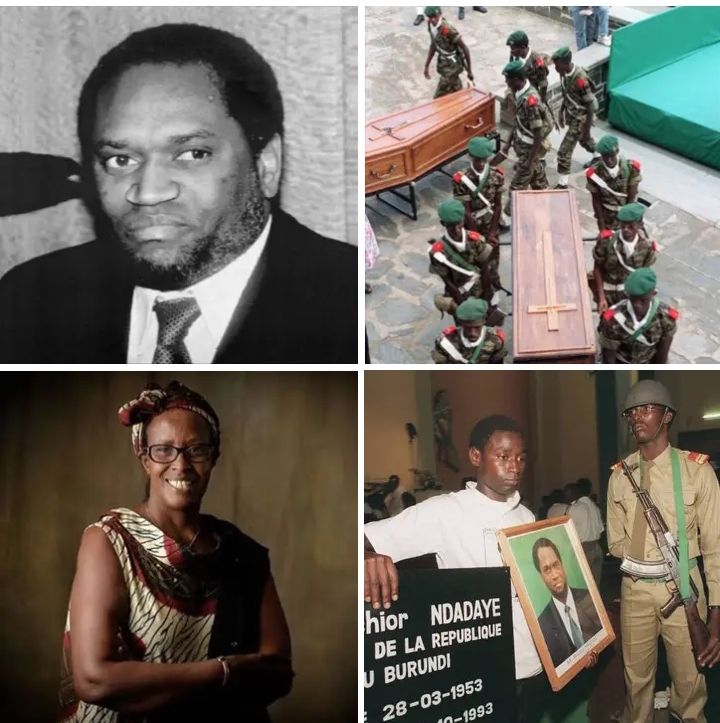

“African President Who Served For 103 Days Before He Was Assassinated In A Military Coup”
Melchior Ndadaye, Burundi’s first democratically elected president, served for only 103 days before he was assassinated during a military coup. He was also the first member of the Hutu ethnic majority to lead the country.
Born in 1953, Ndadaye grew up at a time when the Hutu majority faced political exclusion under a Tutsi-dominated military regime. In 1972, he fled to neighbouring Rwanda, where he continued his education. He later studied education at the National University of Rwanda and took a banking course through France’s Conservatoire National des Arts et Métiers.
In 1983, he returned to Burundi, where he became involved in politics. In 1986, he secretly co-founded the Front for Democracy in Burundi (FRODEBU), a political party that fought for human rights, democratic elections, and an end to ethnic discrimination.
Burundi had been ruled as a one-party state for years. By the early 1990s, domestic and international pressure pushed the military government led by Pierre Buyoya to introduce multiparty elections.
In June 1993, Ndadaye ran for president against Buyoya. In a historic victory, he won approximately 65% of the vote, defeating the incumbent president. On July 10, 1993, he officially took office as Burundi’s first democratically elected president.
Ndadaye appointed Sylvie Kinigi, a Tutsi woman, as prime minister, signalling his intention to promote national unity and ethnic reconciliation. He also sought to reform the military, expand democratic freedoms, and address the country’s long-standing political divisions.

However, his proposed reforms challenged the position of the traditionally Tutsi-dominated military leadership. On October 21, 1993, army officers staged a coup attempt. Soldiers seized the presidential palace, and Ndadaye was arrested and assassinated. Several other senior government officials were also killed.
His assassination triggered widespread ethnic violence between Hutu and Tutsi communities. The violence deepened the country’s political crisis and contributed to the civil war that followed, which lasted until 2005 and claimed hundreds of thousands of lives.- Victor Adundo