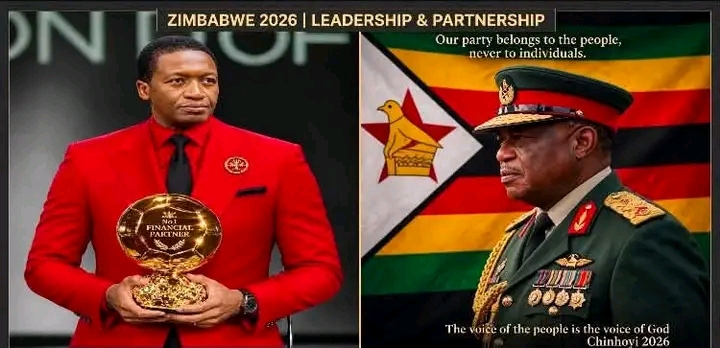

ANALYSIS: The Arrest of Uebert Angel and the Shifting Political Landscape in Zimbabwe
By Jefrey Mlauzi | 22 November 2026
On 22 November 2026, the Zimbabwe Republic Police (ZRP) announced the arrest of Prophet Uebert Angel.
According to the statement circulated on ZRP’s official X account, Angel was arrested on allegations of indecent assault and sodomy. The statement said more details would follow. As of the time of writing, no charge sheet or court date has been made public.
An arrest is not a conviction. The allegations remain allegations until tested in court. Angel, like any citizen, is entitled to the presumption of innocence.
What makes this arrest significant is not only the man involved, but the timing.
- A Case That Dates Back to March
The allegations are not new. In March, it was reported that a complaint had been filed at Borrowdale Police Station. The complainant alleged an incident occurred in Angel’s office at his Hippodrome church.
At the time, no charges were brought.
The question to ask now is: why was action taken in November, and not in March?
- A Prophet in a Political Storm
Angel is not only a church leader. Since 2021, he has served as Zimbabwe’s Ambassador-at-Large and Special Presidential Envoy to Europe and the Americas, appointed by President Emmerson Mnangagwa.
On 1 November, during a church service, Angel condemned what he described as vitriolic attacks on Vice-President Constantino Chiwenga. He said criticism was legitimate, but contempt disguised as criticism was wrong.
On 10 November, Angel publicly reaffirmed his loyalty to President Mnangagwa, stating that his support was deliberate and not dictated by political seasons.
Days later, former Norton MP Temba Mliswa publicly called for Angel’s arrest, referencing the Borrowdale complaint and criticising Angel’s political interventions.
- The Broader Context: A Party Divided
The arrest comes at a time of visible tension within the ruling party over leadership and tenure.
President Mnangagwa is constitutionally due to leave office in 2028. A faction within the party has pushed for an extension of his tenure to 2030. Vice-President Chiwenga has publicly opposed that extension.
At the Chinhoyi conference in October, Chiwenga stated: “Our party belongs to the people, never to individuals. The voice of the people is the voice of God.”
- Three Questions Zimbabwe Must Ask
This article does not conclude who ordered the arrest. That is a matter for investigation. But three questions are legitimate:
First, if a docket existed since March, what changed to allow an arrest in November?
Second, will this case be handled in the same way as other high-profile cases involving politically connected individuals?
Third, will the process be transparent — with a public charge sheet, a court appearance, and due process for both the complainant and the accused?

- Conclusion
The arrest of a Presidential Envoy is a rare event in Zimbabwe. It signals that the political landscape is shifting, and that no individual, however connected, is entirely beyond the reach of the law.
Whether this is a genuine step toward accountability, or a product of internal factional competition, will only become clear as the facts emerge.
For now, Zimbabweans should avoid speculation and insist on one thing: due process.
Let the police present their case. Let the courts decide. Let the people be informed with facts, not rumours.
The voice of the people remains the voice of God.