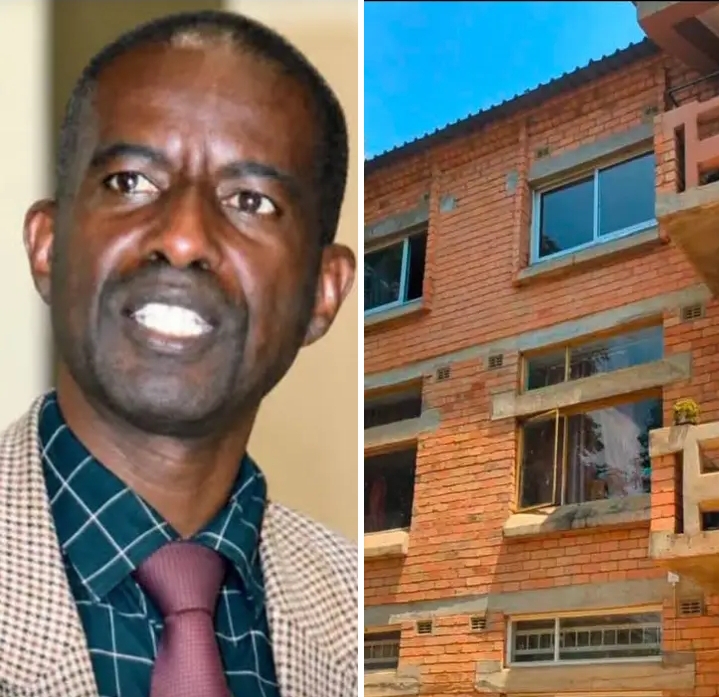

ANATOMY OF SELF-SILENT EXILE
….Borniface Chilangwa’s tragic death exposes hidden fractures, pride and unspoken toxicity that haunt modern Zambian families
By DAVID KANDUZA
HE spent years shaping minds in the lecture halls of South Africa, but when Boniface Chilangwa returned home to Zambia between 12 and 15 years ago, he walked into a profound, self-imposed exile.
The once-bubbly, charismatic academic slowly transformed into a ghost of his former self, retreating behind the closed doors of a flat in Lusaka’s Kabulonga area.
When he was recently found dead inside the apartment, it was not just a medical tragedy, but a searing indictment of the silent fractures tearing modern families apart.
Though police initial reports misspelled his name as Chilongo, relatives have clarified that the deceased was indeed Boniface Chilangwa.
He was a man surrounded by a large family of nine adult siblings, yet he died entirely alone.
To the outside world, Mr Chilangwa’s withdrawal may have looked like academic eccentricity or aloofness.
A relative who did not want to be named, revealed that, Mr Chilangwa never drank alcohol or smoked, keeping a meticulous diary that the family was now left to piece together.
But behind his silence lay a desperate, quiet struggle.
The depth of his isolation was harrowing.
Family members who attempted to bridge the gap by bringing food to his flat discovered a devastating pattern: instead of consuming the provisions, Mr Chilangwa would hand the groceries over to the gated-flat’s security officers.
Depleted of resources, family members now suspect he may have tragically succumbed to starvation—a slow, invisible calamity occurring in one of the capital’s wealthiest neighbourhoods.
For those who knew him before his departure to South Africa, the transformation was baffling.
He had returned a completely altered man—quiet, withdrawn and carrying an unspoken trauma he never shared.

Yet, flashes of his old warmth occasionally broke through the fog.
“He would still call and talk to me sometimes,” a grieving relative recalled, rewriting the memory of their last conversation in August, just before the general elections.
“He called joking that he was going into politics. I feel shattered because since August, I promised to call but never did. Sadly, that was our last conversation.”
Mr Chilangwa’s tragic passing has forced his family into an agonising period of introspection, prompting them to publicly call out the toxic dynamics that plague many Zambian households.
His death highlights a cultural paradox: a society that prides itself on extended family values, yet increasingly allows resentment, score-keeping and pride to build insurmountable walls of silence.
“This is very painful. When we read stories of family neglect, it seems easy, but we ignore our own skeletons,” the relative shared in a raw appeal meant to spark reflection across social media.
“We must learn to forgive, reconcile and be present for one another despite misunderstandings.
“Sometimes, we claim to be busy keeping score of who wronged whom that we forget to check whether the person we are angry with is still standing.”
Medical professionals frequently warn that depression and mental health struggles often manifest as social withdrawal.
Too often, families misinterpret this distance as a rejection of love or an act of pride, rather than what it truly is—a muffled cry for help.
As the Chilangwa family prepares for a funeral that came far too soon, they are urging the public not to wait for a tragedy to mend broken bonds.
Mr Chilangwa’s death serves as a stark reminder that sharing a surname or showing up for burials is not enough.
“Let us not wait for funerals to begin asking what went wrong or wishing we had done more,” the family pleaded.
“Where possible, let us keep reaching out, while respecting boundaries and encouraging one another to seek help. May we learn to heal our families before we lose one another,” the relative lamented.
For Mr Chilangwa, the academic who mapped out complex theories for thousands of students, the final equation of his life went unresolved.
He died without anyone knowing the heavy burden he carried, leaving behind a grieving family, an empty flat and a vital lesson on the urgency of love, presence and forgiveness.- alendo