BAROTSELAND EXISTS: IT IS CALLED KWA BULOZI
By Peter Sinkamba
When a child gets inherited by foster parents, that does not imply the biological parents cease to exist. That is the key issue that confronts the Barotseland question. Zambia is a foster parent of Barotseland. The fact that Barotseland was inherited by Zambia through the Barotseland Agreement 1964. The foster parenthood of Barotseland in that manner explained above does not imply Barotseland a.k.a Bulozi ceased to exist.
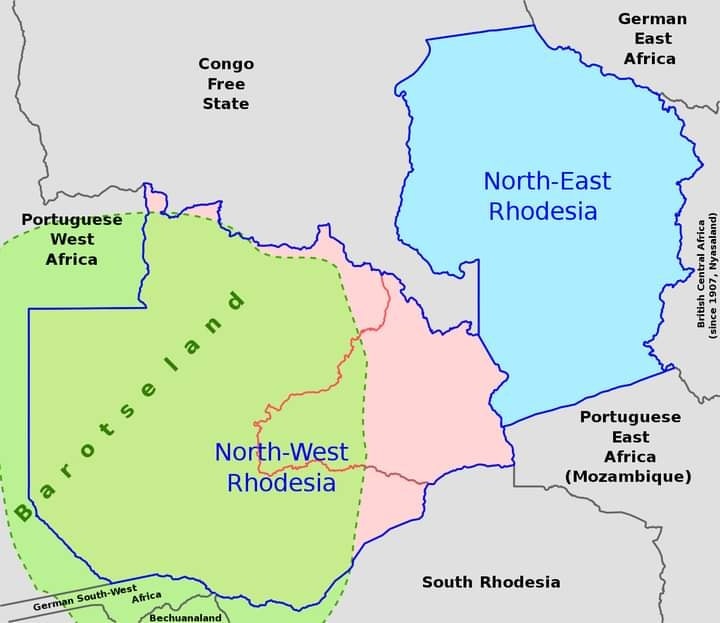
The country we all cherish and call Zambia is a product of three distinct territories. The constituent territories are: North Western Rhodesia, Barotseland, and North Eastern Rhodesia.
North-Western Rhodesia was a territory administered from 1891 until 1899 under charter by the British South Africa Company (BSAC). In 1890 the BSAC signed a treaty with King Lewanika of the Barotse, one of the most powerful traditional rulers in the territory at the time. The treaty did not confer protectorate status on the territory, as only the British government could confer that status. Nonetheless, the charter gave the territory protection.
The territory consisted of the western half of present-day Zambia up to the Kafue River, its border with North-Eastern Rhodesia. Later the border between the two chartered territories was moved east, but the distinction did not have any great implications.
In 1899 North-Western Rhodesia was amalgamated with Barotseland to form Barotzeland-North-Western Rhodesia, and at that point became the official British protectorate.
North-Eastern Rhodesia was a British protectorate in south central Africa formed in 1900. The protectorate was administered under charter by the BSAC. It was one of what were colloquially referred to as the three Rhodesian protectorates, the other two being Southern Rhodesia and Barotseland-North-Western Rhodesia.
In 1911 Barotziland-North-Western Rhodesia was amalgamated with North-Eastern Rhodesia to form Northern Rhodesia. Today this is the Republic of Zambia.
If you take a look at the map presented here, the pink area represents North-Western Rhodesia and the blue area North-Eastern Rhodesia from 1905 until 1911, when they were unified. The red line denotes the border between them from 1899 to 1905. The green area is Barotseland.
I was commissioner on the Mwanakatwe Consultation Review Commission constituted in 1993. The issue of Barotseland Agreement came out prominently. I understand fully the concerns of Batu Babulozi on the Barotseland Agreement. They hold two key positions: either the Barotseland Agreement is implemented or Barotseland separates from the amalgamation of Barotzeland-North-Western Rhodesia with North-Eastern Rhodesia.
I think that these political demands are legitimate. We need to sit down in an honest manner and settle the issues.
Fortunately, we have presidents of political parties from the three regions. I am from North-Eastern Rhodesia. And I am ready to meet presidents from the other territories. Hopefully others are ready to meet for the settlement of the issues.
After the political settlement, we can meet other key stakeholders to resolve social and economic issues arising from the dispute.
I submit.