
🇿🇲 WEEKEND DIGEST | Chawama After the Ballot: Grief, Green Waves, and a Rattled Ruling Party
Chawama has spoken, and the aftershocks are still rippling through Zambia’s political landscape.
On Friday morning, Hakainde Hichilema broke his public silence with a brief but statesmanlike Facebook post, accepting defeat and congratulating the opposition. His message was measured, calm, and deliberately institutional, praising the people of Chawama, the Electoral Commission of Zambia, and law enforcement for a peaceful poll. It was the language of a sitting president protecting the legitimacy of the system, even as the political meaning of the loss sank in.
UPND candidate Morgan Muunda followed suit. His concession was dignified and reflective, framed around unity, service, and respect for the will of the people. In tone, it contrasted sharply with what followed inside the ruling party. As votes were tallied and the final margin confirmed, sections of the UPND machinery turned inward. Quiet blame games began. Whispers about resources, organisation, and internal sabotage grew louder by the hour.
Across the aisle, the mood could not have been more different.
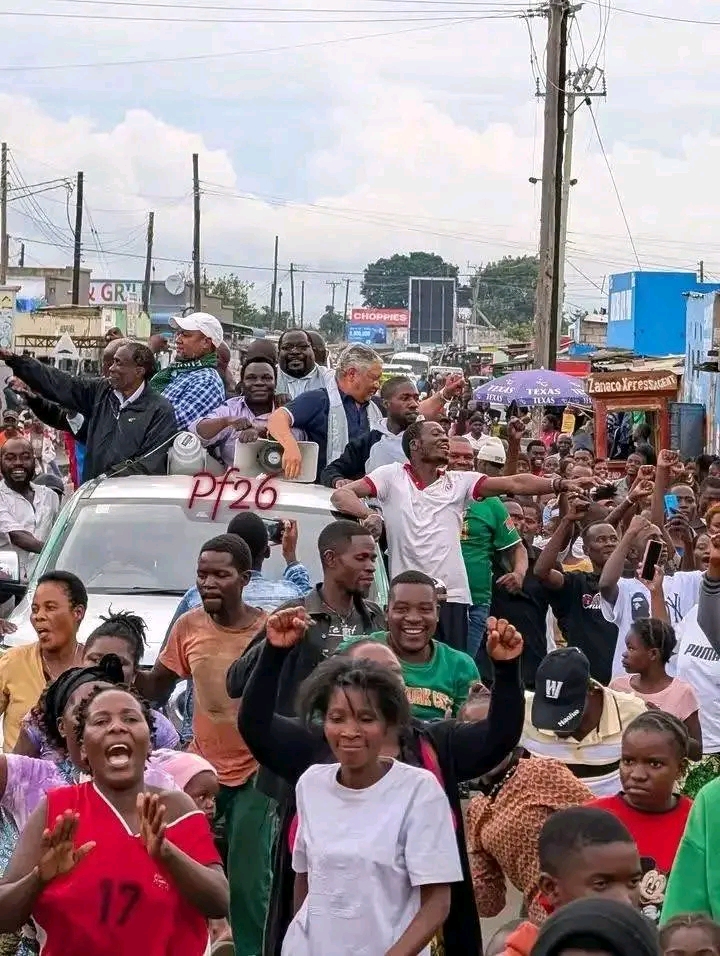
By Friday afternoon, Chawama had turned unmistakably green. Bright Nundwe, now duly elected Member of Parliament on the Forum for Democracy and Development ticket, drove through the constituency flanked by senior opposition figures. Among them were Given Lubinda and Miles Sampa, symbols of a Patriotic Front that, for the first time in months, looked animated, confident, and politically relevant again.
Celebrations spilled into the streets. Mockery followed. In one image that went viral, PF cadres wrapped a dog in UPND campaign regalia, a crude but telling sign of how emotionally charged the victory felt to opposition supporters.
This was not just a by-election win. It was psychological.
For the opposition, Chawama became proof of concept. A fragmented but coordinated opposition can still beat the ruling party in urban terrain, especially where history, identity, and emotion weigh heavily. The seat was triggered by the prolonged absence of Tasila Lungu, herself absent while mourning her father, Edgar Lungu.
This unresolved mourning has become political currency. In Chawama, grief was not background noise. It was the message.
Opposition actors leaned into it deliberately. The narrative was less about ideology and more about dignity, respect, and unfinished business. Voters were asked, implicitly and sometimes explicitly, to vote not just for a candidate, but for a memory. That strategy worked.

Inside UPND, the defeat has exposed uncomfortable truths. Public comments attributed to senior party officials about campaign funds not materialising have fuelled a growing perception that the ruling party’s grassroots structures remain underfunded and taken for granted. For a party now in government, this is a dangerous weakness. Chawama did not just test popularity. It tested internal discipline and trust.
Opposition voices have wasted no time sharpening their knives. Ackim Antony Njobvu went furthest, declaring the Chawama loss “the beginning of UPND’s end” and warning the ruling party to prepare for defeat in August.
The language was dramatic, perhaps overstated, but politically useful. It reinforced a growing opposition narrative that UPND’s biggest challenger is not another party, but voter fatigue, perceived economic pressure, and alleged arrogance of power.
But perspective matters.
UPND still pulled 6,542 votes in a constituency long regarded as a PF fortress. This is not collapse. It is penetration. The ruling party is clearly closing in on urban opposition bases, even if it has not yet broken through. Chawama shows a narrowing gap, not an unbridgeable one.
For the opposition, the lesson cuts both ways. Unity works. Fragmentation nearly diluted a stronger victory. Remove Citizens First and smaller party votes from the equation, and the margin tightens dangerously. Chawama was won because opposition votes converged around one credible vehicle. Replicating this nationally will require discipline that the opposition has historically struggled to maintain
Still, this weekend belongs to the opposition.
Chawama re-energised PF-aligned politics, revived the Tonse Alliance narrative, and injected belief into parties that had begun to doubt their own relevance. It also reminded the ruling party that incumbency does not cancel emotion, and development statistics do not automatically override memory.
As Zambia heads deeper into the 2026 election year, Chawama will be cited again and again. Not because it changes the national arithmetic on its own, but because it exposed something more subtle.
Grief can still mobilise. Unity can still win.
And even a confident ruling party can bleed in familiar territory.
This is the real takeaway of the Chawama weekend.
© The People’s Brief | Francine Lilu
Well written article. Chawama is one of the biggest stronghold of PF and if 2000 votes margin is what you reap for victory then HH must be smiling at this outcome. As the writer put it: this is penetration