
🇿🇲 EDITORIAL | Zambia’s Catholic Voice Must Not Be a Partisan Echo
State House has invited the organisers of the mass protest for dialogue. Pressure is rising on all sides. The Oasis Forum backed by parts of the Catholic clergy is mobilising for a November 28 demonstration against the constitutional amendment process and what they are calling the return of cadre violence.
This afternoon the Evangelicals pushed back and defended the reforms, only to be attacked by opposition voices. The question now is simple. Are Catholics the only group allowed to appear politically correct in Zambia?
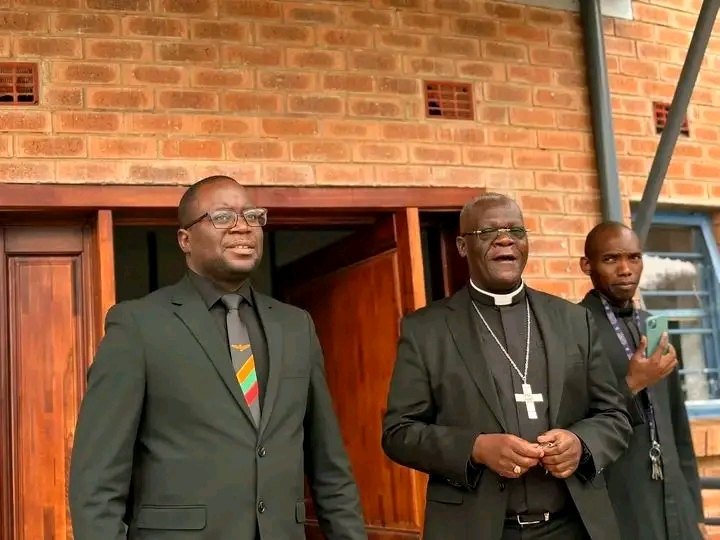
First things first. The two bishops shaping this national conversation stand on very different ground. Bishop Paul Mususu speaks from the Evangelical Church in Zambia, a constituency oriented institution that has historically urged development, delimitation and community welfare. Archbishop Alick Banda speaks from the Catholic Church, a powerful institution with a long history of political intervention from pastoral letters that rattled UNIP to public warnings that undercut the legitimacy of past governments.
Their pulpits are not equal. Their political magnitude is not equal. Their reputational burdens are not equal either.
When Alick Banda preached that Zambia risks “strife, blood bath, and destruction of both innocent lives and property” if current trends continue, the message landed with force but also with deep division. Unlike Mususu, who focused on development and governance, Banda reached for apocalyptic moral judgement.
Today, Banda does not carry the neutrality required to deliver such warnings. His political associations and partisanship are well known. His alliances are widely discussed within the PF and beyond. His presence at the Lungu family funeral in South Africa, at a moment when the State and the family were locked in legal combat, cemented a public perception that he has shifted from pastor to partisan actor.
This is why his warnings, however sincerely intended, now trigger suspicion rather than reflection. When a bishop who has hosted errying opposition figures in private meetings and presided over politically symbolic funerals speaks about national collapse, many sane citizens hear not prophecy but politics.
It is impossible to ignore that Banda has become, fairly or unfairly, a partisan spiritual reference point for the PF base. Online he has acquired a new label, “the Archbishop of Lusaka PF,” a mocking but telling measure of how far trust has eroded.
The Catholic Church must confront this reality. It is not just another denomination. It has been treated for decades as a kingmaker. Many Zambians believe that Catholic pronouncements contributed to the fall of UNIP and the weakening of MMD.
This belief has made the Church a political force whose words can tilt public mood. But that moral power depends on neutrality. When its most visible Archbishop is viewed as partisan, the institution risks losing its moral leverage and turning the sanctuary into a political stage.
Banda’s tone invites scrutiny because he speaks from an institution that has often demanded that sitting presidents answer to its moral expectations. However, Zambia is not a Catholic republic. Catholics are many and influential, but they are not the only faith community. Methodists, Adventists, Pentecostals, Evangelicals and independent churches carry equal stake in the nation’s democratic conversation.
When Banda speaks as if the Catholic interpretation of Zambia’s crisis is the national interpretation, he feeds the perception that the Church wants to remain the loudest voice even when others are present and concerned.
Bishop Mususu, by contrast, spoke about concrete reform, delimitation, CDF access and the need to avoid another cycle of administrative stagnation. He said that “the amendment process contains progressive provisions” and warned that delaying reform would disadvantage rural communities. He condemned the stoning of the President and called for peace.
His message centred on governance, not political warfare.
This contrast matters. Zambia needs moral clarity. It needs courage from the pulpit. But it also needs voices that remain above political suspicion. If the Catholic Church wishes to reclaim that authority, it may need other bishops, not those entangled in partisan perception, to lead this moment.
The message of justice and peace must come from shepherds who speak to all Zambians, not from figures who are already treated as political symbols.
For now, the two bishops are addressing the same crisis, but their credibility, their tone and their constituencies are worlds apart. One appeals to reform. The other fuels a political storm.
Zambia must reject the dangerous belief that one church or one bishop holds the keys to national destiny. That belief divides the country and amplifies fear over fact.
We deserve faith leaders who speak to the entire nation, not to a single political wing.
For publishable reaction opinions, write to editor.peoplesbrief@gmail.com.
© The People’s Brief | Editor-in-Chief
These individual clergy men speak for themselves and not for the church.They are actually politically inclined to PF.They are hiding in church garments symbolizing the purpose for their work yet they are an extension of the PF.They play a role in the simingly tension existing in the political sphere by taking sides in supporting the sentiments or political position of the PF stance.We could be wrong to talk about Catholic position when it is just a few countable individuals politically charged to fight government efforts to appease their sponsors.That can be seen in a way where this individual was in a scandal of having been in possession of property capable of being stolen.The recovery of that property has even deepened the hate they have for authority.The opposition of the constitution making process is deliberate with intent to cause friction.These men must be exposed as individuals in church garments separate from the church itself.The moment we bring the church in the matter means we are even helping them to hide in the church yet their political activities are indeed personal.They don’t have national interest at heart.
Socially, culturally and intellectually I was processed by the Catholics. Make no mistake about it, If you are a good protege you come out well baked with enhanced social, developmental and people focussed skills. You become a tolerant person. What we are observing now among some Catholic Leaders is concerning and deserves introspection and comment. The bias and hate of the UPND government by some Catholic leaders is evident. They have not become a mouthpiece of divisiveness and discrimination. This leave to start assuming that the serious hate about this current administration is simple because it’s leader is both Tonga and SDA. In the past we have had rogue personalities for president but the Catholic church was quiet about their bad behaviour, why? Please practice what you preach and exercise forgiveness and tolerance. You are adults with influence and can quietly engage government. You have haboured opposition leaders to discuss whatever it is that is if interest to you. We can see through you. We were taught, we learnt and therefore we think. Don’t play God. You know better what that means.