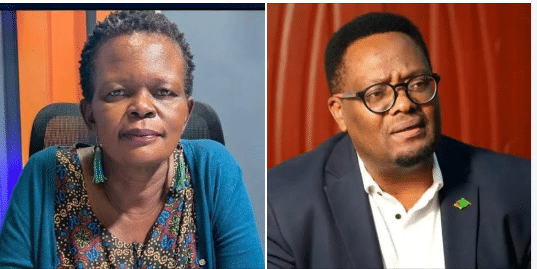

EXTRADITE EMMANUEL MWAMBA TO FACE THE LAW IN ZAMBIA
The Editor Zambia
Laura Miti’s call for Emmanuel Mwamba to be extradited to Zambia and face the law has reopened an important question about the responsibilities of political commentators who operate from outside the country while making sweeping claims about Zambia’s political and constitutional order.
Miti’s intervention on Burning Issue programme should not be dismissed simply as another political disagreement because at its heart is a legitimate question: if a Zambian citizen has outstanding legal obligations before the courts, should political prominence or residence abroad shield that person from answering those matters? The answer in any constitutional democracy should be no.
In Mwamba’s case, this is not merely theoretical. The National Prosecution Authority has stated that he was facing sedition-related proceedings, that he stopped attending court after four State witnesses had testified, and that a bench warrant was issued against him in September 2025.
The NPA further said the warrant remains active and that Mwamba is believed to have left the country.
That record provides a legitimate basis for demanding that the legal process be allowed to run its course.
The wider concern, however, is Mwamba’s increasingly dramatic portrayal of Zambia in some diaspora political commentary.
Mwamba’s EMV platform has repeatedly presented the country as being in the grip of an existential political crisis. Recent programmes and publications have described President Hakainde Hichilema’s inauguration as illegitimate, accused the government of using the courts to block an election petition, and repeatedly questioned the constitutional legitimacy of the post-election order.
Such claims are politically consequential because they reach audiences far beyond Zambia. A Zambian living abroad who repeatedly presents the country as having descended into dictatorship, constitutional collapse, or imminent political rupture can influence how fellow citizens, foreign governments, investors, and international organisations perceive the country.
Objective criticism should be anchored in verifiable evidence, particularly when the allegations concern institutions such as the judiciary, Parliament, the Electoral Commission of Zambia, the security services and the presidency.
Mwamba is not alone in using international platforms to advance a strongly critical narrative about Zambia. Augustine Mukoka, who operates from the United States, has also been a misguided prominent critic.
Their commentaries deserve scrutiny not because they are abroad or because they criticise the government, but because claims made to international audiences should be subjected to the same evidentiary standards expected of journalists and political actors everywhere.
Miti’s central intervention is, therefore, timely and must be acted on NOW to stop Mwamba from continuing to make more outrageous statements on his EMV platform.
The Zambian authorities has itself to blame by allowing this circus to continue considering that Zambia is a signatory to many treaties that allows the country to extradite dangerous alarmists like Emmanuel Mwamba, Augustin Mukoka, Sishuwa Sishuwa, Charles Kakula and many others.
That is the standard that should apply to everyone — whether speaking from Lusaka, London, Harare, Pretoria, or Washington.
As you read this write-up now, Mwamba and many perennial critics of President Hakainde Hichilema are posting lies and falsehoods on their platforms, painting Zambia black.
The solution: Extradite them to answer charges of treason back home.