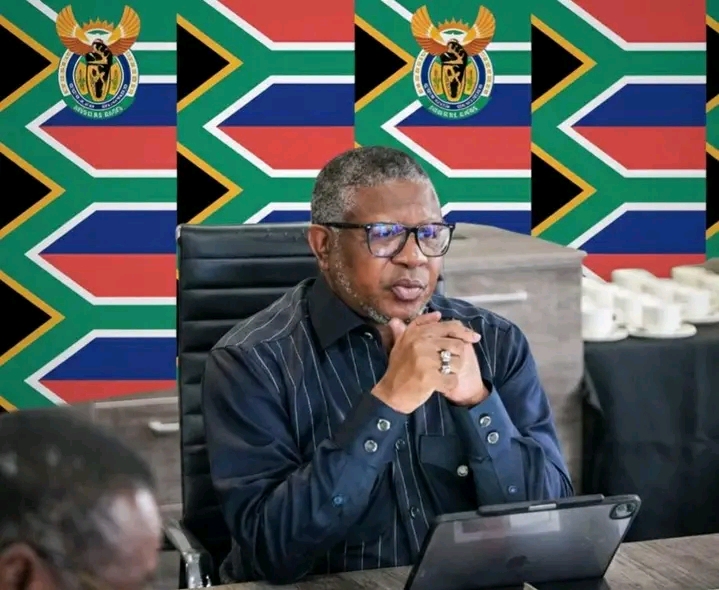

Fikile Mbalula Hails EU Decision to Remove South Africa From ‘High-Risk’ List as Major Economic Victory and Global Confidence Boost
The African National Congress (ANC) has welcomed the European Union’s decision to remove South Africa from its list of high-risk third-country jurisdictions, describing it as a powerful vote of confidence in the country’s financial system and a major step toward economic recovery.
ANC Secretary-General Fikile Mbalula said the decision marks a turning point for South Africa’s international standing, showing that the world is beginning to trust the country’s institutions again after years of reputational damage caused by corruption, state capture, and weak financial controls.
“This is not just a technical decision. It is a political, economic and diplomatic victory for South Africa,” Mbalula said, adding that the move reflects the progress made in strengthening financial governance and protecting the integrity of the global financial system.
What did the “high-risk” status mean?
When a country is placed on the EU’s high-risk list, it is viewed as vulnerable to:
Money laundering
Terrorist financing
Illicit financial flows
Weak regulation and oversight of banks and financial institutions
As a result, all financial transactions between that country and Europe are subjected to extra scrutiny, strict compliance checks, and delays. This increases the cost of doing business, discourages investment, and damages the country’s reputation in global markets.
For South Africa, this meant:
Local banks faced tougher checks when dealing with European partners.
Businesses experienced delays in payments and higher compliance costs.
Some international investors avoided South Africa because it was seen as risky.
Why the ANC and Mbalula are celebrating
The ANC says the EU’s decision is recognition that South Africa has made serious reforms, including:
Strengthening anti-money laundering laws
Empowering the Financial Intelligence Centre
Improving oversight of banks and financial institutions
Cracking down on corruption and illicit financial flows
Aligning local regulations with global standards
Mbalula said this shows that South Africa is rebuilding the credibility of its institutions and restoring the rule of law.

What is good for the country?
The removal from the high-risk list is expected to bring several benefits:
1. Restored Investor Confidence
International investors are more likely to bring capital into South Africa, knowing the financial system is trusted and compliant with global standards.
2. Stronger Trade With the EU
The European Union is one of South Africa’s largest trading partners. Easier financial transactions mean smoother exports and imports, helping local businesses grow.
3. Economic Growth and Job Creation
Increased investment can stimulate key sectors such as manufacturing, mining, agriculture, tourism, and services, leading to more jobs.
4. Lower Costs for Banks and Businesses
Reduced compliance burdens mean faster transactions and lower operational costs, which can benefit consumers in the long run.
5. Improved Global Image
South Africa is no longer seen as a risky financial jurisdiction, strengthening its diplomatic and economic standing in the world and within groupings like BRICS and the G20.
A signal of rebuilding after state capture
The ANC says this development is also symbolic. It shows that the country is slowly recovering from the damage caused by years of corruption and weak governance, and that international partners are acknowledging the reform process.
Mbalula stressed that while much work still needs to be done, the EU’s decision proves that South Africa is on the right path.
“This is a clear message that our efforts to clean up the system, strengthen our institutions and restore trust are being recognised globally,” he said.
In summary, being removed from the EU’s high-risk list is not just about banking rules. It is about restoring confidence, attracting investment, protecting jobs, strengthening the economy, and rebuilding South Africa’s reputation as a credible and trustworthy member of the international community.