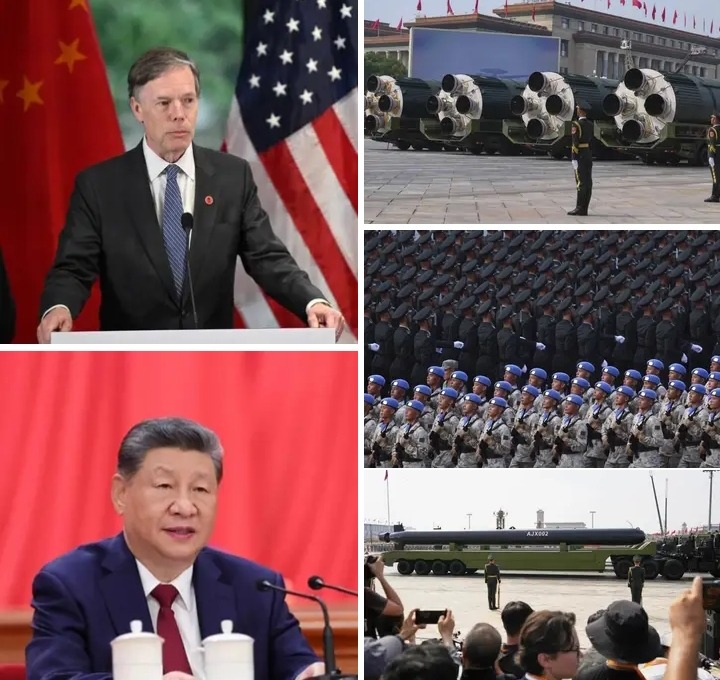

FORMER U.S. AMBASSADOR TO CHINA: “WE’VE UNDERESTIMATED CHINA”
Former U.S. Ambassador to China Nicholas Burns has warned that Washington may have underestimated Beijing’s growing strength across four major areas: infrastructure, science and technology, the economy, and military power.
Burns’ remarks highlight the scale of China’s transformation and raise questions about whether the United States has fully recognized the pace of Beijing’s rise as a global power.
🇨🇳 China’s Growing Technological Strength
Burns pointed to the large number of Chinese university students pursuing engineering. According to figures cited in his remarks, approximately 34% of first-year university students in China study engineering, compared with 5.6% in the United States.
The figures underscore the differences in how the two countries are developing their future technical workforce.
China has also expanded its capabilities in advanced manufacturing, artificial intelligence, electric vehicles, batteries, robotics, and other strategic industries, challenging the perception that its technological progress depends primarily on copying Western innovations.
🪖 U.S. Concerns Over China’s Military Power
Burns also expressed concern about the growing capabilities of the People’s Liberation Army (PLA), China’s armed forces.
“I’ve seen the PLA. I think we’ve underestimated their military strength, their technology strength,” Burns said.
His comments reflect broader concerns in Washington about China’s military modernization and its expanding technological capabilities.
🌍 China’s Long-Term Strategy in Africa
Beyond its domestic development, Burns highlighted China’s sustained diplomatic engagement with Africa.
For decades, Beijing has maintained a tradition of sending its foreign minister to Africa for the first overseas visit of the new year. In January 2026, China marked 36 consecutive years of this diplomatic practice.
The consistency of these visits illustrates the importance Beijing places on maintaining political relationships and expanding its engagement with African countries.
Burns contrasted China’s long-term approach with what he described as a lack of comparable strategic consistency from Washington.
“They’re strategic and we’re not competing on that level,” he said.
💰 A Wider Contest for Africa’s Economic and Political Influence
China’s engagement with Africa extends beyond diplomacy to trade, infrastructure development, investment, and economic cooperation. Meanwhile, the United States, European countries, Russia, and Gulf states are also seeking to strengthen their relationships across the continent.
This competition has significant implications for Africa’s development, access to investment, infrastructure financing, industrialization, and international influence.
However, the debate also raises questions about how African governments can negotiate partnerships that deliver long-term benefits, strengthen local industries, and protect their economic interests.
🌐 Can Africa Develop Its Own Long-Term Strategy?
The central issue extends beyond whether China or the United States is gaining influence. It concerns whether African countries can develop coordinated strategies that allow them to shape the terms of international partnerships rather than simply respond to the priorities of external powers.
With growing global interest in Africa’s markets, natural resources, strategic location, and young population, the continent faces both opportunities and challenges.
The question is no longer simply how major powers plan to compete for influence in Africa, but how African governments can use that competition to advance their own development goals.
As global powers deepen their engagement with the continent, a fundamental question remains: Will Africa increasingly shape its own strategic future, or will its future continue to be influenced by the competing ambitions of others?