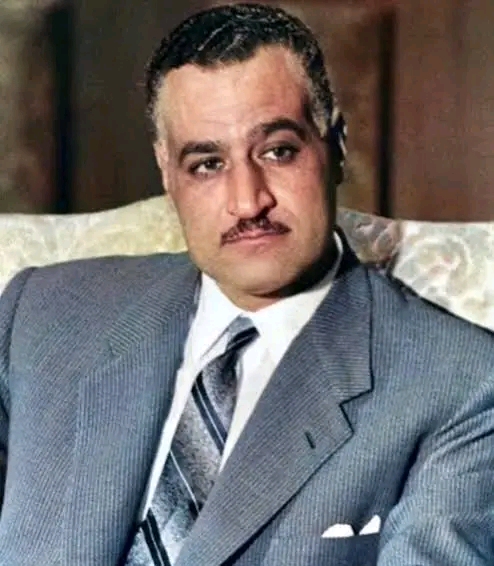

FROM NOVEMBER 13 TO NASSER’S PAN-AFRICAN VISION: THE STRUGGLE AGAINST IMPERIALISM CONTINUES
Today, November 13, marks a profound milestone in the history of African and anti-colonial resistance. As we commemorate this date, we must situate the revolutionary leadership of Gamal Abdel Nasser within the unbroken arc of Egypt’s anti-imperialist struggle, a struggle anchored in the sacrifices of ordinary people who refused to bow to foreign domination.
On November 13, 1918, Saad Zaghloul and the Egyptian delegation (Wafd) confronted British colonial authorities to demand self-determination, igniting the 1919 Revolution. Seventeen years later, on November 13, 1935, Egyptian students and youth rose up in mass defiance against British imperial control and constitutional manipulation. Those historic November uprisings proved a fundamental truth that remains relevant to us today: genuine sovereignty is never handed over by colonisers out of goodwill; it is seized by the organised masses.
Gamal Abdel Nasser inherited that revolutionary fire and elevated it from a national struggle into a continental and global anti-imperialist crusade. Through the 1952 Revolution and the bold nationalisation of the Suez Canal in 1956, Nasser demonstrated to the entire world that African and Global South nations could dismantle economic subjugation and reclaim their strategic resources from Western hegemony.
As a Pan-Africanist and a socialist, I have always maintained that colonialism never truly ended. It merely changed its form through neo-colonial economic structures, predatory debt, and foreign control over our land and minerals. Nasser understood this reality from the very beginning. He recognised that political independence without economic sovereignty is an illusion.
Nasser’s Pan-Africanism was never abstract rhetoric; it was demonstrated through concrete, courageous action in Africa’s darkest hours.
When the forces of imperialism conspired to overthrow and assassinate Congo’s first democratically elected Prime Minister, Patrice Lumumba, Nasser did not abandon his fallen comrade’s bloodline. Acting on Lumumba’s urgent plea, Nasser orchestrated a daring operation to rescue Lumumba’s children and later his widow, Pauline Opango, smuggling them out of danger and giving them sanctuary, education, and fatherly protection in Cairo
Closer to home, Zambia’s own road to freedom owes an immense debt to Nasser’s solidarity. Cairo became a vital diplomatic and strategic sanctuary for the United National Independence Party (UNIP) during our bitter struggle against British colonial rule. Nasser hosted Dr. Kenneth Kaunda, permitted UNIP to establish a formal representation office in Cairo, and extended material, moral, and diplomatic backing to our freedom fighters.
It was in Cairo that towering Zambian nationalists, such as UNIP’s first Deputy President and Zambia’s inaugural Vice-President, Reuben Chitandika Kamanga, alongside cadres like Wilted Phiri and others, found refuge, international platforms, and unwavering support to rally global pressure against colonialism. It is no accident that upon independence, Lusaka honoured this unbreakable bond by naming central arteries Cairo Road, Suez Road, and Nasser Road.

By providing sanctuary, training, and unwavering solidarity to African liberation movements, co-founding the Non-Aligned Movement, and standing shoulder-to-shoulder with giants like Kwame Nkrumah, Patrice Lumumba, and Kenneth Kaunda, Nasser proved that Egypt’s destiny is inseparable from the total liberation and unity of Africa.
On this November 13, honouring the memory of Egypt’s anti-colonial uprisings alongside Nasser’s legacy is not merely an exercise in nostalgia. It is a call to revolutionary action.
Today, as imperialism seeks new ways to plunder Africa’s wealth and divide our people, we must draw strength from the courage of 1918, 1935, and 1952. Our task remains clear: to unite the working masses, defend our sovereignty, and build a truly independent, socialist, and united Africa.
Fred M’membe
President of the Socialist Party [Zambia]