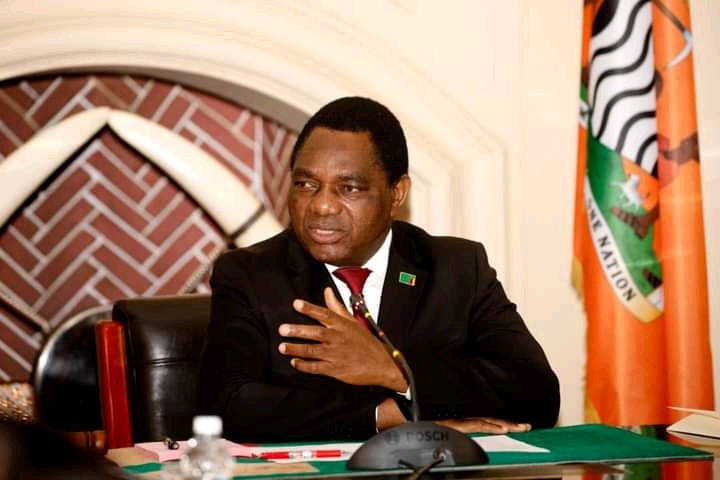

Hichilema’s Leadership is Under Attack by Stephen Lock’s Political Vendetta Masquerading as Facts
By Dr. Catherine Frazha Benkele Mulaisho
Stephen Lock’s article published in the International Policy Digest is nothing short of a disingenuous attempt to derail Zambia’s progress by fabricating half-truths, manipulating facts, and packaging them as insightful analysis. While it may be palatable to Western observers who are too far removed to discern the political realities on the ground, Zambians, who live and breathe these circumstances every day, see through such charades.
Lock’s portrayal of President Hakainde Hichilema, as a “favorite African leader coming unstuck” is not only misleading but appears to be driven by an ulterior motive aimed at undermining the credibility of a man whose leadership has been recognized globally for its strides in steering Zambia towards a path of economic recovery and democratic consolidation.
Lock conveniently glosses over the fact that Zambia’s current economic challenges are a direct consequence of years of reckless borrowing and corrupt financial management under the previous Patriotic Front government, led by former President Edgar Lungu. Zambia’s ballooning debt—over $18 billion, as Lock mentions—was not accrued by the Hichilema administration but was inherited.
What Hichilema inherited was a near-bankrupt country on the verge of economic collapse. This context is crucial, yet Lock paints it as if Zambia’s economic woes began in August 2021 when Hichilema took office.
In reality, Hichilema’s administration has worked tirelessly to renegotiate Zambia’s debt. The recent debt restructuring deal involving China—secured through diplomatic and strategic negotiations—was a significant breakthrough.
Lock downplays this achievement by highlighting Zambia’s debt situation without appreciating the complexity of untangling the mess left behind by the Lungu regime. The challenges Hichilema faces are not unique, and to ignore the global economic impact of the COVID-19 pandemic, inflationary pressures, and the war in Ukraine on Zambia’s economy is irresponsible.
Lock’s commentary on inflation and currency depreciation demonstrates either a lack of understanding of global economic trends or deliberate oversimplification. Zambia’s inflation, while higher than the central bank’s target, is reflective of broader international trends exacerbated by external shocks such as rising oil prices, disruptions in global supply chains, and climate-related disasters, including severe droughts that have affected agricultural output.
These are not issues unique to Zambia or indicative of governmental mismanagement but are part of a larger pattern affecting many African economies.
While Lock criticizes the sale of maize, he conveniently ignores the strategic importance of such decisions in managing foreign exchange reserves and maintaining diplomatic relations with neighboring countries that depend on Zambia’s agricultural exports. Zambia’s agricultural challenges, including food shortages, are largely a result of unpredictable weather patterns—a factor Lock fails to acknowledge with any seriousness.
It is disingenuous for Lock to allege that the Hichilema administration is “reverting to old habits” of corruption. Under Hichilema’s leadership, Zambia’s Anti-Corruption Commission (ACC) has gained significant momentum, pursuing cases with unprecedented vigor, even when high-ranking officials are implicated. The resignation of the ACC Director General, Thom Trevor Shamakamba, whom Lock mentions, is evidence of accountability—something that was notably absent under the previous PF regime, where corruption was endemic and unchecked.
The allegations against Solicitor General Marshal Muchende and other officials Lock references are either politically motivated or unsubstantiated, serving only to fuel the narrative of a government backsliding into corruption.
Unlike under the previous regime, where corruption was swept under the rug, the Hichilema administration is confronting these challenges head-on, demonstrating a clear commitment to transparency and justice.
Lock’s insinuation that President Hichilema is maneuvering to delay the 2026 elections by citing “constitutional lacunae” is nothing but baseless fear-mongering.
Hichilema has repeatedly expressed his commitment to strengthening Zambia’s democratic institutions and has no history of manipulating the constitution for political gain. The Zambian constitution, like any other, requires periodic amendments to address emerging challenges, and raising such issues early in the electoral cycle is a sign of responsibility, not a power grab.
Lock’s claim that the Hichilema government is using the judiciary to stifle opposition is laughable, especially coming from someone who has likely turned a blind eye to the rampant abuse of the legal system under Lungu’s administration.
The PF was notorious for arresting opposition members, silencing dissent, and using state machinery to intimidate political rivals.
Under Hichilema, Zambia has seen a significant reduction in politically motivated violence, and the judiciary has operated with far more independence than in previous years.
The case of MP Jay Jay Banda, as presented by Lock, is yet another example of cherry-picking incidents to fit a pre-determined narrative.
The claims regarding his abduction, while serious, are still under investigation, and until all facts are known, it is premature and irresponsible to level accusations against the government or police.
Lock’s inclusion of Mubita Nawa’s alleged involvement in a kidnapping scandal reeks of a smear campaign designed to discredit one of Zambia’s most prominent law enforcement figures.
Nawa’s bid for the Secretary General position of INTERPOL, backed by the African Union, has drawn the ire of those who fear an African at the helm of such a powerful institution.
The timing of these allegations, just as Nawa’s candidacy gained traction, is suspect, and the accusations are, at best, spurious and at worst, politically motivated.
Zambia’s police force has categorically denied the claims, and the suggestion that Nawa is involved in any wrongdoing is more a reflection of geopolitical maneuvering than a genuine concern for justice.
Stephen Lock’s article, while couched in the veneer of thoughtful analysis, is nothing more than a thinly veiled attack on Zambia’s leadership.
The Hichilema administration, though not without its challenges, has made significant strides in tackling the mess left behind by the previous government.
*Rather than undermining these efforts with baseless allegations and half-truths, international commentators like Lock would do well to appreciate the complexities of governance in a post-colonial, economically challenged African nation like Zambia.*
Hichilema’s leadership is far from “coming unstuck.” Rather, it is navigating treacherous waters with integrity, foresight, and a commitment to uplifting the Zambian people from years of economic mismanagement and political corruption.
Zambians understand this, and no amount of foreign misinformation will distort the reality on the ground.