
INSIGHT | Hichilema’s second term begins with a warning: Deliver, or leave
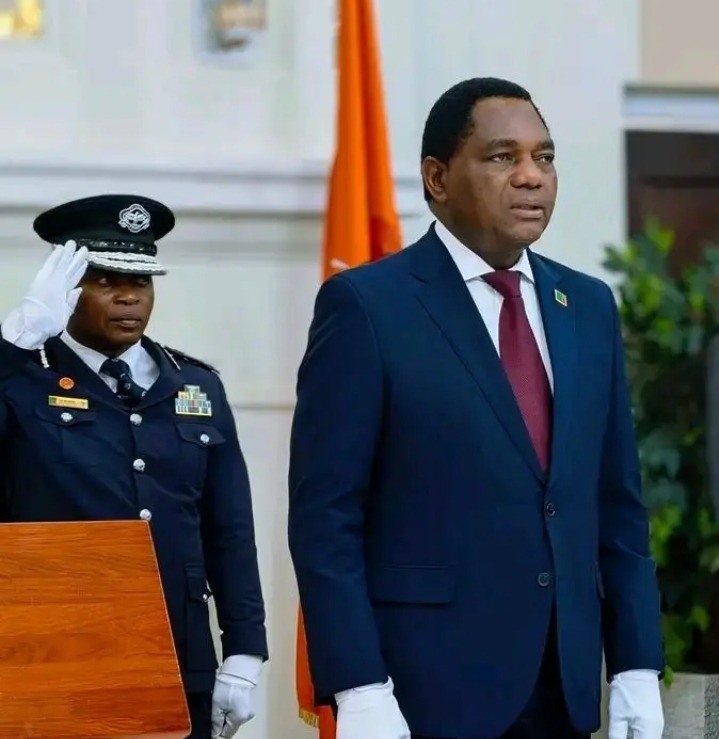
There was something noticeably different about President Hakainde Hichilema at State House on Monday. The dark navy suit was immaculate, the burgundy tie restrained and the white ceremonial gloves familiar. But the President wearing them appeared different. His face was stern. His instructions were unusually specific. His language carried little of the accommodation normally associated with the beginning of a government. .
Four ministers were taking oath. Hichilema seemed to be putting the entire State on notice.
Situmbeko Musokotwane returned to Finance and National Planning, Mulambo Haimbe to Foreign Affairs and International Cooperation, while Professor Roma Chilengi took Health and Dr Gilbert Siame moved into Green Economy and Environment. The first appointments combine continuity with technical expertise. More revealing, however, was the presidential instruction accompanying them.
“I don’t want people who play in my Cabinet,” Hichilema said. On members of his previous administration who failed to meet his expectations, he was colder: “Some former ministers are gone forever.” Vice-President Mutale Nalumango reinforced the message, saying the second term would tolerate neither non-delivery nor public office treated as a place of personal comfort.
Hichilema has political room his predecessors often spent years trying to preserve. Under the present constitutional order, this is his final presidential term. There is no third campaign to prepare for. Even during his first term, however, he demonstrated a willingness to absorb political pain. His administration removed fuel subsidies and moved towards cost-reflective pricing despite fierce criticism over pump prices and the wider cost of living.
Government argued the subsidy was expensive, fiscally unsustainable and disproportionately benefited motorists, although the wider economic effects of higher fuel prices remained part of the national debate. Hichilema took the political hit. He did not retreat.
Now comes a different problem: the machinery under the President. A day before the first ministers were sworn in, Kafue West MP Obvious Mwaliteta made remarks which caused discomfort but raised a serious question. “We can’t have civil servants who are going to frustrate the efforts of government. Today I want to tell you, these five years will be difficult for you,” he said. He went further: “You can’t serve two masters, you can only serve one master at a go.” His language was political and his claim that names were being compiled requires caution. But the institutional question beneath it cannot simply be dismissed because the wording was uncomfortable.
A civil servant does not owe UPND political loyalty. Neither does a police officer owe Hichilema his or her vote. The secret ballot belongs to the citizen. But once behind a government desk, a public officer owes the State professional service and the elected administration lawful implementation of its programme. There is a difference between privately voting for Brian Mundubile and using privileged access, government information or administrative authority to frustrate the government elected to govern. If an officer reaches the point where political allegiance makes professional service impossible, resignation is the cleaner democratic choice. Leave the bureaucracy. Enter politics openly. Contest the government from outside the State.
This question became particularly important during Hichilema’s first term. We, at The People’s Brief has repeatedly read claims within opposition circles of access to information from inside government, sometimes presented as evidence that the regime was collapsing from within.
Emmanuel Mwamba and a wider opposition-aligned online ecosystem built a formidable stream of anti-government messaging, while the “one-term President” and “Ukuya kwena aleya” narrative became a central feature of opposition politics. During the 2026 campaign, confidence in imminent regime change at times rested on claims of intelligence and information supposedly coming from within State structures. Not every such claim was genuine, and information leakage alone cannot explain opposition propaganda. But a government which cannot protect legitimate official information eventually loses control of more than documents. It loses administrative coherence.

Zambia’s political history also shows why incoming presidents have worried about an inherited bureaucracy. Previous changes of government, including under Levy Mwanawasa and Michael Sata, were followed by significant changes across senior government and administrative structures as new administrations sought officials capable of implementing their programmes.
Hichilema was comparatively restrained after taking power in 2021, despite inheriting a State apparatus shaped by ten years of PF government. Tolerance can protect professionalism. It becomes counterproductive when officials mistake continuity of employment for permission to conduct partisan warfare from inside the system. The answer, however, is not a crude purge. It is a professional audit: performance, conduct, confidentiality, competence and political neutrality.
This is where Hichilema’s harder second-term posture begins to make sense. His complaints on Monday were strikingly operational. He spoke about corruption. Medicine theft. Health workers spending time online while patients wait. Ministers issuing verbal instructions to controlling officers. These are failures occurring inside institutions, not on campaign platforms.
Musokotwane can stabilise macroeconomic policy. Chilengi can design health reform. Siame can develop environmental policy. But ministers cannot deliver when the bureaucracy beneath them is corrupt, lethargic, politically compromised or simply unwilling to execute. Government is ultimately experienced at the counter, the clinic, the police station and the district office.
The stakes are now measurable. Grow Zambia promises 10 million tonnes of maize, 10,000 megawatts of electricity, three million tonnes of copper and five million international tourists annually by 2031, alongside other production targets. Copper is already trading above $14,000 per tonne. Inflation has eased from its earlier highs. Much of the debt restructuring work which consumed the first term has been completed. Hichilema therefore enters the second term with a different burden of proof.
Macroeconomic stabilisation must become household economics. Investment must become employment. Mining targets must become tonnes. Health budgets must become medicines on shelves. A President demanding performance should be judged by performance.
The same standard must govern his tougher language on social media and law enforcement. Zambia has endured extraordinary levels of misinformation, tribal rhetoric, threats and political propaganda online. The internet cannot become an alternative jurisdiction where conduct otherwise prohibited by law suddenly becomes lawful. But criticism is not sabotage, opposition is not sedition and insulting a government cannot by itself become proof of a security offence.
Hichilema will strengthen the State if his government draws those boundaries with evidence and law. He will weaken his argument if political disagreement becomes the test.
The white gloves were the same. The man wearing them looked less interested in persuasion. Hichilema has already spent five years learning where his government works, where it leaks, where it stalls and where appointments failed. He has another five under the present constitutional order, and no re-election campaign waiting at the end. Ministers have been warned to deliver. Civil servants should understand the other half of the equation: neutrality does not mean sabotaging an elected government while drawing a salary from it. Serve the State professionally, irrespective of who you voted for. If politics becomes more important than public duty, politics is where you belong.
Hichilema says the era of playing is over. Zambia should hold him to those words.
-The People’s Brief | Ollus R. Ndomu