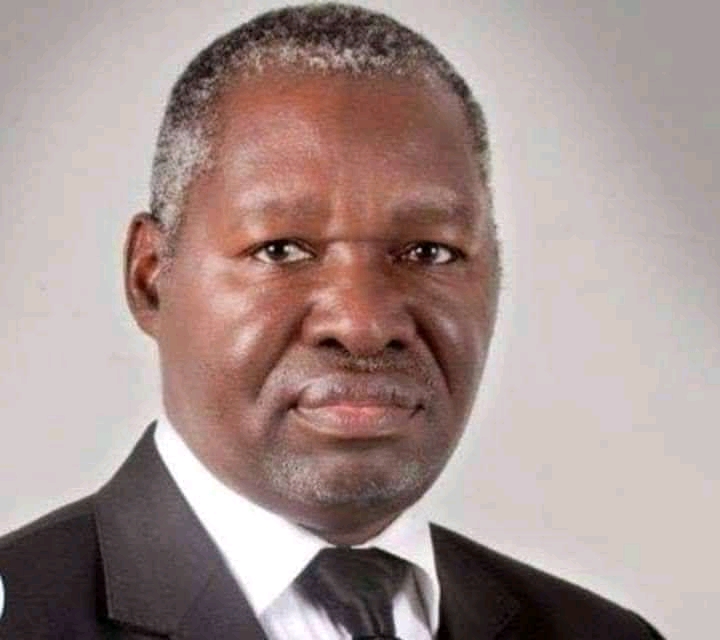

HON MUSOKOTWANE IS THE REAL ENEMY OF ZAMBIA
Dr. Mbita Chitala writes:
Hon Musokototwane’s first act against Zambia is when he betrayed President Mwanawasa’s economic program following Mwanawasa’s demise and his appointment as Minister of Finance by President Banda.
President Mwanawasa following the advice of experts from Norway and the IMF and other friends including Musokototwane as Economic Adviser to President Mwanawasa introduced a progressive taxation policy of the mines. President Mwanawasa in 2008 introduced changes to the fiscal and regulatory regime for the mining sector. The fiscal changes were intended to increase the effective tax from our God-Given minerals.
With Ngandu Peter Magande as Minister of Finance, the Mwanawasa MMD administration introduced windfall tax in the charge year 2008/2009 on base metals. Windfall tax was not paid when the monthly average did not exceed US$5,512. Even as it was known that the breakeven point of base metal production averaged about US$2,000, Mwanawasa provided more than double to reach the first trigger point for windfall taxation. Using special taxing formulae, Zambia was to benefit 25% at the 1st Trigger point, 50% at the 2nd Trigger point and 75% at the 3rd Trigger point.
The MMD further introduced variable tax where assessable income from mining activities exceeded 8%of the total sales. The variable tax however did not apply to mining income that had been subjected to windfall tax.
The MMD government of President Mwanawasa also increased mineral royalty tax to 3 percent from 0.6 per cent.
These tax measures were supported by the IMF, IMF and all cooperating partners and were meant to enable Zambia benefit fairly from its base metals. Sadly, this was not to be.
In 2009 as new minister of Finance Hon Musokotwane in clear betrayal of Mwanawasa with whom he had worked as Economic Adviser, immediately introduced a most reactionary macro-economic policy regime. He abolished the windfall tax regime that surprised all cooperating partners including the IMF and the World Bank who had been at the fore of advising Zambia to adopt the policy. Furthermore, Musokotwane reduced mineral royalties from the 3 percent to 0.6 which was short of abolishing it. He also zero-rated the variable tax that had been imposed on the minerals by Mwanawasa. In other words, he simply introduced a tax regime that allowed the multi-nationals to continue plundering Zambia without Zambia benefiting anything.
Hon Musokotwane went further. The US$485 million in windfall tax that was collected in the financial year 2008 and deposited in a special account at the Bank of Zambia was closed and most of the money returned to the mine companies. The mine companies must have given a golden handshake to Banda and Musokotwane for this clearly unpatriotic conduct.
MUSOKOTOTWANE STARTS RECKLESS BORROWING
The IMF Staff Report for the year 2012 for Article IV Consultation on Debt Sustainability Analysis, revealed that external public and publicly guarantee debt by MMD under the leadership of Hon Musokotwane as minister of finance $2.1billion, about 11.6 percent of GDP in 2011. Most of his borrowings were for consumption. This was the beginning of the debt overhang which grew in later years and which Zambia is currently facing.
As at September 2021, Zambia’s external debt was reported to be US $12.99 billion while guaranteed and non-guaranteed external debt for State Owned Enterprises was US $1.56 billion and US $164.52 million, respectively.
SITUMBEKO MUSOKOTWANE RETURNS AND WORSENS ECONOMIC SITUATION
On 29 October 2021, Musokotwane presented his 2022 Budget to the National Assembly. He not only reduced the mineral royalty tax from 10% to 3.1% but also announced that mineral royalty will be deductible for corporate income tax purposes. In other words, it would be considered as a cost in the accounts of mining companies. This of course was a departure from best practice as a royalty is simply a right to use land and should never be part of costs. This measure effectively reduced royalty payments on base metals in Zambia as the mining companies were able to report reduced sales particularly as they also enjoyed rights to carry on losses according to their development agreements. Many people criticized this move with the Governor of the Bank of Zambia Dr. Denny Kalyalya commenting that “our economy has shrunk and stagnated.” The Zambia Revenue Authority also continued to fail to reach the 22% of GDP collection demanded of them by the Minister and in fact regressed to 17% of GDP. This made its Chairman Dr. Caleb Fundanga who is a close friend of mine very concerned as he is not used to failing.
Musokototwane further continued on the borrowing path as he did earlier under President Banda to the extent that Zambia’s external debt in 2022 was reported to stand at $18.6 billion. This external debt included debt-service arrears of which the Eurobond arrears were reported to be $821million as at December 2020. The Total Local debt also rose from K198 billion as at December 2021 to K236 billion as at September 2023 with the adverse effect of the government borrowing overcrowding private sector borrowing.
Musokotwane also entered into another strange deal. He announced that ZCCM-IH, that held 20% shareholding in Kansanshi Copper and Gold Mine had agreed to convert its dividend rights in Kansanshi Mine into a life of mineral royalty payment. He announced that the first payment that FQM would pay ZCCM-IH would be sourced from the outstanding Value-Added Tax refunds from Zambia Revenue Authority due as at 30 June 20222. The aggregated amount of the VAT refund was US$ 442 million and ZMW 433 million. This measure would not only adversely affect the rights and power of ZCCM-IH as shareholders and its Directors would be removed from Kansahshi Board of Directors. It would also adversely affect the country’s right to use its forex income to support the Kwacha.
Further, in some very surprising move, Government directed that the Director of Public Prosecutions (DPP) drop criminal charges against Kansanshi Copper Mine Directors, as part of the conditions precedent for FQM to declare a dividend in the sum of the amount that the government had been claiming from the mining giant majority-owned by First Quantum Minerals (FQM) – to a 3.1% revenue royalty. In this case an audit had revealed that FQM Directors had illegally repatriated $2.5billion from Kansasnhi Copper Mines to develop Cobre Panamá Mine, a new and large-scale open-pit copper mine in Panama without ZCCM-IH consent. This was simply theft. No details was disclosed how the Zambian Government would recover these colossal sums. In fact, ZCCM-IH had in fact won the case in the London Court and awarded US$1.4 billion in damages. However, Musokotwane and his new dawn government let go this money following their so called methodical approach to governance.
Pleas read the full article in the earlier post I made .
You now know as evidenced from the article that I debate from Facts not hear says…