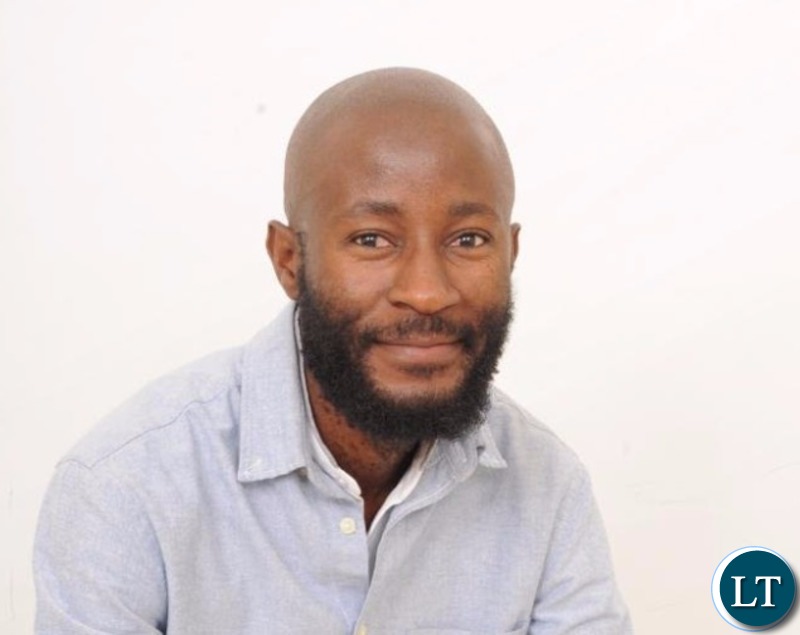

Dr Sishuwa Sishuwa writes..
If this president left office, today, I won’t miss him
I know that the title of this article alone may easily trigger some people, who, without reading further or beyond it, may either jump to premature conclusions which they will deploy in the service of the expression of uninformed opinions or rush to accusing me of harboring hatred.
Such is the age in which we live that many people find no shame in confidently commenting on what they have neither read nor understood and in proudly showcasing their inability to read long posts by demanding that the writer must learn to summarise their output, as if the article comes with the legal requirement that everyone who comes across it must read it.
People who are busy, surface readers, or those with limited attention span are free and most welcome to scroll past my writings in search of shorter posts. There is a reason why I am not on TikTok. I write. I write for those who read. I write long reads and that is part of my identity. I write to express myself on matters of public interest.
I know that I do sometimes express opinions that make some people feel uncomfortable. In my view, what the uncomfortables should deal with is the source of their discomfort, not my drawing attention to the need to discuss even uncomfortable truths or subjects. I speak to express my opinions, not to nurse anyone’s emotions, to make them comfortable, or to secure anyone’s validation, respect, support, or favour. I insist that I have the right to think and express my opinions.
My pen, as does my voice, runs on with my truth. I must either say what is in me or remain silent. In the service of impartial but certainly not neutral political commentary, I test the limits of freedom of expression and have a particularly proven knack of irritating supporters of successive ruling parties, especially those whose support for presidents has anointed itself with the sanctity of a religious faith.
I do not simply express myself. I also let others express themselves freely including on my only social media account. I actively listen to what other people say and pay greater attention to content-based criticism.
All this is to say that I believe in freedom of expression. I live or practice this belief. I believe that free speech is not just for the people or thoughts we like or agree with; it is also for people we despise and opinions that we do not support. This explains why I do not easily take offence when those who comment on what I have shared, even when they have evidently not read the content of the post to which they are responding, resort to abuse, insults, and whatever else in response to what I have put out. I consider even insults a form of democratic expression.
I believe that free speech is intended to protect the expression of ideas in public, to enable us to communicate with each other about what we understand to be true, and to share opinions, debate differing viewpoints, and challenge the status quo. I believe that every person has the right to express themselves in any way, to share opinions that diverge from my own or the prevailing narrative, and to say whatever they want or think including when responding to what I share. In turn, I can choose to respond or ignore, although I welcome and make every effort to read and understand the reactions, rebuttals, or concerns that other people express in response to what I have said.
Having claimed and exercised my freedom of expression, I am only all too aware of the right of others to exercise the same right on any matter, including when commenting on my public commentaries. Being human, it is natural that we will have varying lines of thought on any given topic. Flexibility in slant of views is in keeping up with our humanness. I believe that it is only through many conversations that we can reconsider our positions, challenge our assumptions, question our convictions, and come to appreciate our own ignorance.
One thing I will never do in response to any criticism of my opinions or of me as a person is to block any person, to mute them on social media and consequently shut myself from the knowledge of their views, however warped those views might be, or to interfere in any way with their right to express themselves fully, even in instances where the person is saying nothing substantive or rational. The right to free speech would be meaningless if it was accompanied by a requirement to only give expression to reasonable or sensible thoughts.
To illustrate my commitment to free speech: I receive a lot of flak, nasty responses, insults or ad hominem attacks over the opinions or ideas I express. As is true of my rather indifferent attitude towards praise, these things do not get to me. They do not bother me at all. If they did, I would have long ago stopped expressing myself on public issues. What easily gets to me is reason, logic, or a good argument, displayed by an ability to show weakness in my stated point of view, not to tell me that there exists a particular view on it that is supported by the majority, against which dissent is prohibited.
I believe that we must never knowingly make anyone feel less for not having attained our level – be it of awareness, understanding, education, status, or any other arbitrary considerations. I am an advocate for the free sharing of views and ideas, without any inhibitions or hierarchies. If the only thing that the other person can say in response to what we have said is to call us names, we should understand that outcome as a true reflection of their state and quality of mind. We should not get easily offended. I personally bear sympathies and special understanding for those among us whose only capacity to reason is never beyond an ad hominem attack. I suppose they cannot help it, even if they tried. Let us be charitable. The world can do with a little bit of more tolerance, more understanding.
Now to the content or substance of the title. I do not hate the President. I hate his bad leadership. I will explain what bad leadership in this context means to me.
Bad leadership means representing nearly everything he spent 15 years in opposition fighting against. I hate this.
Bad leadership means his tribalism, regionalism, and sectarian tendencies that have found expression through skewed distribution of appointments to public office and the regular issuance of divisive speech by him. I hate this.
Bad leadership means his tolerance for corruption including the kind that has facilitated the ongoing plunder in the mining, health, agricultural, and energy sectors, and one that explains why he has to date refused to publish his asset declarations. I hate this.
Bad leadership means his compulsive lying that erodes public trust in elected public officials and gives politics a bad name. I hate this.
Bad leadership means his vindictiveness and restraint-lacking character that has found expression in ways that I do not need to explain to any sane Zambian with an open mind. I hate this.
Bad leadership means his unbridled faith in the IMF and outsiders as the panacea to our foremost economic challenges. I hate this.
Bad leadership means his anti-democratic behavior, his failure to enact constitutional and legal reforms that would have prevented his incremental destruction of the guardrails and norms that have long kept executive power in check or within its constitutional constraints. I hate this.
Bad leadership means wasting money on useless ventures while failing to adequately fund higher education so that the University of Zambia and other public universities can manage to pay gratuities and pensions owed to long-suffering workers dating to as far back as 2011. I hate this.
Bad leadership means his decision to pack institutions that are vital to democratic consolidation – such as the judiciary, the electoral commission, the police, and security services – with loyalists who primarily see themselves as existing to serve his partisan agenda, not the interests of the Republic. I hate this.
Bad leadership means the consequences of his Uncle Tom syndrome on public policy, his clear contempt for black ordinary Zambians whom he regularly presents as poor because they are lazy and not smart (with himself as the model for hard work and ingenuity, my foot!), and his apparent lack of consequential exposure, which might help explain his limited worldview and why he gets excited whenever he meets people of a different colour. I hate this.
Bad leadership means his poor record on governance including the continued violations of human rights and the systematic destruction of institutions that are essential to the promotion of vertical, horizontal, and social accountability. I hate this.
Bad leadership means his loyalty to self-gain and private business interests, his deliberate failure to put together a team of independent minded and competent men and women who are patriots, can help him generate a feasible national plan, and are committed to restoring the nation’s dignity, where they come from notwithstanding. I hate this.
Bad leadership means his deeply embarrassing, misguided, anti-human rights, anti-peace, pro-colonialism, and pro-war foreign policy that represents a clear departure from Zambia’s traditional and forward-looking foreign policy whose foundations were laid by Kenneth Kaunda and whose consistent implementation by successive presidents before this one earned the country the respect of much of southern Africa, the continent, and the Global South. I hate this.
Bad leadership means the constant reference to the PF as the standard against which he measures his leadership ignoring the fact that we voted them out because they were bad leaders. I hate this.
Bad leadership means constantly congratulating oneself for the isolated, few, perfectly normal government deeds that should never be a source of pride for a more sane president. I hate this.
Bad leadership means… I hate that too.
Argh, I weep for Zambia. The light is dimming. Darkness is slowly engulfing the flicker of light that has remained. The weather and the speed of the wind is almost extinguishing this light that explains why we have avoided an epic calamity.
I miss the opposition leader I voted for on 12 August 2021: the one who could actively listen and learn, who identified with the people and their needs, who appeared as a decent political leader outraged by anti-democratic or repressive legislation, abuse, injustice, lies, corruption, and ethnic-regional divisions, and presented himself as a steady pair of hands who could help restore Zambia’s democratic tradition and resuscitate the faltering economy – not through graphs or meaningless macro indicators that have no meaning to the lives of ordinary people.
The person ruling today is completely different and one I no longer recognise. This is because this president has gone against his word on the many promises he made and so easily found comfort in the company of nearly all the vices he denounced in opposition that one may think his conscience has been stolen. I sometimes ask myself: What would his former self think of him now? Whatever happened to the one we had in opposition, may we never again be subjected to a similar scam.
In a sense, the blame is on me. Whatever has come out is on me, not him. I did not fully interrogate his character, so I take responsibility for helping to put him in power in the last election. I should have listened to President Levy Mwanawasa who once said this about this same person: “His understanding of politics is that it doesn’t matter; you can cheat, provided you get your goals. The problem [with] Mr Hichilema is…that he wants to cheat, to mislead, to show that he is what he is not”.
I owe Levy an apology. I did not conduct due diligence on this man. He has not changed at all. In 2021, he remained what he had been all along, since 2006 when Levy made that prescient observation: a fraud who fooled many into believing that he was a bankable candidate only to show his true colours after assuming State power; an ethnic-regional, inept political leader with limited depth whose many weaknesses we overlooked in our quest to get rid of his predecessor, and a compulsive liar who made various promises which he had no intention of implementing and, in many cases, had the definite intention of doing exactly the opposite. His strategy was simple: to propose popular policies in order to get elected, and then to drop them after his election.
If this president left office or died today, I will not miss him. I won’t miss him because of all the illustrated bad leadership traits he is displaying. If he left office today, I would rejoice with relief, for Zambia. If he died today, I will be sad, at a personal level, that a fellow human being has died and even extend my condolences to his grieving family, relatives, and friends – including the many currently in government. However, unless he abandons his bad leadership and changes for the better, I will not miss him as president. And I do not think I am the only one who feels that way.
I am convinced that there are many who are quietly appalled by his divisive and dreadful leadership to the point of silently wishing this president dead, not because they hate him as a person but because they, as I do, love Zambia more; people who will be happy to see this president live up to 110 years old if they were not subjected to a subhuman existence emanating from his unpatriotic policies in the mining industry, the institutionalisation of his mediocre leadership, and the strain that can result from the frightening possibility that his poor presidency may continue beyond 13 August, if he is not stopped from stealing the election.
I have tried – really tried – to give this president the benefit of the doubt. I have hoped, like many Zambians, that somewhere in there was a shred of concern for the country. But he keeps stifling my optimism. Time and again, his leadership actions make it clear there is never any real concern for the country – only ego, recklessness, self-interest, and partisan, ethnic, regional, and business, mainly foreign, considerations. The repercussions are stacking up and their combined weight, I fear, may pull down the Republic.
If I was ignorant and of limited world view like many of his supporters, I would shut up and understand. If I was a tribalist, who sees this president as one who comes from our region and therefore choose to shut my eyes to all his pitfalls or transgressions out of herd mentality and the fear that the Bembas and Easterners might come back to power, I would shut up and understand.
If I did not vote for this president and could therefore comfort myself with the consideration that I am not among those who helped put him in power, I would shut up and understand. If I did not come from the country of James Skinner, Akashambatwa Lewanika, Edith Nawakwi and Mbita Chitala (all preceding three as MMD founders), Fred M’membe (the journalist), Alfred Chanda, Justice Clever Musumali, Lucy Sichone, Senior Chief Bright Nalubamba, Brebner Changala, Telesphore Mpundu, Godfrey Miyanda (the opposition leader), Muna Ndulo, Laura Miti (the pre-2021 version), Linda Kasonde, Musa Mwenye, John Sangwa, Chama Fumba (the artist), Sitali Alibuzwi, Cephas Lumina, Beauty Katebe, and many other outstanding patriots of our country who have, at one time or another, illuminated light, spoken truth to power, or demonstrated an inspiring commitment to principle that serves as the heritage for present and later generations, I would shut up and understand.
I can’t wait for the day when Zambians would learn to support their elected public leaders by holding them to account with the same zeal that supporters of successive presidents, including this president’s, show when holding me to account for daring to criticise the leaders they support. Although they probably deserve empathy and understanding, it saddens me greatly that many of those who support this president to a point of fanatism are the very people whose subhuman existence stand to benefit greatly from increased public accountability.
We must attack the chronic syndrome of low expectations, which has become our lot. Our crises are a testimony to how little we Zambians expect and demand from our public leaders, from life, for ourselves. I know from personal experience the cost of speaking out can be high, but we will not see a better Zambia in our lifetime if we let our elected public leaders get away with it or if we leave the task of holding our leaders to account to only a few people.
In addition to conquering fear, all that any citizen with an active conscience needs to speak out is a voice, a pen, a mind, and a platform. For instance, while I have the academic tools, I do not speak out because I am an academic. I speak out because it is my responsibility as a citizen – my primary identity – to hold the government to account, to promote the ideals and objectives of Zambia’s constitution. I insist that every citizen needs to take these duties, imposed on all citizens regardless of their location, seriously. To be silent in the face of democracy erosion, human rights violations, the expression of sectarian tendencies, abuse, injustice, inequality, and corruption is to actively participate in sustaining the status quo.
We all do not have to be in government to participate in the affairs of, or to make a meaningful contribution to, our country. In fact, I sometimes sit quietly, alone, and wonder what would have become of me had I ended up in government under the current or any of the past two administrations. Yes, President Michael Sata, as did President Edgar Lungu, once offered me a government job and there are several people who are still alive today who can testify to this truth. Even under the current government, I have twice been offered but respectfully declined presidential appointments, with the last offer coming on 4 April 2022. I mention this record not to betray confidentiality – I have minimum values and will not say more on this subject unless this president, who personally knows the truth, were to publicly repeat the nonsense that third parties spew out.
I mention the innocuous record to illustrate a wider point: when I criticise a president’s actions, I do so in the interest of the public good, the belief that a better Zambia is possible, and the pursuit of the ideal effective leadership, one that is highly competent, sufficiently educated and is in possession of ethical values – courage, compassion and love for fellow human beings, moral force of character, integrity, genuine humility, honesty, a predilection for consultation, consensus-building, communication, co-operation, active listening, and the selfless pursuit of the public good, and not the selfish striving for personal gain. It is hardly possible to look at, say, the current president’s leadership today without being struck by the calamity of the absence of these qualities.
We Zambians deserve and must demand better. We have a long way to go to get to a better future, but we must go there! In my view, the first step towards that desired future is to demand better from our elected public leaders. Unfortunately, many of us mistake criticism of the actions or policies of our elected public leaders for dislike, hate, support for the opposition, or some other adhominem attack. There must be many and complex and interrelated social, economic, political, cultural, religious, and spiritual forces combining with our entire history as a people that have moulded and continue to shape the current psychology and character structure of the ‘typical Zambian’, one who generally reveres authority, is unquestioning in attitude, and mistakes presidents in a democracy for traditional rulers who must be shown respect even when their conduct demands alternative treatment! Our challenge is to unravel these forces, understand them, and reshape them to build a different and genuinely alive Zambian. We must understand all this as they relate to our place in the whole world.
It is not, in a sense, a Hichilema, Lungu, Sata, Banda, Mwanawasa, Chiluba or Kaunda problem: these leaders have definitely played a part in generating the psychological and material conditions which have created us as a cowardly, zombie-like, easy to manipulate, naive, and quite superstitious people. None of these and more negative qualities are biological, however. They have their roots in our complex history with all the social forces that have shaped this history, including a dominant fawning, ingratiating, degraded Christian theology and practice (largely pacifist) to which we so often appeal to resolve our perfectly manmade problems. Our political and religious leaders simply feast on this historical banquet!
This social milieu or context explains why I often insist on structural change as the route to a truly radical transformation of Zambia, not merely replacing one set of individuals with another. We must desist from thinking that merely changing “presidents” and “parties” will lead to any meaningful changes in our cultures, lives, and country.
I am extremely optimistic, however, that there is potential for a new national consciousness to emerge in Zambia. In fact, our current deep seated systemic and structural social, economic, and cultural crises are a perfect foundation to begin to build a new consciousness, to begin to resurrect the human being in the Zambian. The first port of call is us, first as individual Zambians, I must maintain. As an individual, one must refuse to be reduced to the subhuman status our current situation confines all of us to. We must peacefully rebel against this status. Then, in our many millions of personal life activities, we must transmit this rebellion to others.
So far, the main platform for criticism of our lives is in the media, and largely confined to the deplorable social and economic conditions we now suffer. It need not be confined to this terrain. Ethically, morally, spiritually, intellectually, culturally, and yes, ultimately, philosophically, we must also wage a war against influences in these spheres which define and confine us to subhuman existence. To be who we are is a reflection of inferior qualities in us of all the human essences I have listed. We must question everything and everyone, fearlessly, especially if they are leading us or making claims to want to lead us.
We must stand up for other people who are facing injustice from the government and demand positive change, even if that positive change does not bring us direct personal benefits. Some among us, perhaps because they cannot imagine being motivated to do anything except for material gain, will always think that those who hold the government to account do so in anticipation of material gain, political or personal favours, now or when governments change. This is regrettable. It is my belief that we all must act out of conviction, based on understandable reasons and the intrinsic value of our actions.
Of course, many won’t understand this devotion to principle when we do so and will seek to judge us using their rotten standards. It is the only thing they know. We must retain comfort in the conviction that what is said about us is not as important as what we know about ourselves, how we respond to what has been said, and the weight that we attach to that sentiment.
This is the attitude that has helped me to survive or overcome torrential abuse from supporters of successive ruling parties. Under the MMD and the two PF administrations, supporters of the incumbent presidents called me bitter, tribalist, a hater of the leaders they supported, a job seeker, or someone sponsored by or supporting the opposition whenever I criticised the leadership. I see and hear praise singers repeating the same drivel today.
As I did previously, I simply ignore them because I know that I do not speak out because I seek a job from the government. With a University of Zambia degree, two Oxford postgraduate qualifications to my name and the honour of being a Rhodes Scholar, I consider myself sufficiently educated and marketable enough to easily secure a professional job in any part of the world. Even after Oxford and spurred by the belief that the acquisition of specialist knowledge should result in its application to causes and communities that need it most, I deliberately returned home to impart that which I had learnt. It was only after the situation or conditions made it difficult for me to continue that I left Zambia, which explains why I am where I am now. As I write this article, I am in my office at Harvard University not because of any government power but because of my formal education.
I am genuinely anguished as much by the deplorable state of our country and the conditions of life for most ordinary citizens as I am by the extent to which many have resigned and seemingly accepted the status quo as a given. Minor steps towards progress are cheered as if they are major. This poverty of ambition frightens me. I speak out on matters of governance out of love for Zambia, out of principle, out of the belief that we must dare to dream, to aspire for more than the little we celebrate as triumphs. I do not have to. I can stop writing public political commentaries today and will not lose a penny because there are no benefits attached to what I do.
Although I do not live in affluence and it will never be my aspiration to, I also do not feel poor. As the former president of Uruguay Jose Mujica once said, “poor people are those who only work to try to keep an expensive lifestyle and always want more and more.” I lead a simple life and my basic salary alone – which is higher than the gazetted salary of the president of Zambia – is enough to meet my basic needs. I do not need a government job from this president or the one who will come after him, just like I did not need one from those who came before.
The only thing I need is a functioning government that works for the many, not the few. I want to live and thrive in a Zambia with a president who CARES, one who will restore our cherished democracy, get the best out of Zambia’s mineral wealth (not merely celebrating increased mineral output when public revenue from the industry is insignificant), respect the constitution and the rule of law, fight corruption in real time beyond rhetoric, promote genuine national unity and equitable distribution of publics service positions, build a professional civil service including a diplomatic cadre of staff that will outlive changes in government, and address the cost of living crisis and the deplorable conditions of life for most ordinary Zambians. None of these needs has ME in it and if this president achieves these things, I will join the praise team.
One day, hopefully soon, and like those who came before him, this president will be gone. His party will be gone too. Even the praise singers who carry his banner will be gone and pretend they did not mean it, that they opposed his bad leadership. Sooner than later, they will all be gone. But the damage they are doing to this country will take decades to repair. I do not know if this president realises the danger he is creating. When people are unfairly targeted and pushed to the margins, it breeds anger and hardened positions. Power used vindictively today can create something far worse tomorrow. And if the cycle continues, those who eventually take over may govern with even less restraint than the current rulers. That is why leadership must be fair, consistent, and blind to partisanship or political convenience. Otherwise, we are simply laying the groundwork for a more toxic future. Unfortunately, like dominant cultures, those who benefit from it often fail to see the status quo as one that is open to challenge, analysis, or change
Most useless chap, writing of a hater, you will burst, none would remember you, many Zambians would remember hh for many things
You’re going too far and please have respect. Keep your opinions to yourself and you have completely no relevance at all with your utterances. A lot of people are supposed to look up to you but not with your conduct, look at yourself in the mirror and do some self introspection. HH is doing a lot of positives for this country and it’s only you and your PF who are full of detestation.
Before August of 2021, I really loved Hakainde. I had so much hope. I thought our country had finally cracked it. The man said all the right things. I was so so proud that we now had a man that could take us to the promised land. The fool that I was, I even ignored KK’s warnings and went and voted for the golden boy. By December 2021, I realised we had made a huge mistake. We had a psychopath at our hands. An incompetent and corrupt dodgy tribalist. It was then that I realised KK was right.
REJECT TRIBALISM, CORRUPTION AND OPPRESSION.
VOTE FOR CHANGE IN AUGUST.
By December? You judged him too early, so the difficult part now in your head is because you already convinced your brain in December that this man is bad so you can’t see anything now. Other PF people who didn’t judge him that early, are judging him now and started following and understanding him.
Kasai from Congo/Tanzania you have never supported HH STOP lying here.You have never liked him right from the time he was in opposition but we don’t care because you never share his vision, hence you never even voted for him despite he won with a wider margin which may even be doubled next year.Keep on dreaming and just know that people they will vote for him massively
KK never said anything about HH ,that nonsense is just in you empty head,A kasai from Congo /Tanzania without any shame
Dr. Sishuwa, if you stopped your lengthy, prejudiced articles, I won’t miss you either.
Mr. Hichilema will be around for another five years. So you have a long, long wait before your wish is granted.
This chap Sishuwa does not know that it is a sign of illiteracy to post such lengthy chaff without bookmarks or even sub titles
He could spare educated people time to gloss over most of his nonsense.How do you waste half your article squiling like a piglet about what people think about you
I would rather read my bible in my spare time than go through this trash. The hate for one HH has finally overwhelmed this imbecile.
This is foolishness: if your wife asked whether you will miss HH, just send her a love letter. We don’t need to know about your dry sentiments. You overestimate yourself and lack self-awareness.
Shishuwa is irrelevant, in many ways he craves attention for his dickless reports . To be honest no one will miss you if you joined Nawakwi or you father LUNGU
Being called Doctor when one is so downright stupid and petty is an insult to the title. PhD was crafted to show one could be looked up to like the Greek philosophers
Dr in History, at least if he was a Dr in Future , he thinking resemble his area of study
Sishua is a psychopath. He thinks that he is an important person to be listened to by the President and everyone.
Sishuwa, whether or not you will miss this president when he leaves office is purely your business and therefore does not concern us. Please keep such sentiments to yourself, we are not interested or bothered about your feelings.
SS, YOU ARE A DICKHEAD
You really like writing,fyonse ifi!Can’t waste time reading this.
To Mr Sishuwa,you just wasted your time writing this long trash which does not make sense.We told you before that we are not your history students.Stop smoking marijuana Sishuwa