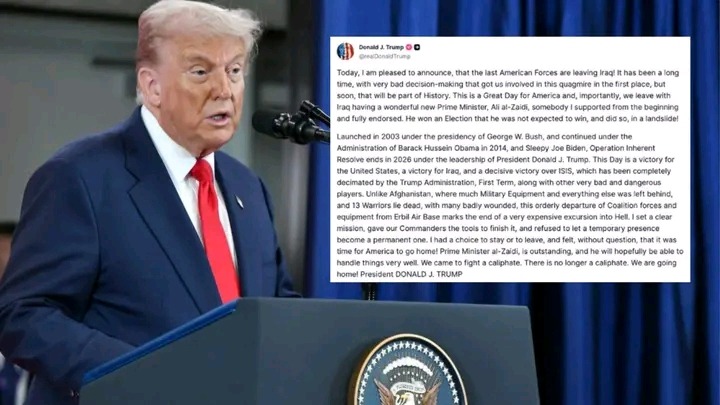

Iraq Enters a New Era After U.S. Withdrawal — Who Will Fill the Power Vacuum?
The withdrawal of the final U.S. forces from Iraq marks the beginning of a new and uncertain chapter for the country, with Baghdad facing the challenge of balancing competing regional powers without the direct American military presence that shaped Iraqi security for more than two decades.
Iran is likely to emerge as the strongest beneficiary in the security and political arena. Tehran already maintains deep relationships with powerful Iraqi Shiite armed groups and political networks, and the removal of U.S. forces eliminates a major counterweight to Iranian influence.
But Iran is not the only power seeking greater influence.
Turkey has built significant security, trade and economic ties with northern Iraq and maintains military positions linked to operations against the PKK. Ankara is also seeking greater leverage through trade, infrastructure and regional connectivity.
China represents a different type of influence. Beijing has expanded its economic presence in Iraq through energy, infrastructure and trade, allowing it to increase its strategic footprint without establishing the kind of military presence associated with Washington.
The United States is also not completely disappearing from Iraq. The withdrawal ends the coalition’s military mission, but Washington is expected to retain security cooperation, arms relationships, training and diplomatic influence through a bilateral partnership.
The biggest question is whether Baghdad can prevent Iraq from becoming a battleground between competing powers.
Prime Minister Ali al-Zaidi has pledged to strengthen state authority and bring weapons under government control, including efforts to disarm powerful Iran-linked militias.
Iraq is therefore entering a new balancing act: less dependent on American troops, but potentially facing greater competition between Iran, Turkey, China, the Gulf states and the United States for influence over its future.