
IS RUSSIA STILL A GLOBAL SUPERPOWER? FIVE KEY FACTORS THAT EXPLAIN MOSCOW’S GLOBAL INFLUENCE
Russia remains one of the world’s most powerful countries, despite the collapse of the Soviet Union in 1991 and the ongoing war in Ukraine.
A recent debate over whether Russia still qualifies as a superpower has reignited questions about military strength, nuclear capabilities, economic power and international influence. Some argue that only the United States and China meet the definition of superpowers today. However, Russia’s capabilities make that assessment far more complicated.
So, what makes a country a superpower, and does Russia still meet the criteria?
🇷🇺 1. MILITARY POWER
Russia possesses one of the world’s largest armed forces, extensive combat experience, advanced missile systems, military aircraft, submarines and other sophisticated weapons.
Although the war in Ukraine has exposed serious weaknesses in Russian military planning, logistics and equipment, Russia remains a formidable military power capable of conducting operations well beyond its borders.
Its conventional military performance has faced significant challenges, but those difficulties do not erase its broader military capabilities.
☢️ 2. NUCLEAR WEAPONS
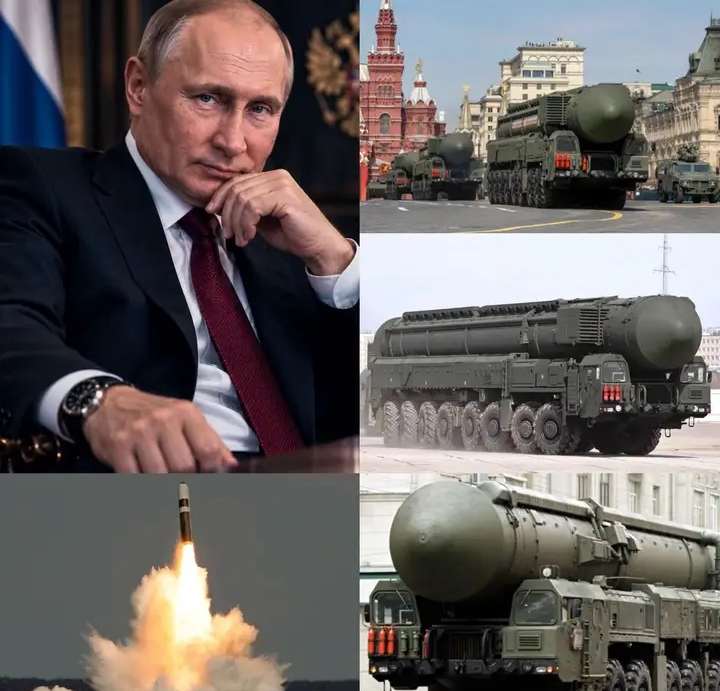
Russia possesses one of the world’s largest nuclear arsenals, with thousands of nuclear warheads and a strategic deterrent capable of threatening any major nuclear power.
Its nuclear forces include land-based intercontinental ballistic missiles, submarine-launched ballistic missiles and strategic bombers.
Russia’s nuclear capabilities are a major reason it remains central to global security calculations. Its arsenal is broadly comparable in strategic significance to that of the United States, although exact warhead totals vary depending on whether deployed, reserve and retired warheads are counted.
🛢️ 3. NATURAL RESOURCES AND ECONOMIC POWER
Russia is a major producer and exporter of oil, natural gas, coal, metals, fertilizers and other essential commodities.
Its energy resources give Moscow significant economic and geopolitical leverage, particularly in global commodity markets.
However, possessing abundant natural resources does not automatically make a country an economic superpower. Russia’s economy is considerably smaller than those of the United States and China, and Western sanctions, technological restrictions and the costs of the war in Ukraine have created additional pressures.
🇺🇳 4. POLITICAL AND DIPLOMATIC INFLUENCE
Russia is one of the five permanent members of the United Nations Security Council and holds veto power over substantive council resolutions.
This gives Moscow a formal role in international security decisions that most countries do not possess.
Russia also maintains diplomatic, military and economic relationships across the Middle East, Africa, Asia and Latin America, allowing it to influence developments beyond its immediate neighborhood.
🚀 5. SPACE, SCIENCE AND ADVANCED TECHNOLOGY
Russia inherited a major space programme from the Soviet Union, which launched the first artificial satellite, Sputnik 1, in 1957 and sent Yuri Gagarin into space in 1961.
Today, Russia retains important capabilities in rocket technology, military satellites, nuclear engineering and defence research.
Nevertheless, its technological and industrial position faces growing competition from the United States and China, particularly in commercial spaceflight, semiconductor manufacturing and other advanced industries.

⚔️ DOES THE WAR IN UKRAINE PROVE THAT RUSSIA IS WEAK?
Not necessarily.
Russia’s difficulties in Ukraine demonstrate that even a nuclear-armed major power can suffer heavy losses, encounter operational setbacks and struggle to achieve its objectives against determined resistance.
However, a country’s ability to win a particular war is not the only measure of its global power. Nuclear deterrence, economic resources, diplomatic influence and technological capabilities also matter.
The argument that Russia could defeat Ukraine within days if it genuinely wanted to is speculative. The outcome of a war depends on military objectives, available forces, logistics, resistance, external assistance and political calculations.
The same principle applies to the United States and Iran: overwhelming military advantages do not guarantee a quick or politically decisive victory.
🌍 THE BOTTOM LINE
Russia remains a major global military and nuclear power, with substantial natural resources and significant diplomatic influence. However, the United States and China possess considerably larger economies and broader advantages in several areas of advanced technology.
Whether Russia should be classified as a superpower or a great power depends on the definition being used. What is clear is that Moscow remains a central actor in global security and cannot be dismissed as an insignificant power.
What do you think? Is Russia still a global superpower alongside the United States and China, or has its position declined enough that it should now be considered a great power instead?