
FACTS 1ST | Makebi’s Rising Profile, His Claims, Contradictions, & Netzen Reactions
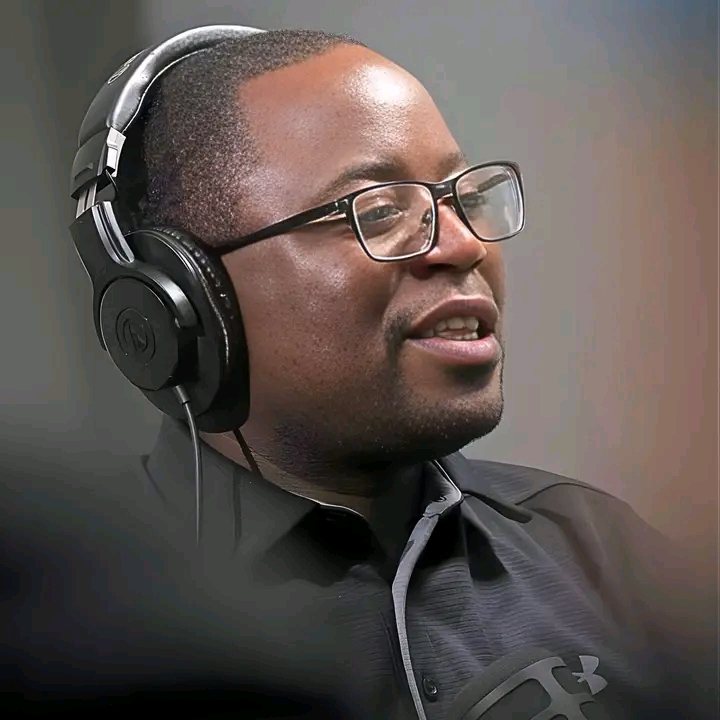
Makebi Zulu’s appearance on Showster’s House Podcast yesterday was not an ordinary media outing. It was a calculated political pitch at a moment when the Patriotic Front is fractured, anxious, and desperate for a clear contender ahead of its still-contested convention.
His interview has electrified parts of the PF base, irritated UPND supporters, and unsettled rival aspirants within his own party. It also brought back unresolved questions about governance, the rule of law, and the fate of Edgar Lungu’s unburied body. Facts 1ST breaks down what he said, what is factual, what is debatable, and what it all means as Zambia moves toward 2026.
Zulu anchored his argument in the Kabwe assault of Given Lubinda, calling it proof that “cadre violence never left.” He argued that UPND promised to end political thuggery but instead “turned state power into a weapon,” pointing at the PF Secretariat attack, the Kabwe-Lubinda ambush, and repeated incidents where alleged ruling party supporters appeared in videos beating opponents.
His core claim was simple: the state is tolerating cadre violence. Here, the context is clear. In the Lubinda case, the Minister of Home Affairs Jack Mwiimbu confirmed Lubinda was “rescued by police,” while UPND’s Kabwe youth figure Kelvin Mwangala admitted in a viral video that cadres confronted Lubinda because he had “no permit.”
These facts show why the claims gained traction, but they also reveal a fragmented ruling party communication system that cannot speak with one voice.
Makebi’s most pointed line was aimed at policing standards. “If the abductors were PF, we would have seen people bundled into police cars already,” he said. The comparison taps into a real grievance: police moved quickly after the Chingola stoning of the President, but slow-walked arrests at the PF Secretariat and Kabwe lodge.
Selective policing has a long Zambian history, going back to the MMD and PF eras, but the pattern remains politically damaging whichever party is in power.
On governance, Makebi repeated a long-standing PF argument that Zambia’s democratic space is shrinking. He pointed at sedition charges and cyber security laws, saying they are being used almost exclusively against government critics. This is partly accurate: sedition charges under both PF and UPND have been controversial because of their vague thresholds. But his promise to repeal the Cybersecurity and Cybercrimes Act needs scrutiny. The PF passed its own version of the Act in 2021; the UPND strengthened it.
His claim that the law allows government to penetrate private phones “without cause” requires nuance. The Act allows surveillance with a warrant, but critics argue warrants are too easily granted and oversight too weak. His broader point stands: Zambia has not yet found a balanced digital security framework.

The most emotionally charged part of his appeal came through the economy. “People expected the cost of living to go down. Instead, they have one meal a day and 21 hours of load shedding.” Load shedding peaked at 20 hours in some districts in early 2025, and food inflation has been steep. His reference to Aliko Dangote hit a nerve because the industrialist’s recent remark that “no country develops without power” embarrassed the government.
This line helped him frame himself as a voice of economic realism. But PF also left unresolved power issues, including stalled thermal projects and ZESCO debt. There is political convenience in blaming the current crisis on UPND alone, but the roots run deeper than one administration.
Makebi also pressed the burial issue with deliberate finesse. He avoided discussing the Lungu standoff in detail, saying “a spokesperson does not decide,” and insisting burial decisions belong to the family and the courts. But he built political capital by promising that if elected, he would “give President Lungu the dignified burial he deserves.”
Critics immediately revived the nickname “Malukula,” tying him to the prolonged custody of Lungu’s body and implying that he benefitted politically from the delay. His supporters countered by calling him “David,” positioning him as a brave outsider ready to face the Goliath of incumbency. The symbolism is interesting, but it risks framing PF politics around the corpse of a former president instead of the future of the country.
Inside PF, his confidence that the convention will proceed despite the Chabinga injunction rests on shaky ground. A new application by Brenda Nyirenda was filed in Kabwe on Monday asking the court to discharge the order on grounds of “multiplicity of actions.” This legal maze reflects PF’s internal illness: parallel structures, contested signatures, factional loyalties, and a base confused about who is in charge.
Makebi’s assertion that “PF is bigger than papers held by any individual” is a clever political line, but the courts have repeatedly ruled that political parties must follow their own constitutions. The Sampa, Chabinga, and Lubinda disputes have made PF more dependent on the same courts it condemns.
The final question in the interview summed up the entire moment: “What makes you think you can defeat Hichilema in 2026?”
Makebi responded that UPND has created a “large pool of angry and disappointed voters,” and all that remains is organisation and vote protection. His answer captured the mood in PF circles: confidence in public discontent, but uncertainty about internal cohesion. This is not a small tension. You cannot defeat the ruling party with a divided party, scattered messaging, and competing presidential camps.
For a party heading into a high-stakes convention with injunctions, faction fights, cadre clashes, and a still-unburied former head of state, Makebi Zulu’s interview was not just rhetoric. It was a signal of what PF wants to become, and what it still fears. Whether he can convert sharp language into delegate votes is another matter.
For now, Makebi Zulu has seized the narrative, and in politics, that is half the war.
This is Facts 1ST, for comments, insider information, or corrections, write to editor.peoplesbrief@gmail.com.
© The People’s Brief | Transcribing —McCarthy Lumba; Fact-checking —Francine Lilu; Analysis —Ollus R. Ndomu