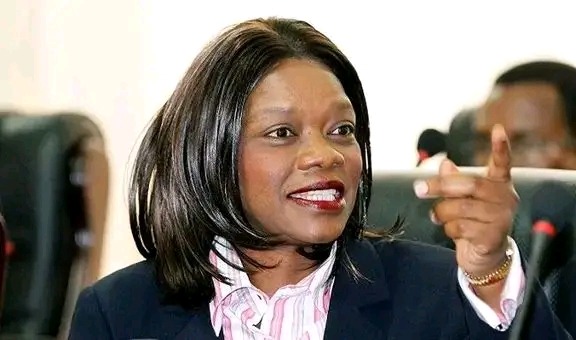

🇿🇲 MORNING WIRE | Masebo breaks silence, Zambia expands diplomatic reach as election cases continue
Good morning, Zambia! Wednesday opens with former minister Sylvia Masebo breaking her silence after weeks of statements being attributed to her online, while election disputes continue through the courts and Zambia expands its diplomatic engagements at the United Nations. The IMF and World Bank have also revised the framework used to assess debt sustainability in low-income countries, a change that will matter for Zambia as it moves beyond restructuring and back towards normal borrowing.
Masebo breaks silence, dismisses third-term debate
Former Lands Minister Sylvia Masebo says she has not spoken to journalists, media houses or bloggers since the August 13 election, rejecting social-media reports portraying her as being at odds with the Government or the Electoral Commission of Zambia.
“I have not spoken to any journalist, media house or blogger since August 13,” Masebo told ZNBC.
She said her decision to challenge the Chongwe East parliamentary result should not be interpreted as opposition to the UPND administration or ECZ, maintaining that the allegations before the court should be determined through the judicial process.
Masebo also weighed in on the emerging discussion over presidential term limits, saying speculation about President Hakainde Hichilema remaining in office beyond 2031 is premature. She said it is not Hichilema’s intention to seek a third term and argued that Government should instead concentrate on growth, jobs and development.
The remarks are notable after several UPND figures publicly raised questions about presidential tenure in recent days.
Masebo, a member of the party’s National Executive Committee, said Zambia should allow time and the democratic process to determine who leads the country after Hichilema.
ECZ closes case in Lusaka mayoral petition
The Electoral Commission of Zambia has closed its case without calling witnesses in a petition challenging the election of UPND’s Chitambala Mwewa as Lusaka Mayor. ECZ lawyer Eric Kamwi told the tribunal that the Commission did not consider the evidence presented by petitioner Gabriel Kibombwe sufficient to require a rebuttal, arguing that the burden remained on Kibombwe to prove his case.
Lawyers for Kibombwe objected, saying ECZ’s decision meant certain documents would not be placed before the tribunal. The matter returns Wednesday for a ruling on the petitioner’s application.
In a separate case, the Lusaka High Court has set October 5 to 15 for trial of UPND candidate Andrew Tayengwa’s petition challenging the election of NRPUP’s Danny Yenga as Kabwata MP.
Zambia establishes diplomatic ties with Uruguay, Vanuatu
Zambia has established diplomatic relations with Uruguay and Vanuatu as Foreign Affairs Minister Mulambo Haimbe leads the country’s engagements at the 81st United Nations General Assembly in New York. Haimbe, representing President Hakainde Hichilema, signed joint communiqués with the two countries on Monday, formally opening diplomatic relations. Zambia says the new ties could support cooperation in agriculture, trade, investment, climate change, eco-tourism and cultural exchanges.
The agreements form part of a wider push to use foreign policy to expand Zambia’s economic relationships rather than diplomacy being limited to political engagement.
Grow Zambia agenda moves to the United Nations
The New York meetings have also given Zambia a platform to advance the Government’s Grow Zambia agenda, with Haimbe arguing that diplomacy should contribute directly to economic growth. Zambia has held bilateral discussions with Malawi and Cuba covering trade, investment, infrastructure, energy, health and education, while engagements with the European Union and United Nations have focused on development cooperation and global governance.
Health Minister Roma Chilengi has meanwhile participated in discussions on reforming the global health system. Zambia is also lobbying for a seat on the UN Human Rights Council for the 2027-2029 term. Haimbe is expected to deliver Zambia’s national statement to the General Assembly on Monday, September 28.
IMF, World Bank revise debt sustainability framework
The IMF and World Bank have revised the framework they use to assess whether low-income countries can sustainably manage their debt, broadening the analysis beyond external borrowing. The revised framework will place greater emphasis on domestic debt, liabilities associated with state-owned enterprises, long-term development and climate financing needs and the quality of public debt data.
For Zambia, the change comes as the country moves beyond years dominated by default and debt restructuring and seeks to restore normal access to financing. The framework is expected to become operational in the second half of 2027, meaning its practical effect will emerge gradually rather than immediately.
Wednesday therefore begins with Zambia looking both inward and outward. Election disputes are still being settled, political arguments over the next constitutional reform process are taking shape, and Government is trying to convert renewed international engagement into investment and economic opportunity. The diplomatic meetings will produce communiqués. The economic reforms will produce indicators.
For ordinary households, the more consequential test remains whether either eventually produces jobs, incomes and a lower cost of living.
-The People’s Brief | Chileshe Sengwe; Mendoi Liteta