
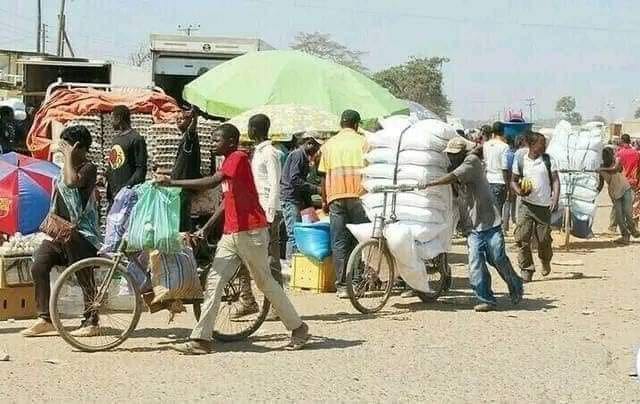
Mealie meal Shortages- an Ugly Face of Smuggling
By Dr. Martin Mushumba
Like all the previous governments, the New Dawn Administration has equally been facing a dilemma whether to please farmers or to please consumers. In this regard, the hard decision has been whether to go for self-sufficiency or price stability.
As a strategic commodity, maize also acts as a tool for the government in power to be re-elected. Maize is not only an economic commodity, but also a critical recipe to political power retention. If the government cannot control prices, social political conditions are easily shaken.
The government’s legitimacy, among other factors, is championed by the ability to control the cost and availability of a staple food.
Suffice to mention that the current shortage of mealie-meal in the country is artificial and induced by the current smuggling of the commodity to nearby countries such as DR Congo where a 25kg bag of mealie meal is fetching ZMK 800.
There is a notable increase in the consumption of mealie-meal in the country because of the increase in the population. However, Zambia and Southern Africa as whole, have seen a decline in maize production in recent years affected by global warming and farmer input support programme mismanagement. The combination of increased demand and declining production has caused a widening imbalance between maize supply and demand.
While Zambia still imports maize, the country caters for the largest share of its maize demand domestically. The domestic supply chains are, therefore, of utmost importance for stable, affordable and accessible mealie meal supplies.
Therefore, the government has banned the export of mealie meal with a view to increasing domestic availability of the staple food. This also comes at time that government seeks to enhance food security in the country after mealie meal prices surged in retail markets especially in border towns.
The policy which functions under the New Dawn Administration with regard to mealie-meal is the crop floor price control law. The government sets the floor price. the Food Reserve Agency buys the maize from the farmers and or sells to the millers, thereby compensating the production cost while setting the consumer price to ease household expenses.
The United Party for National Development’s food security policy seeks to lower Zambia’s dependence on imports and to push increased domestic production of maize, wheat, rice soybeans, and drought resistant food crops such as sorghum, cassava and millet among others.
The New Dawn Administration’s agriculture economic policy holds that the government crop floor system is to achieve and maintain food security, to trigger economic growth, improve economic stability and farmers’ welfare.
At the moment, the distribution of public mealie-meal stocks has been compromised. The government must come in and quickly seal the loopholes such as smuggling, which is a threat to Zambia’s food security. As a practical short-term solution to improve mealie meal stocks, lower the prices and improve the efficacy of distribution, the government is strategic in allowing mealie-meal Imports.
The author is a Public and Economic Policy Analyst