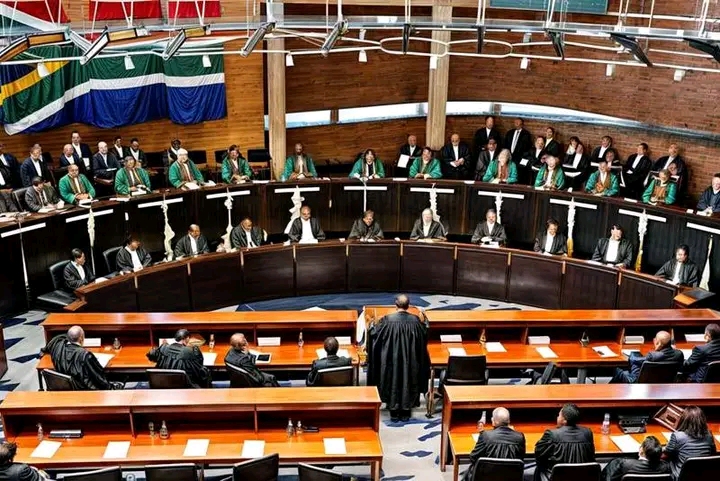

REGIONAL BRIEFING | Men Can Now Take Wives’ Surnames, Rules South Africa’s Top Court
South Africa’s Constitutional Court has delivered a ruling that could reshape family law across the region. In a landmark judgment, the court declared that men may assume their wives’ surnames after marriage, striking down provisions of the Births and Deaths Registration Act that restricted this right to women alone.
The ruling follows a challenge by two couples, Jana Jordaan and Henry van der Merwe, and Jess Donnelly-Bornman and Andreas Bornman. Both men had sought to adopt or hyphenate their wives’ surnames, but were denied under Section 26(1)(a) to (c) of the Act. The court held that such denial constituted unfair gender discrimination, violating South Africa’s equality clause.
“This is about dignity and equal recognition in marriage,” the judgment read, affirming that the law had long entrenched an outdated presumption: that only women could change their identities in marriage, while men were confined to patriarchal tradition. By striking down the provision, the court opened the door for couples to define their marital identities on equal footing.
The implications are sweeping. For generations, surnames in southern Africa have symbolised power, inheritance, and lineage. Women have carried the burden of altering theirs as a sign of marital union, while men remained untouched. Now, men can choose to do the same whether out of solidarity, cultural conviction, or simply personal preference.

Legal scholars note that the decision echoes similar debates in Europe and North America, where men increasingly adopt their wives’ surnames or hyphenated versions to reflect equality in marriage. “This is a groundbreaking affirmation that patriarchy is not cast in stone,” said Joakim Mthealu, a Johannesburg-based analyst. “It is a legal recognition that identity belongs to both partners, not one.”
For Zambia and the wider region, the ruling raises questions of reform. Could Lusaka, Harare, or Lilongwe soon see legal petitions from men wanting to carry their wives’ names? Family law remains rooted in tradition, but South Africa has often set precedents that ripple across borders.
The applicants themselves called it a victory for choice. Van der Merwe, once denied the chance to take Jordaan’s surname, told reporters: “Marriage is about partnership. This judgment finally reflects that.”
© The People’s Brief | Regional Briefing — Ollus R. Ndomu
Mr The “People’s” Brief, leave ” stare decisis” issues to legal experts !!