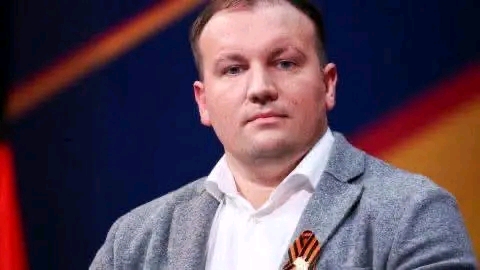

MONTENEGRO EXPELS RUSSIAN PROPAGANDIST AS NATIONAL-SECURITY THREAT
Montenegro has ordered the expulsion of prominent Russian war propagandist Mikhail Zvinchuk, better known as “Rybar,” after authorities determined that his presence posed an unacceptable threat to the country’s national and internal security.
Zvinchuk, his wife Valeria and three other Russian nationals—Pavel Lekatorchuk, Sergey Belous and Kira Doroshenko—were detained in the coastal town of Risan. Police reportedly seized sophisticated digital equipment, including a drone, cameras and several mobile phones.
Rybar is one of Russia’s largest pro-war Telegram networks, reaching more than 1.5 million subscribers. Zvinchuk previously worked in the Russian Defense Ministry’s press office, while his platform has spent years promoting Moscow’s invasion, spreading Kremlin narratives and attempting to shape public opinion far beyond Russia.
What makes Montenegro’s response especially significant is the country’s history. This small Orthodox Slavic nation was once considered a close Russian ally and remains home to a substantial Russian population. However, Montenegro joined NATO in 2017, aligned itself with Western sanctions and is now pursuing membership in the European Union.
Authorities said their coordinated response prevented potentially damaging activity inside the country. Prime Minister Milojko Spajić was direct: Montenegro will protect its interests, its stability and its European future.
Zvinchuk had reportedly entered Montenegro despite being subject to European sanctions and an entry ban—and even boasted publicly about getting through the border. That confidence has now ended with detention, confiscation of equipment and deportation.
Montenegro may be small, but its message to Moscow was unmistakable: Russian influence operations will not be tolerated simply because the Kremlin once considered the country part of its sphere.