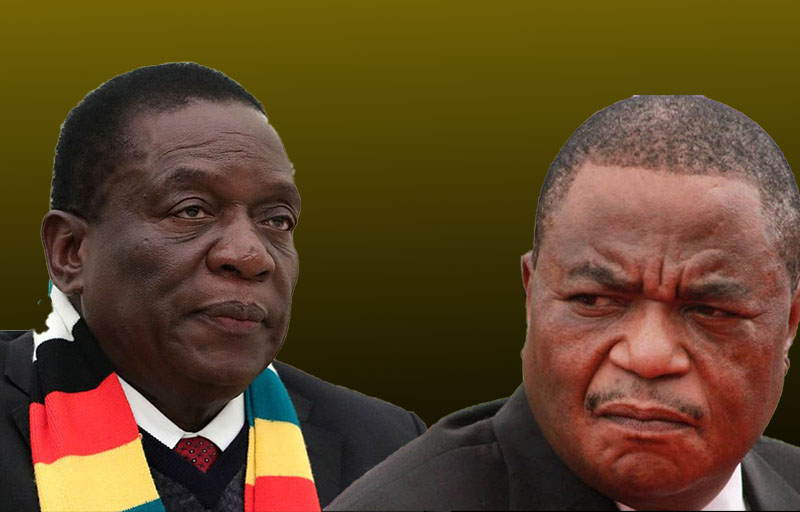

MUGABE KNEW HOW TO CLING TO POWER, MNANGAGWA IS SHOWING ZIMBABWE HOW NOT TO DO IT
The Sunday Political Read
By Gabriel Manyati
On 21 June 2008, as Zimbabwe reeled from the political earthquake of the March harmonised elections, Robert Mugabe delivered a characteristically defiant declaration. Facing the unprecedented humiliation of having been outpolled in the first round by Movement for Democratic Change leader Morgan Tsvangirai, the veteran autocrat laid bare his core political philosophy.
“Only God who appointed me will remove me, not the MDC, not the British,” Mugabe proclaimed. The context was stark. Official results had given Tsvangirai 47.9 percent of the vote against Mugabe’s 43.2 percent. Although Tsvangirai failed to clear the outright majority threshold, forcing a run-off that he would eventually boycott amid a brutal campaign of state-sponsored violence, the first round shattered the aura of invincibility that had shielded ZANU PF for nearly three decades.
Yet Mugabe’s response to that existential crisis demonstrated a masterclass in survival politics. He did not concede the underlying legitimacy of his opponents; instead, he framed the contest not as an electoral defeat, but as an imperialist assault on Zimbabwean sovereignty. By invoking the liberation struggle, anti-colonial grievance and national identity, Mugabe fused his personal survival with the survival of the state itself. He understood that in Zimbabwean political culture, the leader must be rendered indistinguishable from the liberation movement and the nation. If Mugabe fell, the narrative went, the revolution fell with him.
This totalising authority was not accidental. Throughout his 37 years in office, Mugabe maintained his grip through an intricate, ruthless balancing act. He managed party factions by playing ambitious lieutenants against one another, rotating security chiefs, offering tactical accommodations when pressed, and unleashing the full machinery of violence when persuasion failed.
When economic collapse threatened his regime, he printed money, dished out land, or orchestrated patronage networks to keep his coalition intact. Mugabe was frequently cornered by hyperinflation, international isolation and internal dissent, but he almost always possessed the tactical agility to make his opponents overreach or divide. His political dominance rested on a grim comprehension of power: he knew how to absorb pressure, make calculated tactical retreats, and reassert control before his rivals could consolidate an alternative centre of gravity.
Even Mugabe Understood the Value of Constitutional Cover
Mugabe’s authoritarian record was a matter of bloody historical record, marked by Gukurahundi, electoral manipulation, and the systematic dismantling of democratic institutions. Yet even at his most autocratic, Mugabe displayed a shrewd appreciation for the political value of constitutional and institutional machinery. He preferred to shape the rules of the game rather than openly shred them in plain sight.
This approach was evident as early as December 1987, when structural constitutional amendments dismantled the Lancaster House-mandated prime-ministerial system, replacing it with an executive presidency that concentrated sweeping powers in his own hands. The transition was executed through the established mechanisms of parliament, creating a veneer of legal continuity even as the substance of democratic checks and balances was eviscerated.
The limits of this strategy were tested in February 2000, when a government-sponsored draft constitution designed to further expand presidential powers was decisively rejected at the polls. Approximately 55 percent of voters voted against the proposal, handing Mugabe a stinging public rebuke. It was a rare moment where popular resistance pierced the armour of ZANU PF hegemony, demonstrating that even a dominant regime could miscalculate when attempting to alter the foundational compact too blatantly.
Mugabe learned from that stumble. When he altered the constitutional architecture subsequently, he did so through incremental amendments, parliamentary majorities, and judicial appointments that legitimised his executive dominance. The distinction is critical. Mugabe was undoubtedly a dictator, but he understood the corrosive political cost of appearing petty, desperate, or openly self-serving with the basic law of the land.
He wrapped his ambitions in the grand rhetoric of national sovereignty and anti-colonialism. He used institutional cover because he knew that changing the rules solely to keep oneself in office strips away the mystical aura of inevitability that sustains an autocrat.
Mnangagwa’s Constitutional Gamble
When Emmerson Mnangagwa assumed power following the November 2017 military intervention that ended Mugabe’s reign, he inherited a country desperate for a reset. Mnangagwa sought to capitalise on that weariness by projecting himself as a pragmatic reformer, a business-friendly nationalist who would break with the economic isolation, violent repression, and erratic governance of Mugabe’s twilight years.

His early speeches promised economic revival, international re-engagement, and strict adherence to the rule of law. That reformist persona was not merely a diplomatic strategy; it was the foundational narrative of his presidency, distinguishing him from his predecessor and creating high expectations at home and abroad.
That early political positioning, however, has become the anchor weighing down his current administration. A leader who enters office promising institutional renewal and respect for constitutional limits establishes a baseline against which every subsequent manoeuvre is measured. Mnangagwa’s repeated, unequivocal public assurances that he would respect presidential term limits and step down in 2028 have returned to haunt his political project.
The record of those commitments is extensive and unambiguous. At the ZANU PF Youth League National Assembly in Harare in August 2024, Mnangagwa stood before party structures and delivered a clear legal and moral injunction: “Besides being a soldier, I am a trained lawyer. I am a constitutionalist. I want our party, our leadership, our people to be constitutionalists. We must abide by the provisions of our constitution to the letter. Kana nguva yekuti uende [yakwana] enda.”
The Shona phrase, meaning “When your time to go comes, leave,” was a direct rebuke to early murmurs of a third term.
Weeks later, addressing the Zimbabwean diaspora in Beijing in September 2024, Mnangagwa doubled down on those assurances. He told his audience on 3 September 2024: “I have said it before that I am a constitutionalist, meaning I follow the Constitution of Zimbabwe to the letter and spirit. Also, I am one of its authors. So, those whom you gossip with saying maybe I will extend my years in office, no I will not do that.”
He went further, explicitly anchoring his timeline: “I am already in my second term and already know even the date that I will leave office in 2028 and go home…if there are others misleading you then go and tell them it’s not what our father (himself) is thinking.”
Even as late as February 2025, during an off-the-record meeting with selected editors at State House on 17 February 2025, Mnangagwa maintained the stance. When asked about whether he could be persuaded to remain in office beyond 2028, he replied with characteristic folksy confidence: “I’m very clear that I have two terms, and these terms are very definite, and I am so democratic. When they come to an end, I will step aside and my party will elect my successor. That is as clear as day.” Asked if he could be convinced to stay, he added: “I will persuade the persuaders not to persuade me so that I remain constitutional.”
These statements were not offhand remarks; they were deliberate acts of political reassurance designed to soothe domestic anxieties and placate international creditors. Yet politics in ZANU PF rarely moves in a straight line dictated by presidential declarations. While Mnangagwa was publicly vowing to pack his bags by 2028, party loyalists, provincial structures, and ambitious securocrats were orchestrating a counter-movement.
At the ZANU PF conference in Bulawayo in October 2024, delegates endorsed a resolution calling for Mnangagwa to remain in office until 2030. The distinction between the president’s stated positions and the party’s orchestrated resolutions created a widening credibility chasm.
The culmination of this internal campaign arrived in mid-2026. Following months of intense political lobbying and parliamentary manoeuvring, lawmakers approved sweeping constitutional changes. On 7 July 2026, Mnangagwa signed the legislation into law. The legal mechanism was intricate: the amendments extended presidential and parliamentary terms from five years to seven and shifted the selection of the president from a direct popular vote to parliament, effectively clearing the path for Mnangagwa to remain in office until 2030. Human Rights Watch, in its 8 July 2026 analysis, condemned the move as a blatant subversion of democratic norms designed to circumvent the will of the electorate.
The political cost of this trajectory has been severe. Mnangagwa’s constitutional gamble has shattered the reformist image he meticulously cultivated after 2017. His own recorded words now serve as a devastating indictment, wielded by critics and rivals alike. The damage lies not simply in the extension of his tenure, but in the glaring contradiction between the political identity he advertised and the blunt legislative machinery he ultimately deployed to cling to power.
The Chiwenga Problem
At the heart of ZANU PF’s current anxieties sits Vice President Constantino Chiwenga, an actor whose presence makes the ruling party’s succession struggles uniquely volatile. Chiwenga was the commander of the Zimbabwe Defence Forces who spearheaded the November 2017 military intervention, an operation that proved decisive in unseating Mugabe and catapulting Mnangagwa to the presidency. That historic partnership forged a new dispensation, but it left a foundational question unanswered: who would ultimately inherit the party and the state when Mnangagwa’s tenure expired?
Chiwenga’s position as vice president, former military chief, and senior liberation-war stalwart gives him an independent power base within the ruling establishment. He is not a junior minister or a party apparatchik who can be easily sidelined or reshuffled. As the 2030 agenda gathered momentum, transforming a constitutional debate into an open factional war, Chiwenga’s posture became the barometer of ruling class stability.
The underlying tensions broke into the open at the ZANU PF conference in Chinhoyi this month. Addressing delegates, Chiwenga delivered remarks that were immediately interpreted across the political spectrum as a calculated warning against unconstitutional overreach. He stated: “Distinguished guests and delegates, change is inevitable. It must be orderly, engaged through our party structures, and guided by our constitution. Change must be driven by the people, not imposed from above. You may recall, Your Excellency, that the voice of the people is the voice of God. As such, we must remain true to that promise.”
The political force of those words reverberated through State House and party headquarters alike. Chiwenga did not need to launch an explicit insurrection or announce his own candidacy for his insistence on constitutionalism, party structures, and organic change to carry immense weight. Delivered precisely at a time when the presidential extension agenda had polarised the party, his invocation of the constitution and the “voice of the people” was a direct counter-narrative to the 2030 project.
It is vital to distinguish between Chiwenga’s carefully chosen rhetoric and speculative accounts of a violent falling-out. There was no public brawl or open mutiny; rather, there was something far more dangerous for an incumbent: an institutional heavyweight within the ruling coalition publicly signaling that he holds a competing interpretation of the liberation compact.
The tension between Mnangagwa’s legislative engineering to prolong his stay and Chiwenga’s pointed defense of orderly, constitutional transition defines the fault line of contemporary Zimbabwean politics.
The Crocodile Has Inherited the Cage
Mnangagwa earned his moniker, “The Crocodile,” through a reputation for patience, cunning, and lethal political survival instincts. When he seized the presidency in 2017, he stepped into the formidable apparatus that Robert Mugabe had spent decades constructing. He inherited a dominant ruling party, an all-powerful executive presidency, security services deeply embedded in political patronage, and a political culture where loyalty to the paramount leader was treated as the ultimate test of patriotism.
Yet, by inheriting Mugabe’s cage, Mnangagwa also inherited the compounding decay of Mugabe’s legacy. He took over an economy battered by decades of mismanagement, a collapsed public health sector, crumbling infrastructure, and a populace utterly exhausted by broken promises. For a brief window, his reformist rhetoric offered a credible exit from that stagnation. But by breaking his solemn word on term limits and engineering a controversial extension to 2030, Mnangagwa has fallen into a trap that Mugabe managed with far greater theatrical skill.
Mugabe understood how to use power without constantly exposing his own defensive mechanics. When Mugabe changed laws or brushed aside opposition, he did so from a position of unchallenged ideological dominance, casting himself as the indispensable patriarch against foreign foes.
Mnangagwa, lacking Mugabe’s oratorical mystique and revolutionary pedigree, has had to rely on the clunky mechanics of party resolutions and parliamentary amendments. In doing so, he has invited a fatal charge: that the preservation of his personal rule has superseded the economic and social well-being of the nation.
The sequence of events is damning in its clarity. The promises of 2017 created an expectation of renewal; the 2024 assurances cemented a moral boundary; the Bulawayo resolution exposed party ambition; and the July 2026 legislation crossed the Rubicon. Each step stripped away another layer of the reformist veneer, leaving the presidency looking less like a visionary institution and more like an embattled faction desperately locking the doors from the inside.
The Real Test Is Succession
Ultimately, the enduring flaw in ZANU PF’s political architecture is its historic inability to manage succession without tearing itself apart. Mugabe’s absolute dominance ultimately foundered on the rock of succession, as his failure to groom or permit a stable successor triggered the factional civil war that culminated in his ouster. He could manage crises of the economy, international sanctions, and electoral pushback, but he could not manage the ambitions of the lieutenants gathered around his throne.
Mnangagwa is now accelerating toward that exact structural danger, burdened by the self-inflicted wound of his own broken promises. By extending his rule to 2030, he has not resolved the succession question; he has merely frozen it, compressing the ambitions of powerful factions like those aligned with Chiwenga into an even tighter, more volatile space.
The longer the transition is artificially delayed, the greater the pressure builds within the security establishment, party organs, and the broader public.
A president can marshal a parliamentary majority, sign legislation, and mobilise party loyalists to alter the temporal boundaries of his office. But none of those legislative acrobatics guarantees political loyalty or secures the institutional stability required to manage a high-stakes transition.
Mnangagwa wants more time in office, but in securing it through a public repudiation of his own word, he has exposed the limits of his authority. The ultimate test of political survival in Zimbabwe is never simply how long a leader can cling to the levers of the state, but whether they leave behind a party and a nation capable of surviving their departure.