
Netanyahu: Can He Hold on to Power, or Could a New War Change the Political Landscape?
Israel’s election results have left the country facing a difficult political deadlock. Netanyahu’s bloc secured 53 seats, while Gadi Eisenkot’s bloc won 48. Arab parties secured 19 seats. With 61 seats required for a parliamentary majority, neither side can easily form a government
More than 500,000 special ballots, including votes cast by Israeli military personnel and people voting in other locations, are still being counted. The final results could therefore change, although it remains unclear whether the outstanding votes could significantly alter the balance of power.
Netanyahu and Eisenkot now face two difficult options: forming a coalition government or seeking support from other parties. Neither route will be easy.
Eisenkot, a retired general and one of Netanyahu’s strongest challengers, campaigned on a promise not to join a government led by Netanyahu. Their rivalry is further complicated by disputes over responsibility for the security failures surrounding the October 7, 2023, Hamas attack and the contentious issue of military conscription for ultra-Orthodox Jewish men, known as Haredim.
Arab parties, with 19 seats, could play a decisive role in determining who forms the next government. However, most Jewish parties oppose relying on Arab parties for parliamentary support or including them in a governing coalition.

If negotiations fail, Israel could face another election. President Isaac Herzog has already urged political leaders to make every effort to avoid a new vote. Israel has experienced repeated electoral deadlocks in recent years, highlighting the depth of its political divisions.
Since 2019, Israel has held six elections, as competing parties have repeatedly struggled to secure the parliamentary majority needed to form a stable government. Coalition negotiations have frequently collapsed, sometimes forcing voters back to the polls. Repeated elections also carry significant financial, economic and security costs.
What Happens Next?
US President Donald Trump could attempt to intervene, potentially through his ambassador, Mike Huckabee, to pressure Israeli political leaders into reaching a coalition agreement.
However, Netanyahu could resist outside pressure, arguing that he remains Israel’s caretaker prime minister and is therefore entitled to continue governing until a new administration is formed.
Trump previously urged Israelis to support Netanyahu and has spoken about the possibility of another war involving Iran. Those remarks could become politically significant as Israel struggles to resolve its domestic crisis.
In a functioning democracy, major wars, heavy casualties and widespread public suffering would ordinarily intensify demands for political accountability. American voters could similarly hold Trump accountable for the consequences of his administration’s policies.
Yet Netanyahu’s bloc has emerged in first place in the Israeli election, despite the country’s recent conflicts and security challenges. That result raises questions about how voters are weighing security, leadership and political responsibility.
But there is a potentially more dangerous scenario.
Eisenkot could attempt to form a government with outside parliamentary support from Arab parties, potentially removing Netanyahu from power without necessarily including Arab parties in the cabinet.
If that happens, Netanyahu and Trump could face a new political calculation involving Iran. A fresh military confrontation could dramatically change Israel’s domestic political agenda and undermine efforts to establish a new government.
Netanyahu could use images of Eisenkot meeting Arab political leaders to portray his rival as dependent on parties that much of the Israeli electorate views with suspicion. Such imagery could become a powerful weapon in a political campaign aimed at weakening Eisenkot and preventing him from consolidating power.
At the same time, Netanyahu could see a confrontation with Iran as an opportunity to reshape the political landscape. A major military operation, if successful on terms favourable to Israel, could strengthen his political position, disrupt coalition negotiations and potentially create conditions for another election.
For Netanyahu, the stakes could be exceptionally high. He may view the political struggle as a fight for his political survival, while a new war could carry enormous military, economic and human costs for Israel and the wider region.
The central concern is that political calculations could encourage escalation at a moment when the region can ill afford another major conflict. However, the possibility of a new war remains a scenario, not evidence that Netanyahu or Trump have decided to launch one.
Could Another War With Iran Happen Now?
Several recent diplomatic developments could offer clues about the regional situation.
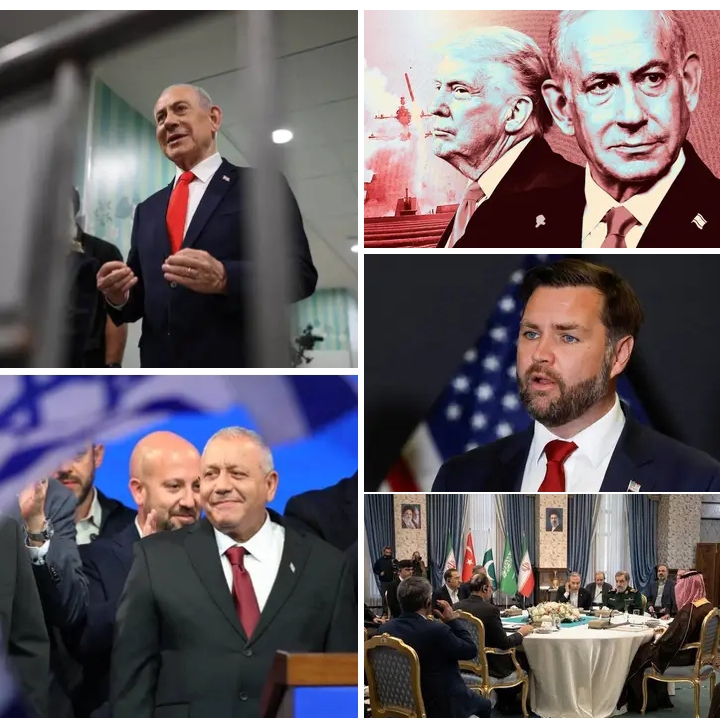
A meeting in Tehran involving representatives of Iran, Saudi Arabia and Pakistan, alongside Turkey’s intelligence chief, has highlighted ongoing efforts to address regional tensions. Meanwhile, Turkish President Recep Tayyip Erdoğan has reportedly held contacts with Trump, and Saudi officials have engaged with the White House while seeking the opening of negotiations.
A message from US Vice President JD Vance to Iran has also attracted attention, particularly given his reported opposition to another major war.
These developments occurred within a short period, raising the possibility that regional leaders are responding to concerns about a potential escalation. Their diplomatic efforts may reflect a desire to prevent a wider conflict, although the meetings and communications alone do not establish that an attack is imminent.
The coming days could therefore prove important. Regional governments may be attempting to create diplomatic space before political or military developments make de-escalation more difficult.
For now, the situation remains uncertain. Israel’s coalition negotiations, the final election results and diplomatic contacts between Washington and regional capitals will all be important indicators of what happens next.
The next two weeks could provide a clearer picture of whether diplomacy can contain tensions or whether political pressures will push the region towards another dangerous confrontation.
The key question is whether Netanyahu can preserve his political future through coalition negotiations or whether a new regional crisis could reshape Israel’s political landscape before a new government is formed.