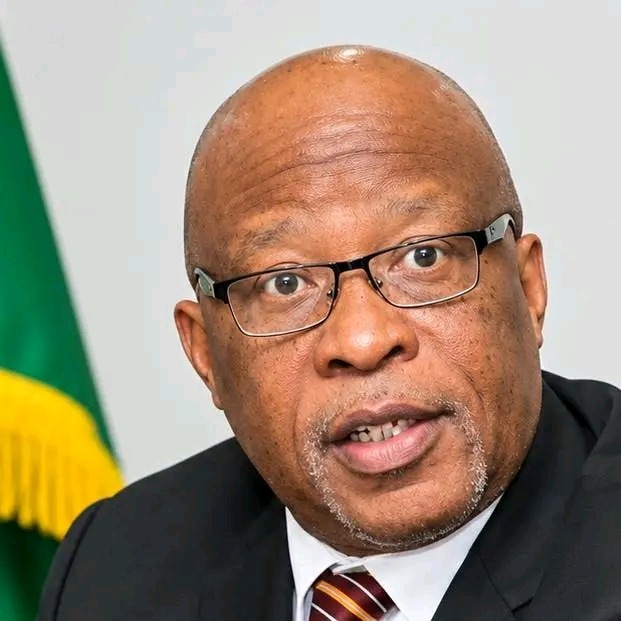

Nevers Mumba – The Presidency that never came
After decades in public life, Dr Nevers Mumba has announced his retirement from active politics and relinquished the leadership of the New Nation, former Movement for Multiparty Democracy (MMD), bringing to a close a political journey that once carried ambitions of reaching State House.
More than a decade ago, Mumba sat down with the Bulletin & Record to explain the ideas driving that ambition. He spoke of an Africa led by men and women of “morality and integrity”, of strengthening democratic institutions, fighting corruption and using education to lift Zambians out of poverty.
His confidence about his own political destination was striking. During the interview, he spoke not of “if” he became president, but “when” he became president.
That presidency never came.
As Mumba now steps away from the leadership of the New Nation and active politics, MakanDay Weekly returns to this revealing interview from our archives — a conversation with a politician looking towards the future, setting out what he believed Zambia needed and the kind of president he intended to become.
Read today, the interview offers more than a record of Mumba’s political ambitions. It provides an opportunity to measure the convictions and promises of an earlier Nevers Mumba against the political journey that followed.
Originally published in the August 2014 edition of the Bulletin & Record Magazine.
Nevers Mumba seeks an Africa whose leaders have “morality and integrity”
The election of 2011 was the first time in the 20-year history of the Movement for Multiparty Democracy (MMD) that the race for the republican presidency was lost. In 2012, Dr Nevers Mumba was elected MMD president. Thus far he is the only MMD president who has not been the president of the country. Will he manage to change that in the 2016 election? He talks to Johan Rahm

Mumba sits in a chair on the lawn of his residential garden in Kabulonga, Lusaka. He finishes a phone call, instructing one of his co-workers not to respond to a question from media, but rather wait until the press conference the following day. Then he leaves two of his phones to another party official. His third phone he keeps in its case in his belt.
“My interest in politics emanates from the moment when I was watching the Rwandan genocide on TV. I saw a little boy, about seven years, who was crying. He was beating on the body of what appeared to be his dead mother. The cameras showed the horror in his face and in his eyes. I was deeply touched. That little boy looked like he could be one of my sons, I found myself weeping in front of the TV and the thought came to me that what happened in Rwanda could be happening in my country and my people could be the ones running away. From that day I came to believe in the importance of Africa having leaders with morality and integrity, and by that I mean that they could be men of their word.“
Nevers Mumba has his mind set on taking back the office of republican president for the MMD. During our interview, he does not once say “if I become president”, only “when I become president”.
What would be his first priority, should he be elected? Dr Mumba leans forward and starts talking:
“The reason I joined politics was to introduce morality and integrity into the political process. I believe in the combination of someone who has a proven record of morality and integrity and of strong institutions on the ground. I would make sure we put in place legislation that makes it extremely significant to bring strong democratic institutions so that the goodness or badness of a leader can be managed by the institutions. The institutions should have the authority to stop a president from doing what is not right and that they allow the president to further goodness. “
What type of institutions are you referring to?
“I am talking about governance institutions, for example media, Zambian Law Association and church associations. Those are the institutions that are important in a democracy. If they are removed it becomes very complicated and you would make a president a dictator. Nobody can challenge him, nobody can petition him, nobody can demonstrate.”
Do you think these organisations are weak today?
“Yes, they are very weak in our country today. Because most of them are terrified to operate under this regime and I would not like to see that under my government. I would like them to have the freedom so that they can execute their constitutional obligations. I would like it to be a total separation of power between the legislator, the executive power and the judiciary. This does not exist much anymore. That is important for a functioning democracy and that will instill confidence in to our democracy.”
Throughout the interview with Dr. Mumba, he returns to the concept of morality as an important factor to bring success to the political leadership. What does this word mean to him?
“Morality speaks to your conscious to make you take decisions on what is valuable to not just you, but to others. Morality is a consciousness of the welfare of others, being fair, a man of your word. If you are a moral man you find yourself bound to stay with your promise and to lift up the ones that are disadvantaged over the ones that have everything.”
Before Dr Mumba entered politics, he was a preacher. He travelled the world to spread the gospel and was followed by many people.
How has this affected his career as a politician and how does he look upon the relation between Government and church?
“I see no conflict between state and religion. The crises come when you eliminate morality and godliness from the politics. What I bring to politics is an asset of good that will guarantee the people that the president will not wake up one day to be unjust to someone just because he feels like it or go and steal from government coffers. I think that politics needs godly values. Zambia is 89 per cent a Christian country, so we would like to build on that.”
Nevers Mumba speaks with a low voice, leaning forward in the garden armchair in which he is sitting. He starts talking about the issue he thinks is the most important to the development of Zambia and the empowerment of its people.
“Our people are taken advantage of because of their level of education. The less educated they are, the poorer they are and the more abused they are by the small elite that is educated. We need to educate our people to such levels that they can make intelligent decisions. Poverty has taken away their ability to decide what is right for them. How do I mitigate this? Education will become compulsory for every child, so that no child is left behind in our country. It will be illegal to keep a child at home who is supposed to be in school. The reason I will take such an aggressive approach is that we are at a level now where if we are going to deal with poverty and ignorance we have to make sure education becomes a major factor.”
Already today there are problems with over full classrooms and not sufficient teachers. How will you finance a costly reform like this?
“Every reform comes with prior planning. We are also looking at the price we have to pay 10 to 15 years down the line if we do not invest more in education. It is costly to do what I am talking about, but we are spending money on things today that are more costly that will not leave a legacy to the nation in terms of investing in human lives and in human resources. To me this will be a priority sector.”
Dr Mumba’s take on empowering the people of Zambia is, besides the focus on education, to rely on a liberalised market economy.
Zambia’s statistics on poverty are depressing. Even though the economic growth rate has been high for the last decade or so, poverty levels are relatively unchanged. But change will come if the economy is allowed to continue being liberalized, according to Dr. Mumba.
“The economic indicators are good. So why then are our people not benefiting? It takes time to trickle down to the last person in the line. We have to keep the interest rates low so that people can borrow money from the bank. This will make small and medium businesses start to employ people. Then you cut down unemployment. This will make interest rates improve even more and you will create a situation where even a small businessman can go to the bank and take a loan. If you stay on course, in a few years we will have this trickling down to the last guy in the line.”
A crucial way of keeping the economic indicators on track is to continue attracting foreign capital and foreign investors to Zambia, according to Dr. Mumba.
“My position is based on a private sector-driven, liberalised economy, a market where anyone can come and participate, using equitable laws for everybody, where there is a win-win situation for the investor and for Zambia. In the value addition industries, for example manufacturing and mining, where there is a need for a lot of capital we opened up doors to the international community to come and work amongst us. Not as charity, but for them to make a profit. They are not here because they love some Zambians that much, they come to make a profit. We will make sure they will make a profit. But we will also make sure that the laws allow them to reinvest in this country to improve the quality of life of Zambians. For me, that is extremely significant that we have a win-win situation with investors. My government will continue to have a strong relationship with the investor community.”
Some are accusing big companies of not being of benefit to Zambians, but only to make profit and move that profit out of Zambia.
“There was an argument before, when we were in government, that we were giving too much space to the Chinese, that the Chinese abused the workers or didn’t pay them well. My take is that it is not the responsibility of foreign firms to set up the ground rules on how they are going to operate. We set the ground rules, they dance to the rules. So if our workers are not being paid well it’s not the problem of that firm, they are here for profit and they will make sure they will squeeze the blood out of our people to get that profit. It’s our responsibility to ensure that the regulations set in place are respected by all players, both local and foreign. If we fail, we can’t blame a foreign firm.”
A critical question for any person who assumes the highest political office of Zambia is access to health services. Many Zambians, especially those in rural areas, have limited access to health care and many are questioning the quality of care given to the majority of the population that cannot afford to pay for private care.
“Again, like education, the goal of government is to make sure that all citizens have access to some form of health care. This is one area in our country where a lot of governments have failed, because we carry this issue without a stipulated programme or plan.
“Our plan will be three tiered in terms of health care. Firstly, we are going to welcome the private sector to provide health care services for those that can afford it and for those who would like that kind of attention. Secondly, we are going to encourage the public–private sector partnership. These are health institutions that will run in partnership with government in order to reduce costs on means and services, for example when it comes to hospitalisation and specialised procedures. Through a public private partnership we are able to make sure that we can reduce the cost, by government taking some kind of responsibility on certain areas of specialisation that will be too expensive for ordinary Zambians.
“Thirdly, government is going to provide health care for the very poor in our society. But even then, each and everyone one will have a type of insurance card they can use to identify which kind of grouping they belong to. This three-tier policy is going to cater for the very poor, the middle class and the rich. All of them are going to have access to medical care at their level and feel responsible to pay for their services at the level where they have the ability. That will help so that Government can concentrate to provide health care to those who really don’t have means to contribute.”
Dr. Mumba says that one of the reasons he was recruited as vice president under Levy Mwanawasa was his commitment to fight corruption. This is a fight he claims he will continue to fight vigorously if he wins the election.
“To run a democracy you have to allow democratic institutions to be independent. The watchdogs that hold government to account, for example the Anti-Corruption Commission and other commissions that exist to protect us from the vice of corruption, have to be strengthened. That is the first thing. Corruption is very selfish behavior that must be dealt with. I am going to fight it in a practical manner. I have put in place a plan which distances the president from being the judge and the jury. It will not be coming from state house to say arrest this person because I don’t like him, I suspect that he stole something. That type of witch hunting that is being done now has got a measure of success, but it is really not comprehensive.”
Dr Mumba has a very concrete idea of how people in the public service should be monitored.
“I would like to put in place a system where public servants declare their assets as they join the public service. If in five to 10 years’ time what they initially had does not measure up with what they have eventually become, the red lights should begin to go off.
And it is important to state that the red lights should go off in the system, not in state house! The system should show that there is something here that needs to be checked. Hong Kong has used this system with good results. It has worked well because it is not a human being who is following another human being just to be spiteful or just because he doesn’t like him.”
Dr. Mumba leans back and takes a zip of his coffee. In the distance a lawn mower starts to roar, as if it had been waiting for him to finish.
This story was first published in the August 2014 edition of the Bulletin & Record Magazine.-MakanDay