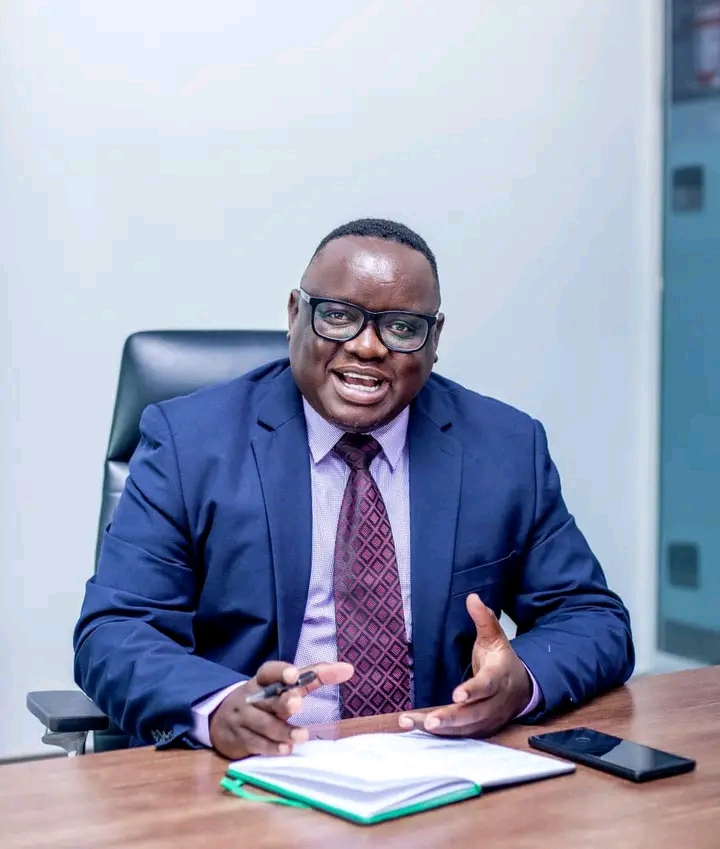

People’s Alliance for Change (PAC) President Mr. Andyford Mayele Banda’s Press Address to the Media on Monday 6th October 2025
Title: STATE OF THE NATION
Date: Monday 6th October 2025
Members of the PAC National Executive Committee present here, ground forces present here, members of the media, Ladies and Gentlemen, it gives me great pleasure to welcome you to this very important Press Conference which is aimed at addressing a few issues that are taking place in our great nation.
As you maybe aware, the country edges towards a very critical election in 2026, it is for this reason that as the People’s Alliance for Change (PAC) we have elected like we have done in the past to start regular engagements with the media in order to prepare our people for the 2026 general elections.
We do this to ensure that our people are enlightended so that they can make the right decision in the 2026 elections. We have just come from our very successful convention four weeks ago, where we did not just get a fresh mandate but marked the beginning of political activities for PAC going into 2026.
As you may be aware, PAC will be heading into the 2026 elections for a third time and the only party outside UPND and PF that will be on the ballot 3 times or more. PAC and myself Andyford Mayele Banda first participated in 2016 elections and came out 4th out of 9 and also participated in 2021 where we came out 4th out of sixteen.
Without wasting much time lets get to the main issues that we have to address:
THE BUDGET
The Minister of Finance Honourable Situmbeko Musokwatane presented the UPND’s 5th and final budget to parliament on 26th September 2026.
The Minister proposed to spend K253.1 billion in the 2026 budget. This spend is 32% more than the UPND government’s opening budget of 2022 which was proposed at K173B. In 2026, the government proposes to finance the budget through domestic revenues of K206.5 billion, grants K12.1 billion, Domestic Borrowing K21.6 billion and external borrowing at K12.9 Billion. Domestic revenue under the UPND government has increased from K98.9 billion in 2022 as per budget projections to a projected K206.5 billion in 2026.
That’s a an impressive 109% increment from 2022. Analyzing the UPND’s five years we have noticed an upswing of spending from 173B in 2022 budget to K253.1 B projected for 2026. Understandably, populations are growing and the needs keep rising. In any event we don’t believe any budget including this one has adequately catered for the needs of the population.
However, in the same vein, debt is also on the rise. The UPND has accumulated an approximate figure of USD 4 billion in 4 years across, that is public external debt, domestic debt and domestic arrears. On the other hand, we have seen introduction of various taxes on the business community and individuals.

In 2025 budget, the government had targeted to reduce inflation from 16% to the 6-8% bracket which didn’t work. Of course this is as a result of the high cost of doing business which is attributed partly to the taxes that have been introduced on businesses, cost of imported raw materials, unstable currency and high cost of energy both petroleum and electricity.
The government has projected to reduce inflation to the 6-8% bracket in the 2026 which we as PAC can predict that it will fail due to high cost of commodity as a result of factors attributed above. Despite going into an election year, we don’t see how commodity prices will fall because the factors driving the prices cannot easily be changed.
On the other hand, there doesn’t seem to be political will to drive indigenous private sector participation as the government keeps crowding out funds in government securities through domestic borrowing meant for local entrepreneurs and lack of revolutionary policies to change the economic systems. In this year’s budget the government has increased domestic borrowing from K15.3B to K21.6B. What this entails is that there won’t be adequate funds within the banking sector to lend out to SMEs making it difficult to grow the indigenous grown private sector.
It is very clearly at this point that we have reached a point where both tax and debt have reached a sealing. We have introduced all the taxes imaginable at the moment and the debt situation at the rate we are moving is not sustainable.
In the 2025 budget presented by Minister of Finance more taxes were introduced on mobile money transaction, toll gates increments and a few others. This is in additional to various taxes introduced in previous budgets such as increase in property transfer tax, standard rating of petroleum products, advanced income tax on remittances exceeding $2,000, the revision of income tax, excise duty and many others.
The question we should ask ourselves is that, if all taxes have been introduced and debt acquisition is currently not sustainable, what must we do to keep pace with a growing population needs and to reduce poverty? A World Bank report projected that Zambia needs to create 10 million jobs by 2050 that’s like 400,000 jobs per year that does not include the backlog of young people looking for jobs and other young people having poor quality jobs such as cash for work. In the same vein, according to the Zambia Statistics Agency’s (Zamstats) 2022 Living Conditions Monitoring Survey (LCMS) found a national poverty rate of 60%, with 78.8% of the rural population poor and 31.9% of the urban population poor.
The question is what is needed to start reversing the escalating poverty? Has the UPND reduced poverty in the last four years since coming to power?
As PAC we don’t believe that the poverty levels have been reduced by the UPND due various factors including lack of deliberate policies that focus on empowering the local people and protecting them from exploitation from foreign interests coupled with drought which culminated into the current energy crisis. This definitely has made it difficult for businesses to operate.
It is our view also that the 5 years of the UPND budget has not focus on the matters that need addressing, creating of jobs, reducing poverty and also restructuring our economic systems. If you analyse the UPND’s 5 years of budgeting you will realize that their pride is more on social programs than programs that can lift people out of poverty.
Social programs focus more on social protection than production. While we understand that the vulnerable people in our society must be protected, continuously focusing on just protecting the vulnerable as the key focal point for any government is not sustainable. In fact the lack of adequate revenue generation can also be tied to the fact that people cannot afford various goods and services. If we boost the buying power in the economy you will find that even more taxes will be collected. The manufacturing industry will thrive because people can afford and are capable to buy goods and services. However, if you pin your strategy on social spending, you shrink the economy and as populations are growing that becomes unsustainable.
A nation should not be proud to focus on giving half the population which is poor free things. You hear the UPND says we have enrolled almost 2.4 million pupils in free education. While that is good, its also a sign of the levels of poverty in the nation. Social Cash transfer has continuously increased from the time the UPND came into power from K3.1 B in 2022 to K8.2B in 2025 and K7.6 B in 2026.
The UPND can claim that the increment in Social Cash transfer means far more coverage for the poor but to us as PAC, this is sign that poverty levels keep escalating. Cash for work which was introduced in 2024 to cushion people during the drought has continued even in 2026 budget with a budget of over a billion Kwacha put there.
Even the FISP is more like a social program because the original idea of FISP was to give farmers a head start and graduate them to stand on their own after a period. If you read the 2021 budget presented by the PF, you will realize that FISP of K5.7 which produced 3.6 million tons of maize targeted 1 million farmers. The budget of UPND of 2024 with K8.5 B which produced 3.7 million tons also targeted 1 million farmers. I know you are asking questions that how come PF invested K5.7 billion and managed to produce 3.6 million tons with one million farmers and yet UPND invested K8.7B and managed to only produced 3.7 million with also one million farmers.
Your guess is as good as mine. But the question is can you the UPND government point at the number of farmers that have graduated from FISP in the last four years especially with their Comprehensive Agriculture Policy? There is non. You see we cant we continue treating these programs as social protection programs but must ensure that we capacitate people to stand on their own. As populations grow these programs are becoming more and more unsustainable.
As PAC we shall relook the social transfer program for we know that some on the social cash transfer do not need to be there but just need to be capaciated to venture into farming. Social cash transfer won’t help to reduce poverty in rural areas which stands at 78%.
Over 22 billion was allocated between 2022 to 2025 for dismantling of arrears. When the UPND came into power they found domestic arrears at K46.9B. Despite allocating 22 Billion in dismantling arrears, the current domestic arrears stands at K84 billion.
This begs the question, why keep increasing the spend in the budget when you don’t have the funds to reduce the previous accumulated arrears you inherited? This could also mean that projected revenues are not being collected as planned. For example in the 2026 budget the government has projected to spend K14.5 Billion on Road Infrastructure a jump from K11B in 2025 and K8B from 2024. Why increase the spend on this when the government has increased domestic borrowing from K15B in 2025 to K21.6 Billion. Is it the elections? And why increase CDF if you have to increase domestic borrowing? Is it the elections?
Speaking of which why has the UPND doubled election budget from K600 Million in 2021 to K1.2B in 2026? Have you noticed that? What factors could affect the doubling of budget for elections. Is President Hakainde Hichilema so sure that his personal project of Bill 7 will be go through hence the need to prepare elections for more parliamentarians.
The PAC government will scrap off Cash for Work and invest the money in the Sustainable Agriculture Financing Facility so that we scale up access to Financing for the poor farmers.
The PAC government will reduce the social cash transfer and invest the funds in the sustainable agriculture financing facility so that we can scale up financing for the poor farmers and focus on production.
We shall enact legislation to stop FRA from buying maize but have them focus on producing and work with the small scale farmers as outgrowers taking the Kaleya small holders farmers model as they work with Zambia Sugar. Farmers needs support, and we want FRA to take the leading role in supporting farmers through financing, agriculture support services and other areas. ZNS must equally get into working with small scale farmers as outgrowers taking into the same model from Kaleya small holders. They should stop being entrepreneur wanna be, trying to do security, block making etc but focus on what they are good at and that’s food production.
To stimulate more economic activity within the local PAC will enact local content legislation to protect Zambians from foreign exploitation. This is the only way we can create jobs if we can get Zambians to have a significant participation in the local economy. Zambians cannot be relegated to mine suppliers in the mining sector but must be involved and be licensed large scale mine owners.
We cannot relegate Zambians to just artisanal mining but must be licensed large scale mine owners. We have energy transition in motion where most mineral commodities such as Copper, Lithium and others that we have in Zambia will be on high demand. We just need to put systems to ensure that we take advantage of the projected demand to raise capital for local people. The game changer is not CDF, the game changer is to ensure that in 3 million copper production target by 2031, 1.5 million or more must be driven by local people. We must create local US$ billionaires. Now that’s a game a changer. In 2024 we produced 820,000 tons of Copper and yet only a small percentange of 80,000 tons is attributed to local mine owners through artisanal mining license. The game must change.
We should protect Zambians from exploitation without apologies. No foreigners should be involved in cleaning business. No foreigners should be selling second hand vehicles. No foreigner should be involved in block making business. No foreigner should keep chickens. No foreigners should be involved in travel agency and many other areas.
We must make ensure that profits are kept in Zambia not repatriated. That’s how we are going to develop the economy. If we make Zambia chipanda odd where everyone walks in and does anything they want we won’t develop this nation. You cannot walk into other countries and do as you wish, first we must protect the local people. You can even see the United States is now requiring people to pay a deposit of US$15,000 from Zambia to travel there. That’s a developed country but they are serious with their American First policy. Hence, it will be critical to enact the local content legislation to protect Zambians first and that’s why our slogan for 2026 says “This time, its time for Zambia.”
In the 2026 budget on Energy, the Minister promises 1500MW to be added to the grid. However, as he did in the 2025 budget the Minister does not categorically indicate which projects are bringing the 1500MW apart from mentioning Mamba thermal plant of 300MW. The energy crisis has affected many businesses and individuals. While we do understand that ZESCO needs to earn a premium tariff by exporting to cover for their expenses due to the low tariffs locally and due to contractual obligations as a result of being a member of the Southern Africa Power Pool, as PAC we believe that bold decisions should have been made early on to stop exports in order to protect the local economy and save jobs that have been lost as result of the energy crisis.
The directive to stop exports at this time, seems like a political ploy meant to hondwink unsuspecting citizens towards the 2026 elections. Hence, now government thinks it’s important to channel more electricity in the compounds where more voters are so that they can think their government is working going into 2026 and get votes from there. Such kind of politics are long gone. With revolutions happening in Africa, it’s clear that political dynamics are changing. Young people are demanding for real solutions not political rhetoric.
While the government has been trying to streamline processes around the energy sector, the major issue and long term goal to attract more investment and sort out the energy crisis is by ensuring the tariffs are attractive. Now this is a decision that need to be bold independent of political expediency.
On the other hand it’s understood that definitely we must look at the vulnerable people in our society’s capability to afford. However, this mentality is the one that has brought us here. Over the decades politicians have been promising people cheap things without thinking of restructuring the economy so that people can afford goods and services at cost. There is no pride in just promising cheap things, we must move towards ensuring that our people can afford these goods and services. If people can’t afford goods and services, supply cannot be guaranteed.
Hence, our focus as PAC is resetting the economy and ensure more activity within the local economy by protecting Zambian businesses from exploitation from foreign interests. Once we do that, we will create more opportunities and jobs and now people can afford goods and services including electricity. That’s when we will solve not just the electricity problem but many other challenges facing this country.
Short term on the energy crisis, we must look at taking advantage of technology to provide financing products to help people get solar and pay on the meter as repayment. We can also get these people off-grid so that we channel this electricity to the real needy areas such as the industries. Technology is available. Government, banks, ZESCO and other Independent Power Producers (IPP) must look into this in order to cushion the current crisis.
The Minister of Energy must actualize the open access regime at Tazama if we want to see stable prices and supply of petroleum products. We cannot continue to be making pronouncements to the nation and yet what is on the ground is different. The TAZAMA pipeline cannot just benefit one company but must be accessible to all Oil Marketing Companies that need to use it. We challenge the Minister to ensure this is streamlined in line with pronouncements made by the President and Minister of Finance.
AUDITOR GENERAL
A comprehensive statement will be issued as we are still studying the report the 380 page report. However, leafing through the report, it is clear that our governance has not reformed under the UPND. The same challenges and leakages we have seen over the years still keep coming.
To close all these leakages honest institution reforms are needed. We must stop government from being place where one party comes in, it’s time for one group to abuse it either a political party, tribe or greed business people. That can only change if we institute radical institutional reforms. We must ensure that we run a merit based governance system if we want to see government operate effectively, efficient and impartial.
CONSTITUTIONAL REFORMS
To understand where we are in terms of constitutional reforms we must understand where we are coming from. The defects in constitutional reforms in Zambia is direct copy cut of colonial political systems. When Africans were pushing for independence colonial powers were not happy about that because they wanted to continue on a path of exploitation. It is for this reason that revolts and the call for independence was met with severe reprisal.
In many instances, people were indiscriminately arrested, harassed, tortured, and imprisoned. Freedom fighters were taken to court on trumped-up charges and sentenced to many years in prison. Others had to run away from their countries and live in exile.
Remember that the white colonial powers were in charge of the government so in order to continue controlling Africans and suppress resistance, the colonial powers had to create draconian legislation that saw many people being imprisoned for many years to perpetuate colonialism.
For example, in apartheid South Africa, a law called the Suppression of Communism Act of 1950, was one of the notorious legislations crafted to ban the activities of the Communist Party of South Africa. Despite this law being created against acts of communism, it was abused through its broad definition to target other political groups.
The main purpose was to suppress the liberation struggle. This is where we see legislations such as Cyber Security, which may seem to deal certain good things but when you go deeper you will find that many sections have broad definitions which gives power to those in government to target especially critics of the government. This is a direct pluck out of the colonial leadership template. In additional to these legislations, constitution of colonial governments kept changing to sustain the exploitation. Especially towards independence there were manoeuvres by the British to amend and sweeten constitutions while still leaving them in control.
So all these maneouvers by the UPND government and even previous govern