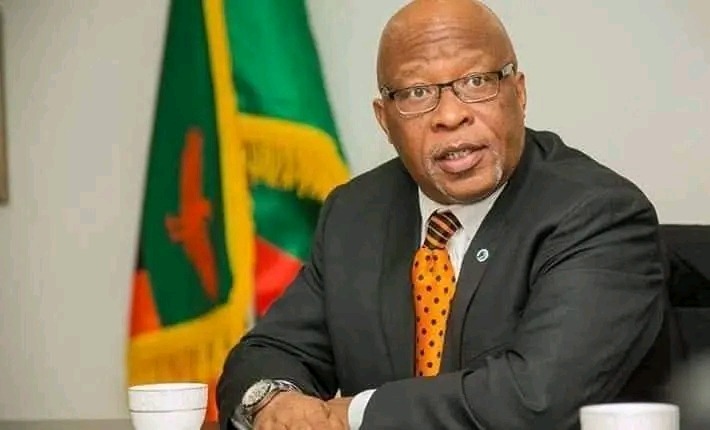

Hichilema and I agree that Zambia is divided – Nevers
PASTOR Nevers Mumba says no matter what is done on the economic side, if Zambia is not united, the country risks destroying itself.
Mumba says all well-meaning Zambians understand that the country is currently divided.
He says President Hakainde Hichilema, himself and other well-meaning Zambians are in agreement that Zambia is a divided nation.
Mumba says there is therefore a need for the country to address its divisions and focus on rebuilding national unity.
Commenting on reports that President Hichilema won a disputed election, Pastor Mumba said, as far as he was concerned, the results that saw Hichilema emerge victorious were confirmed by the Electoral Commission of Zambia and other institutions that conducted Parallel Voter Tabulation (PVT).
Mumba says the confirmation of the results by these institutions provides the basis for recognising the outcome of the election.
-TV Yatu | David Kashiki | September 16, 2026.
It is quite disheartening to hear political discussions suggesting that Zambia is divided. One may reasonably ask: divided along what lines, and to what extent? If our political leaders can engage openly, honestly, and transparently, many of these concerns could be addressed in a constructive manner.
In the most parts of our nation, ordinary Zambians continue to live peacefully alongside one another and go about their daily lives, pursuing their small livelihoods and supporting their families. They continue to coexist and interact regardless of tribe, religion, ethnicity, or political affiliation. This spirit of unity and peaceful coexistence remains an important part of our national identity.
It is therefore important that political leaders exercise restraint and avoid narratives that may unnecessarily create a sense of division among citizens. Political differences are a normal part of democracy, but they should not be allowed to overshadow the common bonds that unite Zambians. No individual or a few politicians should be viewed as having the power to divide the nation; Zambia belongs to all its citizens, and our collective responsibility should be to preserve its peace, unity, and stability.
Another issue worth reflecting on is the way political office is sometimes perceived. The presidency and positions in Parliament are important institutions of public service and should be approached with the seriousness, responsibility, and dignity they deserve. Political leadership should not be viewed primarily as a pathway to personal wealth or privilege, but as an opportunity to serve citizens and contribute to the development of the country.
There is nothing wrong with aspiring to political leadership. However, such aspirations should be accompanied by a genuine commitment to public service, integrity, accountability, and the national interest. Zambia needs leaders who understand that political office is a responsibility entrusted to them by the people, rather than simply a lucrative career.
Ultimately, our differences should not define us. What should unite us is our shared identity as Zambians and our common desire for a peaceful, prosperous, and united country. Regardless of our political, tribal, religious, or ethnic backgrounds, we all have a role to play in protecting and strengthening the Zambia we share.
Let’s face the fact here. The issue is some tribal entitlement to the presidency. Once this is dealt with politicians will stop seeing divisions in the country. The biggest problem are politicians, faith and traditional leaders who believe a president must only come from among their own, a very primitive and selfish belief.
What’s needed is a series of public lectures on how what we call modern nations came into being. HH, Nevers Mumba, Brian Mundubile, Akashambatwa Mbikusita-Lewanika, all journalists etc need this knowledge. Nation-building has never been easy anywhere. Civil wars have been fought in many parts of the world during the path to building stable, united and prosperous nations. Even then, there are still challenges as we have seen this week in the UK where some political leaders from Northern Ireland, Scotland and Wales met in Cardiff to discuss independence referendums to leave the United Kingdom.