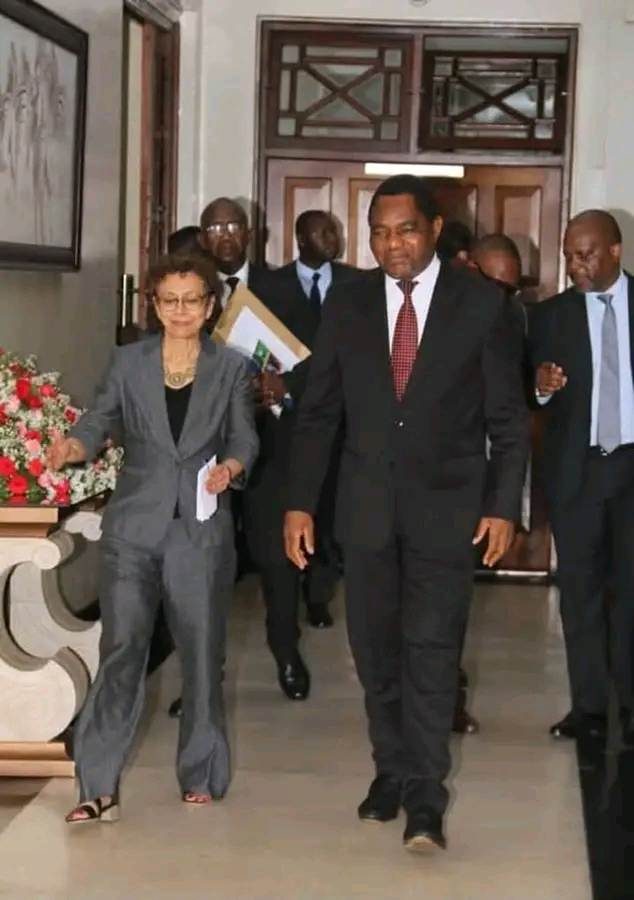

PRESIDENT HICHILEMA URGED TO ACT ON 7 CONCERNS ON HUMAN RIGHTS VI0LATIONS
….ZCLU Reiterates the Need to Prioritize Access to Information Over Cr!minalizing Online Speech
KITWE, ZAMBIA – Saturday, February 1, 2025
The Zambian Civil Liberties Union (ZCLU) has fully supported the findings of UNHCR Special Rapporteur Irene Khan on Zambia’s human rights situation and calls on President Hakainde Hichilema and his administration to prioritize and implement the seven key recommendations outlined in the report.
J
While the opposition and the ruling party may selectively interpret the report to serve their narratives, Zambia’s human rights record has faced longstanding challenges.
The Hichilema administration has a unique opportunity to address ongoing human rights concerns through proactive legal and policy reforms that strengthen civil liberties rather than waiting until it is too late to make amends.
The findings by the Special Rapporteur highlights key concerns on the weap0nisation of the legal system to suppress dissent and pr0secute hàrsh criticism through outdated col0nial-era offences, including offences such as insult!ng language, sed!tious practices, and hàté speech.
Additionally, the report notes that the failure to fully operationalise the Access to Information (ATI) law remains a significant obstacle in combating misinformation and promoting transparency.
While President Hichilema is not responsible for the existence of archaic laws like criminal libel, seditious practices, and insultíñg language – many of which date back over 90 years- his administration has had four years to address them.
Instead of repealing or revising these laws, the Zambian government has continued enforcing them more rigidly than the previous regimes and is even proposing harsher penalties for vague offences like hate speech. This approach does not solve the root issue of poorly defined laws
In our view, addressing these concerns requires more than legislative reform; it demands a shift in the manner these laws are enforced by LEAS and the Zambian Judiciary. The real issue lies not only in outdated laws but in their arbitrary enforcement.
The judiciary must take responsibility for reviewing and striking down overly broad and vague laws, compelling the executive to introduce well-defined and constitutionally sound legislation. Judicial intervention is crucial in safeguarding civil liberties and ensuring legal clarity.
Furthermore, the government must recognize the growing concerns surrounding misinformation, disinformation, and hate speech. Crimínalizing speech based solely on its falsity is ineffective. Instead, the focus should be on providing citizens with greater access to government-held information and fostering open, transparent communication between authorities and the public.
ZCLU reiterates the Special Rapporteur’s concern that the ATI law must not become a symbolic gesture aimed at satisfying international bodies like the IMF. The law’s success depends on the government’s genuine commitment to transparency, accountability, and citizen participation.
A fully functional ATI law will help combat misinformation, promote informed decision-making, and strengthen democracy.
ZCLU urges the government to take decisive action in implementing the report’s recommendations, ensuring that Zambia’s legal framework protects human rights and democratic freedoms for all its citizens.
Signed
Isaac Mwanza
Executive-Director
Zambian Civil Liberties Union