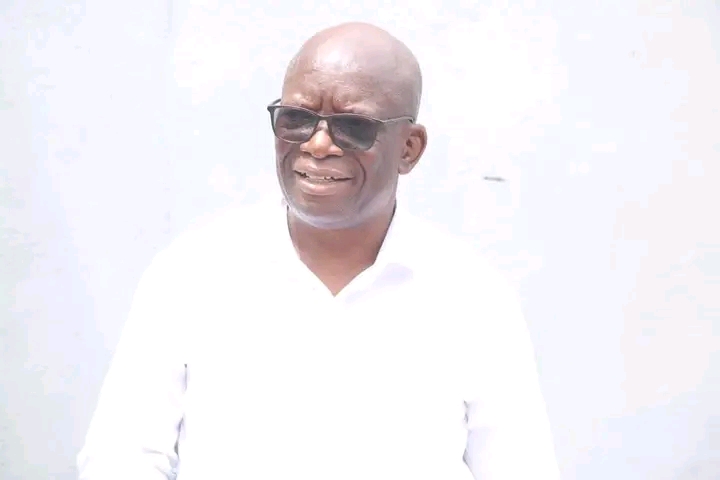

PRESIDENTIAL WORDS CAN DIVIDE A NATION, WARNS Dr MUSUMALI.
Socialist Party and People’s Pact General Secretary Dr Cosmas Musumali has warned that careless or divisive presidential rhetoric poses a serious threat to Zambia’s long-standing tradition of national unity, following controversial remarks attributed to President Hakainde Hichilema during a recent visit to Choma..
In a strongly worded analysis circulating in the public domain, Dr Musumali argues that words spoken by a sitting president carry constitutional and moral weight far beyond ordinary political speech, especially in a multi-ethnic country like Zambia.
“The president does not speak as a private citizen or as a party leader. He speaks as the embodiment of the nation,” Dr Musumali said. “When presidential words are perceived as tribal or exclusionary, they do not merely offend they legitimize division and weaken the foundations of our democracy.”
Dr Musumali cautioned that Zambia’s reputation as one of Africa’s most peaceful and cohesive nations should not be taken for granted. He noted that history across the continent shows how quickly ethnic rhetoric, once normalized by leaders, can escalate into instability and violence.
“African history is replete with painful lessons,” he said. “From Rwanda to Kenya and Côte d’Ivoire, we have seen how political leaders who mobilize along ethnic lines open doors that cannot easily be closed. Words spoken at the top can, and often do, translate into real suffering on the ground.”
He stressed that Zambia’s post-independence unity anchored in the founding principle of One Zambia, One Nation was the result of deliberate leadership choices, not coincidence.
“Our unity has survived because past leaders understood that national cohesion must be protected every day,” Dr Musumali said. “Once a president departs from that ethic, the entire national project is put at risk.”
On accountability, the Socialist Party and People’s Pact General Secretary said the issue goes beyond partisan politics and speaks directly to constitutional responsibility..
“The constitution demands that the president represents all Zambians equally, regardless of tribe or region,” he said. “If presidential conduct undermines that principle, then Parliament has a duty not a favour to interrogate it seriously.”
Dr Musumali also called on President Hichilema to issue a clear and unambiguous apology, warning that vague expressions of regret would not be sufficient.
“A genuine apology must acknowledge what was wrong, why it was wrong, and recommit the presidency to inclusive and unifying leadership,” he said. “That is the minimum required to begin repairing the damage.”
He further questioned whether leaders who engage in divisive rhetoric retain the moral authority required to seek national office again.
“Leadership is about uniting people, not energising divisions,” Dr Musumali said. “A leader who exploits tribal sentiment, even once, must seriously reflect on whether they are fit to preside over a diverse nation.”
Dr Musumali urged civil society, religious leaders, and ordinary citizens to reject tribal politics in all its forms, warning that silence or justification today could set a dangerous precedent for the future.
“This is a defining moment,” he said. “If Zambia excuses this kind of rhetoric, it will invite more of it. But if Zambians stand firm across party and ethnic lines, they will reaffirm that unity is non-negotiable.”
As debate over the Choma remarks continues, Dr Musumali’s message is clear: in Zambia’s fragile but proud democracy, presidential words matter and the nation’s future depends on how they are used.
Socialist Party, Socialist Party. Can you please explain yourselves to a Zambian on the ground before we come in to educate you about these philosophies.
You are not stating what the president said that displeased you. You are not hitting the hammer pa MUSUMALI, like your name.