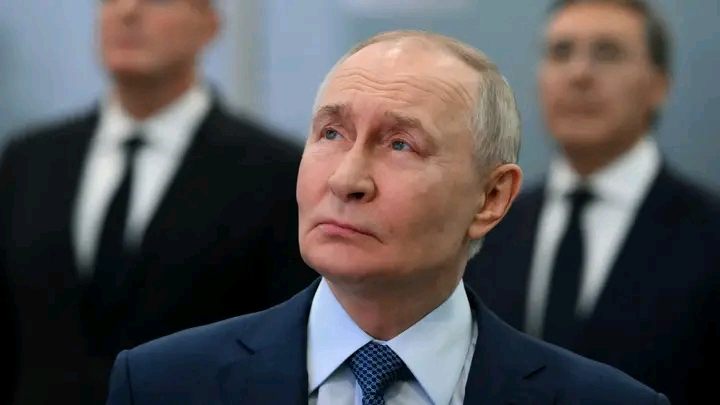

Putin to Meet Syrian President on Tuesday as Russian Military Bases Come Under Scrutiny Moscow, Russia
The Kremlin announced that Syrian interim President Ahmed al-Sharaa will visit Russia on 28 January and hold talks with Russian President Vladimir Putin, with Russian military facilities in Syria emerging as a central point of attention.
According to the Kremlin statement, President Putin will meet President al-Sharaa during his official visit to discuss the current state of bilateral relations, prospects for cooperation across multiple sectors, and the broader situation in the Middle East.
This will mark President al-Sharaa’s second visit to Russia, following his previous trip in October last year.
Al-Sharaa came to power after overthrowing former President Bashar al-Assad, who had been backed by Moscow, in December 2024, subsequently forming an interim government. During their first meeting, Putin and al-Sharaa agreed to maintain strong bilateral relations despite the political transition in Damascus.
The upcoming talks are expected to address the future of Russian military bases in Syria, as well as the potential extradition of former President Assad, who is currently residing in Moscow.

Russia currently operates two major military installations in Syria: the Tartus naval base and the Hmeimim air base. Following the collapse of the Assad government, it remains unclear whether these facilities will continue operating under the new Syrian leadership.
Meanwhile, AFP reported that Russian forces have withdrawn troops and equipment from Qamishli Airport in northeastern Syria, an area under Kurdish control. Russian military personnel had been stationed at the airport since 2019.
The withdrawal comes as the Syrian Democratic Forces (SDF)—a Kurdish-led armed group controlling northeastern Syria—seek a ceasefire agreement with the Syrian government and negotiations on integration into state forces.
The meeting is likely to serve as a critical test of Russia’s ability to preserve its strategic military footprint in Syria under a post-Assad political order. Outcomes related to base access and Assad’s status could significantly reshape Moscow’s long-term influence in the Levant, particularly as Damascus recalibrates relations with both regional and global powers.