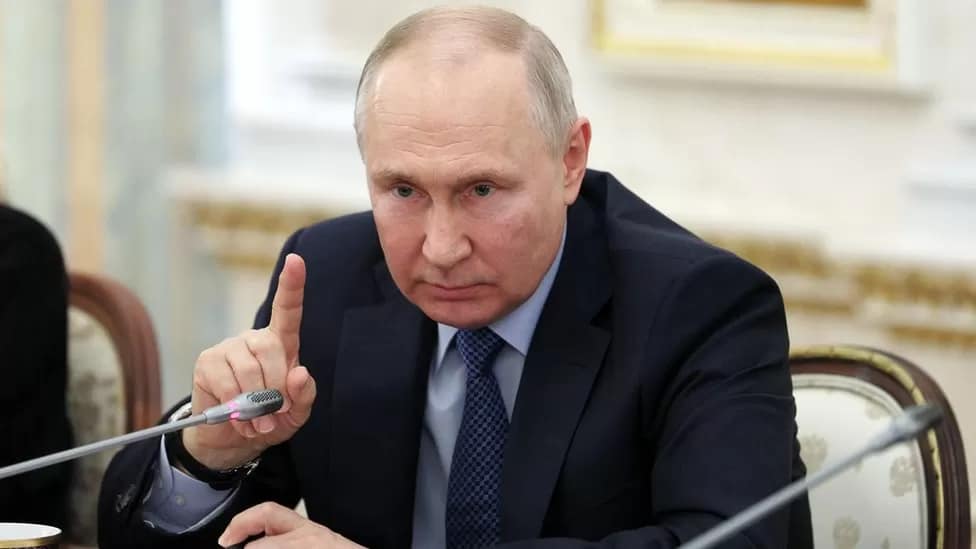

Hardline allies of Vladimir Putin are demanding that Moscow throw its full weight behind Iran in its confrontation with the United States, warning that Russia could be next if it fails to act.
Senior Kremlin figures have called for the creation of a new anti-Western “military coalition” to support Tehran following the killing of Iran’s Supreme Leader Ali Khamenei in joint US-Israeli strikes. The escalating rhetoric comes as US President Donald Trump intensifies military operations against Iran’s leadership and vows retaliation after American troops were killed in the widening conflict.
Alexei Zhuravlev, deputy chairman of Russia’s parliamentary defence committee, urged immediate military assistance for Tehran. He said: “This is not a situation where we should limit ourselves to protest notes, but rather stand up for Iran before it is too late, by all possible means, including military support.” Zhuravlev also called for the formation of a new bloc to counter Washington’s influence.
“It is clear that the United States will no longer even try to negotiate with anyone and will attack a new opponent with renewed force. They must be stopped at these lines, supplied with weapons, intelligence information, and everything necessary so that Iran can hold back this armada in its direction. It even makes sense to create a military coalition for this confrontation, otherwise the collective West will pick everyone off one by one.”
Colonel-General Andrei Kartapolov, head of the defence committee, delivered a fiery address on Russian state television, arguing that Moscow’s survival depended on refusing to bow to Western pressure.
“We could be next if we falter, if we cave in. But we have no right to cave in, no right to waver. We must press forward to the end [in Ukraine]… Today’s West isn’t even a predator; it’s an absolute, infernal evil, devoid of any sense of humanity. Therefore, negotiating with them is pointless, and we won’t do it. We will respect ourselves and our interests.”
Political commentator Alexander Dugin claimed Russia’s allies were being systematically targeted. “One by one, our allies are being systematically destroyed,” he said. “It’s clear who’s next, and it’s clear what negotiations with such an enemy mean.”
He added: “The most important thing right now, for Iran, for Russia, for humanity, is a long war in the Middle East.” On Kremlin-aligned television, presenter Vladimir Solovyov escalated the rhetoric further, calling for intensified action against Ukraine.
“There are no more laws: international diplomacy has been destroyed [with the US-Israeli strikes on Iran]. We must clearly understand that we have entered an era of major wars. These regional conflicts cannot help but merge and coalesce into one larger conflict. To this end, we must destroy Ukraine’s military and political leadership and strike at the decision-making centres in Ukraine… So, the time has come to destroy the existing threat, which has become direct and clear.”
The reaction in Moscow comes as Washington presses ahead with what it has dubbed Operation Epic Fury, targeting Iranian military infrastructure and leadership figures.
Mr Trump told ABC: “I got him before he got me. They tried twice. Well I got him first.” Following the deaths of US service members in Kuwait, he vowed: “America will avenge their deaths and deliver the most punishing blow to the terrorists who have waged war against basically, civilisation.”
He warned Tehran: “These intolerable threats will not continue any longer. I once again urge the Revolutionary Guard, the Iranian military police, to lay down your arms and receive full immunity or face certain death.”
Despite the intensifying strikes, surviving Iranian officials have reportedly sought renewed diplomatic talks with Washington. Mr Trump said he had agreed to discussions but suggested the opportunity had come too late.
“They want to talk, and I have agreed to talk. They should have done it sooner. They should have given what was very practical and easy to do sooner. They waited too long.”
As missile exchanges continue across the Gulf and fighting spills into neighbouring countries, the increasingly confrontational tone from Moscow signals the risk of a broader geopolitical realignment and the potential for the conflict to widen further.#