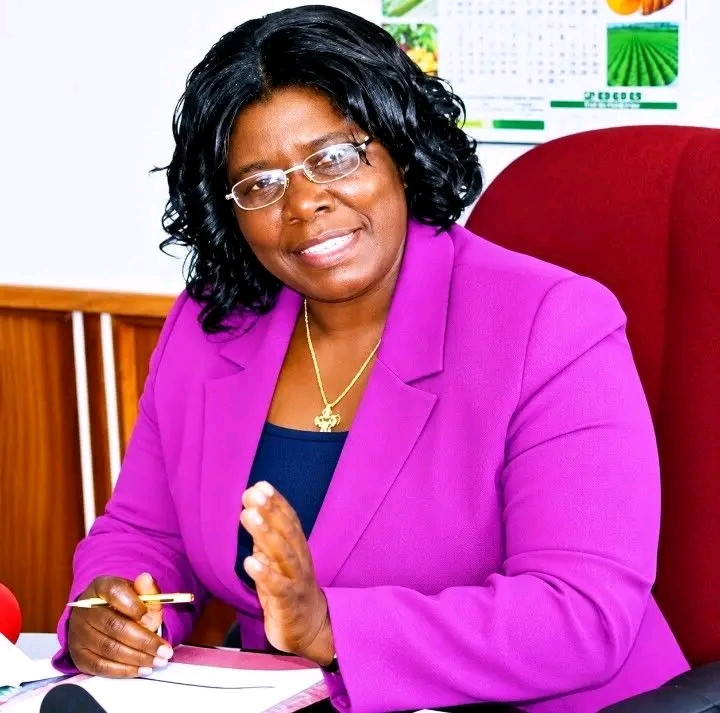

Sarah Sayifwanda: The MP Who Turned Down a Ministerial Appointment
In Zambian politics, where political appointments are sometimes celebrated as if they were Christmas bonuses, Sayifwanda once did something rather unusual: she turned down a government appointment.
Not because she had lost interest in politics, but because, apparently, she considered the offer a demotion. And perhaps she had a point.
Born on 16 January 1963, Sayifwanda graduated with a Bachelor of Arts degree in Special Education. She would go on to become one of the more outspoken female politicians of her generation.
She first entered Parliament in 2006 after winning the Zambezi East Constituency on the Movement for Multiparty Democracy (MMD) ticket. She polled 6,637 votes against her closest rival, UDA’s Rosemary Kandepu, who managed 5,208 votes.
Her parliamentary victory opened the doors to Cabinet, where she served in three different portfolios under Presidents Levy Mwanawasa and Rupiah Banda:
- Minister of Agriculture and Cooperatives (2006–2007).
- Minister of Transport and Communications (2007–2008).
- Minister of Gender and Development (2008–2011).
During her time in government, Sayifwanda championed several causes, including reducing the use of women in drug trafficking, promoting women’s participation in politics, fighting marital violence and advocating for people living with intellectual disabilities.
In 2011, she successfully defended her Zambezi East seat on the MMD ticket, polling 3,813 votes against independent candidate Kenneth Kankinza, who came a close second with 3,651 votes.
Perhaps one of the most interesting chapters in Sayifwanda’s political career came after the Patriotic Front (PF) formed government under President Michael Sata in 2011.
President Sata appointed her Deputy Minister of Gender. However, Sayifwanda declined the appointment and refused to be sworn in.
Her argument? She had already served as a full Cabinet minister in three different portfolios between 2006 and 2011. Accepting a deputy ministerial position would therefore amount to a political demotion.
In other words, after tasting the Cabinet table, she was not particularly interested in returning to the junior seats.
She further argued that North-Western Province deserved adequate representation at the highest level of government and maintained that she should have been appointed a full Cabinet minister to give the region a direct voice in the PF administration.

After declining the appointment, Sayifwanda continued serving as opposition MMD member of parliament for Zambezi East.
Ahead of the 2016 general elections, Sayifwanda crossed political trenches, defecting from the MMD to the United Party for National Development (UPND), alongside other MMD Members of Parliament.
It was another reminder that Zambian politics has never been short of political migrations.
Sayifwanda never re-contested the Zambezi East seat in 2016.
In 2019, Sayifwanda found herself at the centre of another controversial political episode.
On 13 July 2019, the Electoral Commission of Zambia (ECZ) convened a consultative meeting in Zambezi District to discuss the proposed delimitation of constituencies and wards.
What was supposed to be a consultative exercise quickly descended into chaos as competing Lunda and Luvale stakeholders disagreed over proposals for new constituency boundaries
According to reports and police accounts, Sayifwanda allegedly interrupted proceedings when a vote appeared to be going against the Lunda proposal. She reportedly approached an ECZ official, grabbed the microphone and demanded a change in the voting procedure, while accusing officials of bias.
When a Luvale participant challenged her authority to halt the proceedings, tensions escalated into a physical altercation between members of the two groups.
Before long, plastic chairs were reportedly flying across the hall, turning what was meant to be an electoral consultation into something resembling a wrestling contest.
The ECZ was forced to suspend the delimitation exercise.
Sayifwanda was subsequently arrested and charged with conduct likely to cause the breach of peace.
Apparently, in Zambezi, even drawing constituency boundaries was not going to be a straightforward exercise. The boundaries were geographical, but the disagreements were clearly personal and deep rooted
Sayifwanda died on 31 December 2020 at Solwezi General Hospital following an illness. She was 57.
President Edgar Lungu accorded her an official state funeral and declared 5 January 2021 a day of national mourning.
She was laid to rest at Kimeteto Cemetery in Solwezi.
Sayifwanda’s political journey was certainly eventful. From winning parliamentary elections and serving in three Cabinet portfolios to declining a deputy ministerial appointment, crossing political parties and finding herself embroiled in a controversial constituency delimitation meeting, hers was no ordinary political career.
She was a woman who clearly knew her political worth and was not afraid to make her position known.
In a country where political office is sometimes treated as a personal entitlement, Sayifwanda once reminded the political establishment that not every appointment comes with an automatic acceptance letter.
May her soul continue resting in peace.
Credit: Zambian Political Archive